


As an Amazon Associate, Sumizeit earns from qualifying purchases.
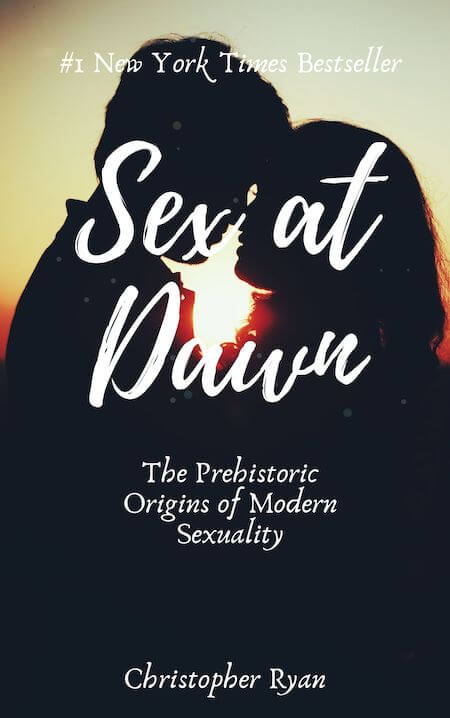
Sex at Dawn Book Summary
This Sex at Dawn Book Summary covers the key ideas, lessons, and takeaways in about 20 minutes.
Additionally, rather than shying away from discussing sexuality with our children, we must engage adolescents in these complex, multi-faceted topics.
Helps with these goals
Want the complete 20-minute summary?
- Full structured summary
- Video Summary
- Podcast Summary
- Audio summary
- Key takeaways
- Exercises
- Quiz
- Highlights and notes
- Ask the book with AI
What is in the Sex at Dawn book summary?
Below is a preview of Sumizeit’s expert-written summary of Sex at Dawn by Christopher Ryan,Cacilda Jetha. The full summary covers the book’s key ideas in text, audio, and video.
From an early age, many of us are told that we will one day fall in love and marry a suitor who is our complement in every way. Why is it, then, that even with the echoes of this moral obligation ringing in our ears, do we, as a species, so often feel inclined to search for something more in the form of an affair? Why is monogamy the prevailing point of view when humans have an innate tendency to deviate from its rigid structure? And now, with more marriages failing than ever before, ‘hook-up’ culture running rampant, and definitions of sexuality continuing to evolve, what is the future of sex in our world? And how did we get here from where we started out centuries ago?
Casual Sex
What’s your number? Yes, you know the number I’m talking about.
Sex partners.
Whatever your answer, chances are, it is much lower than the score of many of your hunter-gatherer predecessors, who led highly promiscuous lives and viewed casual sex as the norm.
In fact, sex was so commonplace in prehistoric times that it was often considered a community resource akin to food, shelter, and childcare. It was considered to be an effective process for keeping people cooperative and relaxed within their communities.
So, what changed?
With the rise of agriculture, cultures, and religions around the world began penalizing promiscuity through strict codes of conduct. Still--like the Romans who customarily allowed a bride to take part in an orgy before her wedding--some traditions that allowed for a suspension of the rules of monogamy continued to exist.
Shared Fatherhood
In the world today, if a man has fathered more than, say, 12 children, it is considered a bit of a taboo. In prehistoric times, this was definitely not the attitude that prevailed.
In fact, because childcare was considered a group responsibility, it did not necessarily matter who a child’s parents were. Instead, the group as a whole worked to keep offspring fed and sheltered.
In some South American tribes, this collectivist attitude towards parenting and sex continues to reign supreme. For instance, in the Ache tribe, each child has four types of fathers:
In this culture, women are encouraged to have sex and collect semen from multiple men. Ache women also engage in sex with other women. Ache men involve themselves in same-sex pairings as well.
The Invention of Agriculture
While there are arguably many positive outcomes that came as a result of advancements in agriculture, scientists today believe that cultivating plants and domesticating animals on a large scale ultimately caused significant damage to our social and sexual lives.
How?
Along with agricultural innovation came the trio of evil: possessiveness, jealousy, and greed.
While hunter-gatherers had previously shared resources collectively, because they were on the move and nobody could travel with large amounts of anything, the rise of farming ushered in an era of sedentary living accompanied by competitive ownership and prosperity.
Soon, a chasm developed between the rich and the poor,…
Want the complete 20-minute summary?
- Full structured summary
- Video Summary
- Podcast Summary
- Audio summary
- Key takeaways
- Exercises
- Quiz
- Highlights and notes
- Ask the book with AI
Who should read Sex at Dawn?
Sex at Dawn is for anyone questioning why monogamy feels difficult despite cultural pressure to embrace it—whether you're in a long-term relationship, newly single, or simply curious about human sexuality. This book appeals to readers interested in evolutionary psychology, anthropology, and the gap between what society expects and what our biology suggests we naturally desire.
Why does Sex at Dawn matter?
In an era of rising divorce rates, evolving relationship models, and ongoing conversations about sexuality, Sex at Dawn challenges the assumption that lifelong monogamy is humanity's natural state. By examining our prehistoric past and comparing ourselves to our closest primate relatives, Ryan and Jetha offer a science-based perspective that could reshape how we think about commitment, desire, and sexual fulfillment in modern life.
What are the key themes in Sex at Dawn?
- The disconnect between cultural expectations of monogamy and biological drives
- How agriculture fundamentally changed human sexuality and social structures
- Female sexual desire and agency have been historically suppressed
- Evolutionary biology explains modern sexual behaviors and anatomy
- Primate behavior reveals clues about natural human sexuality
- The concept of shared parenting and community responsibility for children
What are the key lessons from the Sex at Dawn book summary?
Monogamy is a cultural invention, not a biological imperative
Hunter-gatherer societies viewed casual sex as normal and community-benefiting, suggesting that strict monogamy emerged with agriculture rather than evolving naturally in humans.
Agriculture brought possessiveness, jealousy, and control
The shift from nomadic hunting to sedentary farming created property ownership, wealth inequality, and the need for men to control women's sexuality to ensure paternity certainty.
Women's sexuality has been culturally suppressed, not biologically weaker
Research shows women have equal or stronger sexual arousal than men, but social pressure and historical conditioning taught women to minimize their desires to meet cultural expectations.
Our closest primate relatives offer evolutionary clues
Bonobos and chimpanzees, sharing 98.4% of human DNA, are highly sexual and promiscuous creatures, suggesting our species may have similar natural inclinations.
Male anatomy reflects competitive mating strategies
Penis shape and size, along with large testes, evolved to compete with other males during reproduction, indicating humans adapted to environments where women had multiple partners.
Female sexuality is more fluid than male sexuality
Women show attraction to a wider variety of sexual stimuli than men and have greater capacity for sexual fluidity, yet also demonstrate superior ability to suppress these feelings.
Orgasm patterns reveal evolutionary mating history
Women's longer time to orgasm and capacity for multiple orgasms evolved to facilitate sequential intercourse with multiple partners, while male refractory periods allowed other men access.
Shared fatherhood was the norm in prehistoric societies
Children were raised by communities rather than individual nuclear families, with multiple men recognized as 'fathers,' removing paternity concerns from relationships.
Sex served as a social bonding and cooperation tool
In prehistoric communities, sex was treated like food or shelter—a collective resource that promoted group cooperation, relaxation, and social cohesion.
Monogamy can negatively impact male health
Long-term monogamous relationships correlate with decreased testosterone in men, potentially leading to depression, heart disease, and cancer.
Loud vocalizations during sex signal female receptivity to others
Women's vocalization during intercourse evolved as a way to advertise sexual availability to other potential mates in the community.
Modern relationship struggles reflect evolutionary mismatches
Infidelity, declining satisfaction in long-term relationships, and hook-up culture may reflect the gap between our biology and the cultural constraints of monogamy.
Women were specifically harmed by agricultural ownership culture
The shift to farming introduced forced fidelity through violence, legal structures like marriage, and confinement to domestic roles, directly contradicting women's evolutionary sexuality.
The stereotype of weak female libido is historically rooted
As women were confined to childcare during the agricultural era, societies developed the false belief that women had weaker sexual desires than men.
Some cultures maintained rituals allowing sexual suspension of monogamy rules
Even as monogamy became the cultural norm, traditions like pre-wedding orgies persisted in some societies, suggesting people resisted complete sexual restriction.
Honest conversation about desire is essential for modern relationships
Bridging the gap between cultural expectations and biological reality requires openly discussing true sexual desires without shame or judgment.
Children need honest education about sexuality
Rather than avoiding sexual topics, families should engage adolescents in complex, nuanced conversations about desire, relationships, and sexuality.
Sexual inclusivity within committed relationships may be more natural than exclusivity
Exploring consensual non-monogamy or other relationship structures might align better with human biology than strict, exclusive monogamy.
Evolutionary biology contradicts religious and cultural sexual morality
Our anatomy, hormones, and psychological responses suggest humans evolved for sexual diversity, challenging centuries of religious and cultural restrictions.
Want the complete 20-minute summary?
- Full structured summary
- Video Summary
- Podcast Summary
- Audio summary
- Key takeaways
- Exercises
- Quiz
- Highlights and notes
- Ask the book with AI
How can you apply ideas from Sex at Dawn?
- Have honest conversations with partners about desires and boundaries rather than assuming monogamy is the only acceptable relationship model
- Examine your own internalized shame around sexuality and question whether your desires reflect true values or cultural conditioning
- Consider alternative relationship structures—such as open relationships or consensual non-monogamy—if they better align with both partners' needs
- Educate yourself and your children about human sexuality using an evolutionary and non-judgmental lens
- Recognize that infidelity may reflect biological drives rather than character flaws, allowing for more compassionate relationship conversations
- Challenge the belief that lasting sexual satisfaction requires exclusivity; explore what genuine fulfillment looks like for you personally
- Advocate for comprehensive sexuality education in schools that includes evolutionary perspectives alongside social and emotional learning
What common mistakes do readers make with Sex at Dawn?
- Assuming infidelity always indicates a relationship problem rather than a potential biological mismatch with the monogamy model
- Believing that women naturally desire sex less than men, leading to overlooked female sexual needs and agency
- Treating monogamy as the only morally acceptable relationship structure without considering alternatives that might work better for specific partnerships
- Dismissing evolutionary perspectives on sexuality as excuses for bad behavior rather than tools for understanding human nature
Sumizeit Exercises Apply what you've learned
Turn ideas from Sex at Dawn into action with a short guided reflection: identify the biggest takeaway, connect it to your life, and commit to one step you can take in the next 24 hours.
What is the expert analysis of Sex at Dawn?
Overview
Sex at Dawn: The Prehistoric Origins of Modern Sexuality is a provocative and interdisciplinary exploration of human sexual behavior authored by Christopher Ryan and Cacilda Jetha. Ryan, a psychologist with a Ph.D. focused on prehistoric human sexuality, and Jetha, a psychiatrist specializing in couples therapy and psychosexual disorders, combine insights from anthropology, evolutionary biology, and psychology to challenge conventional narratives about monogamy and human sexual nature. Published in the early 21st century, this book has become a significant contribution to debates on sexuality, relationships, and cultural norms, questioning deeply ingrained assumptions about fidelity and desire.
Core Thesis
The central argument of Sex at Dawn is that monogamy is not the natural or default sexual arrangement for humans. Instead, the authors posit that our prehistoric ancestors lived in egalitarian, hunter-gatherer societies characterized by promiscuity and shared sexual access, which fostered social cohesion and collective child-rearing. The rise of agriculture introduced property, jealousy, and possessiveness, which in turn gave birth to rigid monogamous structures and sexual repression, particularly disadvantaging women. Ryan and Jetha argue that many contemporary sexual difficulties and cultural contradictions stem from this mismatch between our evolved sexual nature and modern societal expectations.
Strengths
- Interdisciplinary Approach: The book skillfully integrates evidence from primatology, anthropology, psychology, and evolutionary biology, providing a rich, multifaceted perspective on human sexuality.
- Challenging Orthodoxy: By questioning the universality and naturalness of monogamy, the authors open up important conversations about sexual norms and the diversity of human relationships.
- Use of Primate Comparisons: The detailed examination of bonobos and chimpanzees as our closest relatives offers compelling analogies that illuminate human sexual behavior and social structures.
- Attention to Female Sexuality: The book highlights the often-overlooked strength and fluidity of female libido, challenging stereotypes and social taboos.
- Accessible yet Scholarly: The writing balances academic rigor with engaging storytelling, making complex scientific ideas accessible to a broad audience without sacrificing nuance.
Critiques & Counterarguments
- Overgeneralization of Prehistoric Societies: The portrayal of prehistoric humans as uniformly promiscuous and egalitarian may oversimplify the diversity and complexity of hunter-gatherer groups, many of which exhibited varied mating systems and social hierarchies.
- Selective Use of Evidence: Critics argue that Ryan and Jetha sometimes prioritize data that supports their thesis while downplaying contradictory findings, such as evidence of pair bonding and paternal investment in early humans.
- Romanticizing Bonobo Behavior: While bonobos provide useful insights, extrapolating their sexual practices directly onto humans risks ignoring the distinct evolutionary paths and ecological pressures shaping each species.
- Neglect of Cultural and Psychological Factors: The book’s strong biological determinism may underappreciate the role of culture, individual psychology, and social institutions in shaping sexual behavior and relationship structures.
- Contradictory Contemporary Evidence: Modern research on attachment theory, pair bonding, and the benefits of stable monogamous relationships challenges the notion that monogamy is inherently unnatural or detrimental to health.
Who Should Read This
Sex at Dawn is ideal for readers interested in evolutionary psychology, anthropology, and the sociology of sexuality who are open to questioning mainstream assumptions about monogamy and human sexual nature. It appeals to scholars, therapists, and thoughtful laypersons seeking a deeper understanding of the biological and cultural roots of sexual behavior. Additionally, those grappling with contemporary relationship challenges or curious about alternative models of intimacy will find the book’s insights both provocative and illuminating.
Frequently asked questions about the Sex at Dawn book summary
What is Sex at Dawn about?
Sex at Dawn: The Prehistoric Origins of Modern Sexuality by Christopher Ryan and Cacilda Jetha explores how human sexuality evolved in prehistoric times and how the shift to agricultural societies fundamentally changed our sexual behaviors and expectations. The book argues that monogamy is a cultural invention rather than a biological imperative, and that humans evolved for sexual diversity and community-based child-rearing.
Who should read Sex at Dawn?
Sex at Dawn is ideal for anyone questioning why monogamy feels difficult, those in committed relationships exploring alternatives, people interested in evolutionary psychology and anthropology, and anyone seeking to understand the gap between cultural expectations and biological reality when it comes to sexuality. The book appeals to readers open to challenging conventional thinking about relationships and desire.
What are the main takeaways from Sex at Dawn?
The main takeaways include: monogamy emerged with agriculture, not as a natural human state; female sexuality has been culturally suppressed rather than biologically weak; our primate relatives demonstrate promiscuity as natural behavior; and honest conversations about desire are essential for modern relationships. The authors advocate for greater sexual openness and suggest that alternative relationship structures may better align with human biology than strict exclusivity.
Does Sex at Dawn argue that monogamy is unnatural?
Sex at Dawn argues that strict, lifelong monogamy is not humanity's default evolutionary state, and that humans likely evolved for sexual diversity and multiple partnerships. The authors point to hunter-gatherer societies, primate relatives, and evolutionary biology as evidence, though they don't claim monogamy is impossible—only that it may conflict with biological drives.
How does Sex at Dawn explain human sexual anatomy?
The book explains that male anatomy—including penis shape, size, and large testes—evolved to compete with other males during reproduction, suggesting humans adapted to environments where women had multiple partners. Similarly, female orgasm patterns and longer arousal times evolved to facilitate sequential intercourse with multiple men.
What does Sex at Dawn say about female desire?
Sex at Dawn presents research showing that women have equal or stronger sexual arousal than men, and greater sexual fluidity. The book argues that the historical stereotype of weak female libido was a cultural invention tied to agriculture and property ownership, not a biological fact, and that social pressure taught women to suppress their true desires.
How does Sex at Dawn connect prehistoric sexuality to modern relationship problems?
The book suggests that modern relationship struggles—infidelity, declining satisfaction, hook-up culture—reflect an evolutionary mismatch between our biology and cultural monogamy expectations. By understanding our prehistoric past, we can better understand why monogamy feels difficult and explore whether alternative relationship structures might be more sustainable.
About Sumizeit
Sumizeit is a profitable Scomy LLC company based in Miami, Florida. It has been helping readers learn from nonfiction books for 7 years with expert-written summaries in text, audio, podcast, and video.
Want the complete 20-minute summary?
- Full structured summary
- Video Summary
- Podcast Summary
- Audio summary
- Key takeaways
- Exercises
- Quiz
- Highlights and notes
- Ask the book with AI
Here's why readers love Sumizeit
Join thousands of learners getting smarter every day
"Great experience. Detailed summaries. Loved the gamification feature. Makes learning fun. Good customer service. I recommend Sumizeit to anyone. You'll learn a lot."
"I always felt busy but still wanting to keep up with the book discussion in my friend group. This was a great supplement to help me keep reading the books I find fun while keeping up with important books."
"I love this website. Instead of scrolling social media, I find myself learning a lot. I use it everyday. I recommend this app for anyone who is too busy and wants to get up to speed with their favorite books."
Sex at Dawn Book Summary PDF
Looking for a Sex at Dawn Book Summary PDF you can save and revisit offline? Our Sex at Dawn Book Summary PDF captures the book’s core ideas in a clean, printable format — the key frameworks, takeaways, and structure without the fluff. Download the Sex at Dawn Book Summary PDF when you want a reference you can annotate, share with your team, or review on the go. Get your Sex at Dawn Book Summary PDF from the download page below.
Download Sex at Dawn Book Summary PDFPeople also liked these summaries
Readers who explored Sex at Dawn often enjoyed these titles next.

Want the complete 20-minute summary?
- Full structured summary
- Video Summary
- Podcast Summary
- Audio summary
- Key takeaways
- Exercises
- Quiz
- Highlights and notes
- Ask the book with AI
Featured Book Titles
Popular Book Summaries at sumizeit, leading book summary app