


As an Amazon Associate, Sumizeit earns from qualifying purchases.
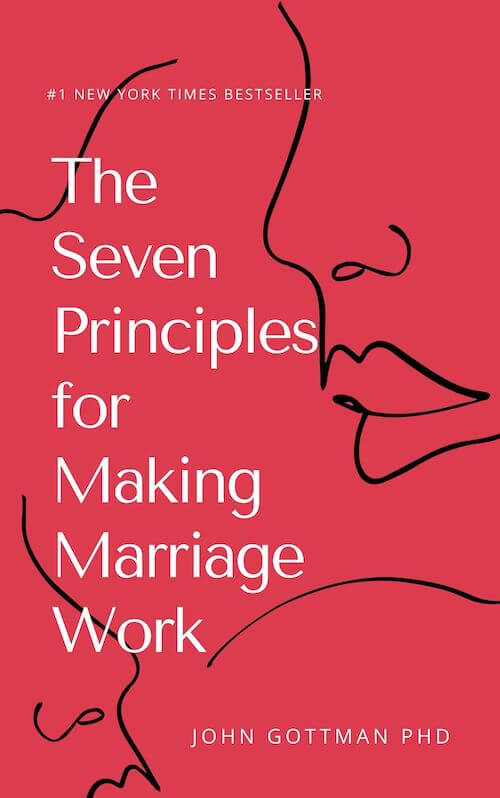
The Seven Principles for Making Marriage Work Book Summary
This The Seven Principles for Making Marriage Work Book Summary covers the key ideas, lessons, and takeaways in about 20 minutes.
Helps with these goals
Want the complete 20-minute summary?
- Full structured summary
- Video Summary
- Podcast Summary
- Audio summary
- Key takeaways
- Exercises
- Quiz
- Highlights and notes
- Ask the book with AI
What is in the The Seven Principles for Making Marriage Work book summary?
Below is a preview of Sumizeit’s expert-written summary of The Seven Principles for Making Marriage Work by John Gottman. The full summary covers the book’s key ideas in text, audio, and video.
Have you ever heard someone say that avoiding conflict can destroy marriages? Believe it or not, it doesn’t matter if you talk about everything or avoid conflict completely with your spouse as long as both partners are satisfied with the approach. Shocking, right? How about this one? Have you ever heard: a healthy relationship includes lots of reciprocity? Well, it is also false! Reciprocity doesn’t mean a relationship is healthy. In fact, relationships, where people do things for their partner because they feel happy in the relationship, are significantly more successful than those where couples keep tabs on who’s doing what for who. With so many rumors flying around, it can be hard to find solid advice for building a healthy relationship. Luckily, in The Seven Principles for Making Marriage Work, John M. Gottman and Nan Silver discuss the seven principles that make relationships healthy. Learn about these 7 principles below, plus: the four biggest indicators of divorce, what the heck a love map is (and why it matters for your relationship), and how to deal with tricky relationship issues (like sex, money, and the dreaded inlaws).
John M. Gottman is well versed in relationships. He has conducted over forty years of research, working with countless couples to better understand what makes relationships work, and what makes them fall apart. He is so well versed in relationships that he can tell in roughly five minutes whether a couple will be successful (with a 91% success rate at predicting divorce). How does he know if a couple is headed for the rocks? They do these four things. First, they criticize. In the context of an unhealthy relationship, criticism can look like one partner asking the other, “What’s wrong with you” instead of addressing the situation at hand. They also engage in contempt. Contempt in relationships is usually fueled by long-standing negative thoughts that partners feel for each other. Couples who engage in contempt do things like roll their eyes when their partner is talking, mock them, or make hostile jokes. The author warns that contempt can be worse than all of the other horsemen, and is a surefire sign that a couple is in serious trouble. The third is defensiveness: when a person in the relationship is questioned, instead of accepting blame or explaining themselves, they tend to blame the other partner right-back or refuse to examine their part in the conflict. The fourth is stonewalling. This is when a person in the couple completely shuts down during conflicts and shuts out their partner. These four horsemen can end marriages. Oh, speaking of divorce, there are a few stages couples normally go through before that happens. First, they believe their marital problems are horrible. Second, partners feel that discussing issues with each other is pointless. Third, both people in the marriage will begin living lives that are parallel, with no intersection. Finally, for most, loneliness will begin to set in. Yikes!
Want the complete 20-minute summary?
- Full structured summary
- Video Summary
- Podcast Summary
- Audio summary
- Key takeaways
- Exercises
- Quiz
- Highlights and notes
- Ask the book with AI
Who should read The Seven Principles for Making Marriage Work?
The Seven Principles for Making Marriage Work is ideal for couples seeking to strengthen their relationship, whether you're newlyweds, facing challenges, or simply wanting to deepen your connection. It's also valuable for therapists, counselors, and anyone interested in understanding what truly makes marriages succeed or fail based on decades of research.
Why does The Seven Principles for Making Marriage Work matter?
With divorce rates remaining high and relationship advice often contradictory, John Gottman's evidence-based approach offers clarity grounded in over 40 years of rigorous research. This book cuts through popular myths about marriage and provides actionable strategies for avoiding the specific behaviors that predict divorce, helping couples build lasting, meaningful partnerships.
What are the key themes in The Seven Principles for Making Marriage Work?
- The Four Horsemen of the Apocalypse in relationships and how they predict divorce
- Building emotional intimacy through deep knowledge of your partner
- Managing conflict constructively without avoiding difficult conversations
- Power dynamics and mutual influence in healthy partnerships
- Creating shared meaning and rituals as relationship foundations
What are the key lessons from the The Seven Principles for Making Marriage Work book summary?
Criticism, Contempt, Defensiveness, and Stonewalling Predict Divorce
Gottman identified four specific negative behaviors—called the Four Horsemen—that reliably predict relationship failure. Recognizing and eliminating these patterns is essential for marriage survival.
A Love Map Builds Emotional Connection
Deeply knowing your partner's history, dreams, stressors, and values creates the foundation for intimacy. Regular, intentional conversations that map out who your partner is strengthen your relationship.
Fondness and Admiration Are Non-Negotiable
Relationships lacking fondness and admiration cannot survive long-term. Actively cultivating appreciation and positive memories together acts as a protective buffer against conflict.
Turning Toward Each Other Creates Resilience
Small gestures of connection and friendship deposits emotional currency into your relationship, making it easier to weather difficult periods without pulling apart.
Accepting Your Partner's Influence Is Critical
When one partner refuses to be influenced by the other, roughly 81% of couples eventually fail. Healthy relationships require shared power and genuine consideration of each other's perspectives.
Start Conflict Conversations Softly
How you begin a difficult discussion sets the tone for the entire conversation. Approaching issues with gentleness and using 'I' statements instead of blame increases the likelihood of productive resolution.
Self-Soothing During Conflict Prevents Escalation
Recognizing when you or your partner is becoming overwhelmed and taking breaks to calm down prevents arguments from spiraling into contempt and defensiveness.
Tolerance and Acceptance Matter More Than Change
You cannot fundamentally change your partner, so accepting their core nature while working through specific solvable problems is more effective than futile attempts at transformation.
Gridlock Reveals Unmet Fundamental Needs
When couples feel stuck on recurring issues, it often signals deeper dreams or needs that aren't being addressed. Identifying and discussing these hidden ideals can ease tension.
Shared Meaning Creates Spiritual Connection
Beyond happiness and function, couples benefit from rituals, symbols, and shared values that give their relationship emotional and spiritual significance.
Daily Micro-Connections Accumulate into Relationship Strength
Small daily practices—asking about each other's plans, end-of-day check-ins, physical affection—compound over time to maintain closeness and prevent drift.
How You Recover from Conflict Matters More Than the Conflict Itself
Gottman's research reveals that couples who repair relationships quickly after arguments experience greater stability than those who avoid conflict entirely.
Money Conflicts Often Reflect Deeper Value Misalignment
Financial disagreements may signal incompatible values or poor negotiation skills; addressing these root causes requires joint budgeting and transparent communication about priorities.
Sex and Housework Are Connected to Emotional Labor
When household responsibilities feel unfairly distributed, sexual intimacy and stress levels suffer; addressing labor equity often naturally improves both areas.
In-Law Boundaries Protect the Primary Relationship
Partners must present a united front to extended family and establish clear boundaries; uncomfortable conversations early prevent long-term resentment and loyalty conflicts.
Partnership Strength Before Parenthood Predicts Post-Baby Success
Couples who prioritize their friendship and connection before children arrive are better positioned to maintain that bond through the stressors of parenthood.
Stress Management Is a Couple's Responsibility
Creating a home environment that serves as a peaceful refuge and allowing partners to vent without judgment helps couples weather external pressures together.
Appreciation Must Be Expressed, Not Assumed
Simply feeling admiration for your partner isn't enough; verbalizing and demonstrating appreciation reinforces positive feelings and counteracts contempt.
Relationship Stages Exist Before Divorce
Couples typically progress through predictable stages—viewing problems as insurmountable, finding discussion pointless, living parallel lives, and finally experiencing loneliness—making early intervention crucial.
Want the complete 20-minute summary?
- Full structured summary
- Video Summary
- Podcast Summary
- Audio summary
- Key takeaways
- Exercises
- Quiz
- Highlights and notes
- Ask the book with AI
How can you apply ideas from The Seven Principles for Making Marriage Work?
- Create a detailed love map by writing down your partner's key relationships, recent events, stressors, dreams, and goals; update it regularly to deepen your knowledge
- Establish a weekly date night and daily connection rituals such as morning goodbyes and end-of-day check-ins to maintain emotional closeness
- When addressing conflict, use soft startup techniques by expressing your perspective with 'I' statements rather than blame, and avoid criticism that attacks your partner's character
- Develop shared family rituals—consistent dinner times, bedtime routines, holiday traditions—that hold emotional meaning and reinforce your partnership's significance
- Create a fair household task distribution list and review it regularly, ensuring both partners feel the labor is equitable and recognizing household help's impact on other relationship areas
- Practice stress-reducing conversations where one partner talks while the other listens without offering advice, validates emotions, and maintains an 'us against the problem' mindset
- Build an appreciation list of your partner's qualities and share it with them; periodically review the positive history and values that brought you together
What common mistakes do readers make with The Seven Principles for Making Marriage Work?
- Assuming that avoiding conflict altogether or engaging in constant debate equally harms relationships; the real danger lies in how couples handle disagreements, not whether they have them
- Believing reciprocity and scorekeeping ensure fairness; healthy couples act from love and satisfaction rather than tracking who owes whom, which erodes goodwill
- Starting difficult conversations with criticism or blame, which immediately triggers defensiveness and derails productive dialogue before it begins
- Neglecting to recognize gridlock as a signal of unmet fundamental needs; instead, couples continue battling the surface issue without addressing the deeper dream or value
- Failing to establish boundaries with in-laws, allowing their interference to create a wedge between partners and undermine the primary relationship
Sumizeit Exercises Apply what you've learned
Turn ideas from The Seven Principles for Making Marriage Work into action with a short guided reflection: identify the biggest takeaway, connect it to your life, and commit to one step you can take in the next 24 hours.
What is the expert analysis of The Seven Principles for Making Marriage Work?
Overview
The Seven Principles for Making Marriage Work is a seminal work by John M. Gottman, a distinguished psychological researcher and clinician renowned for his pioneering studies on marital stability and divorce prediction. Drawing on over four decades of empirical research and clinical practice, Gottman distills complex relational dynamics into seven actionable principles designed to foster enduring, healthy marriages. Co-authored with Nan Silver, this book has become a cornerstone in both academic and popular discussions of relationship science, bridging rigorous data-driven insights with accessible guidance for couples seeking to improve their partnerships.
Core Thesis
At the heart of Gottman’s argument is the assertion that successful marriages are less about avoiding conflict and more about how partners manage their interactions, particularly during times of stress. He identifies four destructive behaviors—criticism, contempt, defensiveness, and stonewalling—that predict marital dissolution with remarkable accuracy. Conversely, he proposes seven principles that cultivate intimacy, mutual respect, and constructive conflict resolution. These principles emphasize deep knowledge of one’s partner (love maps), nurturing fondness and admiration, turning towards each other rather than away, sharing influence, solving solvable problems, overcoming gridlock by addressing underlying dreams, and creating shared meaning. Together, these elements form a comprehensive framework for sustaining marital satisfaction and resilience.
Strengths
- Empirical Foundation: Gottman’s work is distinguished by its rigorous, longitudinal research methodology, including direct observation and physiological monitoring of couples, lending strong scientific credibility to his claims.
- Practical Applicability: The principles are translated into clear, actionable exercises and strategies that couples can implement, making the book highly accessible without sacrificing depth.
- Holistic Approach: The book addresses a broad spectrum of relational issues—from emotional intimacy and communication to power dynamics and shared rituals—offering a nuanced understanding of what sustains marriages beyond mere conflict avoidance.
- Predictive Accuracy: Gottman’s identification of the “Four Horsemen” as reliable predictors of divorce is a notable contribution to both clinical practice and relationship counseling.
- Integration of Emotional and Behavioral Insights: The emphasis on emotional attunement, such as nurturing fondness and admiration, alongside behavioral strategies, provides a balanced approach to relationship health.
Critiques & Counterarguments
- Overemphasis on Predictive Certainty: While Gottman’s statistical models are impressive, critics argue that framing divorce prediction as near-certain risks oversimplifying the fluid and multifaceted nature of human relationships, which can be influenced by numerous external and internal variables beyond observed behaviors.
- Potential Cultural Bias: The research predominantly samples Western, often middle-class couples, which may limit the universality of the principles across diverse cultural contexts where relationship norms and power dynamics differ significantly.
- Reductionism of Complex Dynamics: Some scholars contend that categorizing behaviors into the “Four Horsemen” may neglect deeper systemic issues such as socioeconomic stress, mental health disorders, or trauma histories that also critically impact marital outcomes.
- Alternative Theoretical Perspectives: Attachment theory, for example, offers a different lens emphasizing early relational templates and emotional regulation capacities, suggesting that some conflicts arise from deeper developmental patterns not fully addressed by Gottman’s behavioral focus.
- Real-World Variability: Empirical evidence from longitudinal studies outside Gottman’s lab sometimes shows couples who exhibit “horsemen” behaviors yet maintain stable relationships, indicating that contextual factors and individual differences modulate outcomes.
Who Should Read This
This book is indispensable for relationship therapists, counselors, and psychologists seeking evidence-based frameworks for intervention. It is equally valuable for couples committed to deepening their understanding of relational dynamics and actively improving their partnership. Readers with an interest in the intersection of psychology and interpersonal relationships will appreciate the blend of scientific rigor and practical wisdom. However, those looking for culturally nuanced or trauma-informed perspectives may need to supplement this work with additional sources. Overall, it serves as a foundational text for anyone invested in the art and science of sustaining healthy, fulfilling marriages.
Frequently asked questions about the The Seven Principles for Making Marriage Work book summary
What is The Seven Principles for Making Marriage Work about?
The Seven Principles for Making Marriage Work by John Gottman and Nan Silver is a research-based guide to building and maintaining healthy marriages. Drawing from over 40 years of research, the book identifies the behaviors that predict divorce and presents seven actionable principles—from building a love map and nurturing fondness to managing conflict and creating shared meaning—that help couples strengthen their relationships.
Who should read The Seven Principles for Making Marriage Work?
This book is ideal for any couple seeking to strengthen their relationship, including newlyweds, long-married couples facing challenges, and those simply wanting to deepen their connection. It's also valuable for therapists, counselors, and relationship professionals looking for evidence-based strategies grounded in decades of research.
What are the main takeaways from The Seven Principles for Making Marriage Work?
The main takeaways include recognizing the Four Horsemen (criticism, contempt, defensiveness, stonewalling) that predict divorce; building emotional intimacy through a deep love map; cultivating fondness and admiration; managing conflict softly; accepting your partner's influence; resolving gridlock by addressing unmet needs; and creating shared meaning through rituals and symbols. Daily micro-connections and how couples recover from conflict matter more than avoiding disagreement entirely.
What are the Four Horsemen and why do they predict divorce?
The Four Horsemen are criticism (attacking your partner's character rather than addressing behavior), contempt (expressing disdain through eye-rolling or mockery), defensiveness (deflecting blame rather than taking responsibility), and stonewalling (shutting down emotionally during conflict). Gottman identified these patterns through decades of research and can predict divorce with 91% accuracy when these behaviors are present, as they systematically erode respect, affection, and connection.
What is a love map and how do I build one?
A love map is a detailed understanding of your partner's inner world—their relationships, dreams, stressors, values, and history. You build one by asking intentional questions and writing down information about your partner's important people, recent and upcoming events, current challenges, hopes, and legacy goals. The deeper your love map, the greater your emotional intimacy and relationship satisfaction.
How should couples handle money disagreements according to Gottman?
Gottman recommends couples create budgets together, discuss what spending is non-negotiable, write out current expenditures, manage everyday finances transparently, and plan for the financial future as a team. Often, money conflicts signal deeper value misalignment, so addressing underlying priorities and negotiating as partners rather than opponents resolves disputes more effectively.
What does gridlock mean and how do I overcome it?
Gridlock occurs when one partner's fundamental need—such as freedom, stability, or spiritual growth—isn't being addressed, often due to hidden dreams or ideals. To overcome it, identify the underlying dream, explain it to your partner, listen to theirs with genuine attention, and find ways to compromise or honor both needs. This transforms the conflict from unsolvable to manageable.
Why does Gottman say how couples recover from conflict matters more than the conflict itself?
Gottman's research shows that all couples disagree, but those who repair their relationship quickly after arguments experience greater stability and satisfaction. This means the ability to apologize, take responsibility, soothe yourself and your partner, and reconnect after tension is more predictive of marriage success than whether you argue frequently.
About Sumizeit
Sumizeit is a profitable Scomy LLC company based in Miami, Florida. It has been helping readers learn from nonfiction books for 7 years with expert-written summaries in text, audio, podcast, and video.
Want the complete 20-minute summary?
- Full structured summary
- Video Summary
- Podcast Summary
- Audio summary
- Key takeaways
- Exercises
- Quiz
- Highlights and notes
- Ask the book with AI
Here's why readers love Sumizeit
Join thousands of learners getting smarter every day
"Great experience. Detailed summaries. Loved the gamification feature. Makes learning fun. Good customer service. I recommend Sumizeit to anyone. You'll learn a lot."
"I always felt busy but still wanting to keep up with the book discussion in my friend group. This was a great supplement to help me keep reading the books I find fun while keeping up with important books."
"I love this website. Instead of scrolling social media, I find myself learning a lot. I use it everyday. I recommend this app for anyone who is too busy and wants to get up to speed with their favorite books."
The Seven Principles for Making Marriage Work Book Summary PDF
Looking for a The Seven Principles for Making Marriage Work Book Summary PDF you can save and revisit offline? Our The Seven Principles for Making Marriage Work Book Summary PDF captures the book’s core ideas in a clean, printable format — the key frameworks, takeaways, and structure without the fluff. Download the The Seven Principles for Making Marriage Work Book Summary PDF when you want a reference you can annotate, share with your team, or review on the go. Get your The Seven Principles for Making Marriage Work Book Summary PDF from the download page below.
Download The Seven Principles for Making Marriage Work Book Summary PDFPeople also liked these summaries
Readers who explored The Seven Principles for Making Marriage Work often enjoyed these titles next.





Want the complete 20-minute summary?
- Full structured summary
- Video Summary
- Podcast Summary
- Audio summary
- Key takeaways
- Exercises
- Quiz
- Highlights and notes
- Ask the book with AI
Featured Book Titles
Popular Book Summaries at sumizeit, leading book summary app