


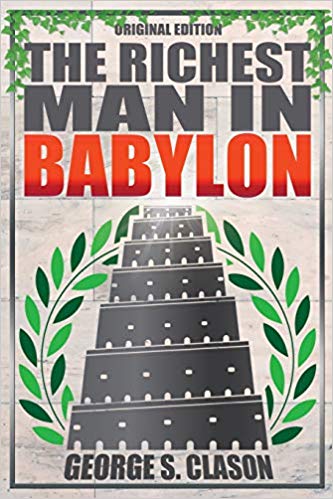
Prefer the print book? Buy on Amazon
As an Amazon Associate, Sumizeit earns from qualifying purchases.
The Richest Man in Babylon Book Summary
This The Richest Man in Babylon Book Summary covers the key ideas, lessons, and takeaways in about 20 minutes.
Short Description:
The Richest Man in Babylon teaches timeless financial wisdom through stories.
Helps with these goals
Want a Free Weekly Read?
Get a free summary every week straight to your mailbox.
Preview the The Richest Man in Babylon book summary
Below is a preview of Sumizeit’s comprehensive human-written summary of The Richest Man in Babylon by George S. Clason. The full summary is 15-20 minutes long and covers the book’s key ideas in text, audio, visual, and video formats. Unlock the full 20 Minute Summary
The Richest Man in Babylon presents financial education through storytelling rather than instruction manuals. Set in the legendary city of Babylon—depicted as the wealthiest and most advanced civilization of its era—the book uses parables to explore why some people prosper financially while others struggle despite working just as hard. Babylon is portrayed as a city that did not rely on natural abundance but instead grew rich through planning, discipline, and knowledge. This setting reinforces the book’s core argument: wealth is not a matter of luck, inheritance, or special talent, but the result of learning and applying enduring principles of money management .
Rather than addressing modern financial instruments, the book focuses on human behavior: habits, decision-making, patience, and responsibility. By anchoring its lessons in ancient stories, the book suggests that the rules governing money have not changed over thousands of years. People still earn, spend, save, lose, and grow money in predictable ways, and those who understand these patterns gain lasting security.
Arkad: From Humble Beginnings to Financial Mastery
At the center of the book is Arkad, a fictional figure revered as the wealthiest man in Babylon. His significance lies not in inherited privilege or sudden fortune, but in transformation. Arkad begins his working life as a low-paid scribe, earning barely enough to survive. He notices, however, that those who produce more valuable work are rewarded more generously. Rather than resenting this reality, Arkad uses it as motivation to improve his skills, increase his output, and raise his earning capacity.
A turning point occurs when Arkad seeks advice from a wealthy money lender. Instead of being offered secret tricks or shortcuts, he is given a deceptively simple insight: anyone who keeps all their earnings for spending will never accumulate wealth. The wealthy, by contrast, always reserve a portion of what they earn. This idea reshapes Arkad’s understanding of money. He realizes that income alone does not determine prosperity—what matters is what you keep and how you use it.
Arkad adopts the habit of consistently setting aside a portion of every payment he receives. At first, the amount feels small and insignificant, but over time it becomes the foundation of his independence. Crucially, Arkad discovers that saving does not require deprivation. By adjusting his lifestyle and prioritizing essentials, he learns that living well on less than one’s income is not only possible but empowering.
Paying Yourself Before Anyone Else
One of the book’s most enduring ideas is the practice of prioritizing personal savings before any other expense. Arkad teaches that most people mistakenly believe all their earnings belong to them, yet in reality, nearly everything they earn is claimed by others—merchants, landlords, craftsmen, and lenders. Only the money deliberately set aside remains under one’s control.
By consistently reserving a fixed share of income, a person creates the habit of ownership. This saved portion is treated not as spare change but as the seed of future wealth. Over time, this practice builds confidence and momentum, as saving becomes automatic rather than optional.
Want the complete 20-minute summary?
- Full structured summary
- Video Summary
- Podcast Summary
- Audio summary
- Key takeaways
- Exercises
- Quiz
- Highlights and notes
- Ask the book with AI
Who should read The Richest Man in Babylon?
The Richest Man in Babylon is for anyone struggling to build wealth or feeling trapped by financial circumstances, regardless of current income level. It speaks to people who want to understand money management through timeless principles rather than complex financial instruments, and to those seeking clarity on why some people prosper while others perpetually struggle despite earning similar amounts.
Why does The Richest Man in Babylon matter?
In an era of rising debt, consumer spending, and financial complexity, this book reminds readers that wealth-building fundamentals haven't changed in thousands of years. By stripping away modern jargon and anchoring lessons in ancient storytelling, George S. Clason demonstrates that financial success depends on behavior and discipline rather than luck or special knowledge, making it relevant whether you're navigating today's economy or planning for future stability.
What are the key themes in The Richest Man in Babylon?
- Wealth is built through consistent habits, not luck or inheritance
- Pay yourself first by saving before any other expense
- Discipline in spending is as important as earning more
- Money must work for you through wise investments
- Protecting wealth from loss is essential to long-term security
- Personal improvement and skill development increase earning power
- Financial wisdom must be learned through practice, not inherited
How can you apply ideas from The Richest Man in Babylon?
- Automatically set aside a fixed percentage of your paycheck before spending anything else, treating this savings like a non-negotiable expense
- Create a written budget that clearly distinguishes between essential expenses and discretionary wants, then enforce it consistently
- Research and invest saved money in income-generating ventures or assets where you have genuine knowledge or expert guidance
- Develop a skill or expertise that increases your market value, then actively market this improved ability to earn higher income
- Establish an emergency fund and insurance coverage to protect accumulated wealth against unexpected loss or hardship
- Review investment opportunities carefully before committing money, avoiding anything that promises unusually fast returns or relies on insufficient knowledge
- Create a long-term plan for owning appreciating assets like a home that reduce recurring expenses and build lasting value
What common mistakes do readers make with The Richest Man in Babylon?
- Waiting for the 'perfect time' to start saving rather than beginning immediately with whatever amount is possible
- Allowing lifestyle spending to expand automatically whenever income increases, eliminating any margin for wealth building
- Investing money in areas without adequate knowledge or expert guidance, mistaking enthusiasm for competence
- Treating saved money as surplus available for spending rather than as the foundation of future security and independence
Sumizeit Exercises Apply what you've learned
Turn ideas from The Richest Man in Babylon into action with a short guided reflection: identify the biggest takeaway, connect it to your life, and commit to one step you can take in the next 24 hours.
What is the expert analysis of The Richest Man in Babylon?
Overview
The Richest Man in Babylon, authored by George S. Clason, stands as a seminal work in the realm of personal finance literature. First published in 1926, this book distinguishes itself by delivering financial wisdom through engaging parables set in ancient Babylon, a metaphorical backdrop representing the pinnacle of economic success in antiquity. Clason’s innovative narrative approach transforms abstract financial principles into accessible, timeless lessons, making complex money management concepts relatable and memorable. His work laid foundational ideas that continue to influence contemporary personal finance education, emphasizing behavioral change over technical jargon.
Core Thesis
Clason’s central argument is that wealth accumulation is less a product of luck, inheritance, or innate talent and more the outcome of disciplined habits, prudent decision-making, and consistent application of fundamental financial principles. By illustrating that the laws governing money transcend time and culture, the book asserts that anyone, regardless of their starting point, can achieve financial security and independence through saving a portion of their income, thoughtful spending, wise investment, protection of assets, and continuous self-improvement. The narrative underscores that financial success is built incrementally through daily choices rather than sudden windfalls.
Strengths
- Timelessness and Universality: By anchoring its lessons in ancient parables, the book transcends historical and cultural boundaries, suggesting that human financial behavior and the principles of wealth creation remain constant across eras.
- Behavioral Focus: Clason emphasizes the psychology behind money management—habits, patience, responsibility—over technical financial instruments, making the content broadly applicable and psychologically insightful.
- Clarity and Accessibility: The use of storytelling simplifies complex ideas, making them digestible for readers without prior financial knowledge, while retaining depth for more sophisticated audiences.
- Holistic Financial Wisdom: The book balances saving, spending, investing, risk management, and self-improvement, offering a comprehensive framework rather than isolated tips.
- Enduring Influence: Its principles have informed modern personal finance movements, particularly the emphasis on “paying yourself first” and living within one’s means.
Critiques & Counterarguments
- Historical and Contextual Simplification: While the Babylonian setting is evocative, the parables simplify complex economic realities, potentially glossing over structural factors like systemic inequality or market volatility that affect wealth accumulation today.
- Lack of Empirical Evidence: The book’s reliance on anecdotal storytelling and moral lessons means it does not engage with empirical financial data or contemporary economic research that could nuance or challenge its claims.
- Overemphasis on Individual Responsibility: The narrative strongly promotes personal discipline and self-improvement but underrepresents external factors such as economic cycles, discrimination, or access to capital, which can limit financial mobility.
- Investment Advice Limitations: The book advocates for cautious investment and reliance on expert advice but does not address the complexities of modern financial markets, diversification, or risk-adjusted returns, which are critical for contemporary investors.
- Opposing Schools of Thought: Behavioral economics and modern finance research highlight cognitive biases and systemic barriers that complicate the straightforward application of Clason’s principles. For example, the “scarcity mindset” and psychological stress of poverty can impede saving habits despite awareness.
Who Should Read This
The Richest Man in Babylon is ideally suited for readers seeking foundational financial wisdom conveyed through engaging narrative rather than technical manuals. It appeals to those at the beginning of their financial journey who benefit from motivational, principle-based guidance emphasizing habit formation and personal responsibility. Additionally, readers interested in the psychological and philosophical dimensions of money management will find its behavioral insights valuable. While not a substitute for advanced financial planning or investment strategy, it serves as an enduring primer for anyone committed to cultivating disciplined money habits and long-term financial security.
Frequently asked questions about the The Richest Man in Babylon book summary
What is The Richest Man in Babylon about?
The Richest Man in Babylon by George S. Clason is a financial education book that teaches wealth-building principles through ancient parables set in the legendary city of Babylon. Through stories of characters like Arkad, the richest man in the city, the book explains that financial success comes from saving consistently, spending wisely, investing intelligently, and protecting wealth from loss—principles that have remained unchanged for thousands of years.
Who should read The Richest Man in Babylon?
Anyone struggling to build wealth or overcome financial challenges should read this book, regardless of their current income or circumstances. It's valuable for people who feel trapped by debt, want to understand why they can't seem to get ahead despite earning decent money, or seek timeless financial principles without complex jargon. The book is also ideal for those seeking clarity on personal responsibility in wealth creation.
What are the main takeaways from The Richest Man in Babylon?
The main takeaways are: save a consistent portion of every dollar you earn before spending on anything else, live below your means without deprivation, invest your savings in productive ventures, protect your wealth carefully from loss, continuously improve your skills to increase earning power, and accept responsibility for your financial outcomes. These habits, practiced consistently over time, compound to create lasting financial security and independence.
Is The Richest Man in Babylon still relevant today?
Yes, The Richest Man in Babylon remains highly relevant because human behavior around money hasn't fundamentally changed despite modern technologies and financial instruments. The core principles of saving first, disciplined spending, wise investment, and protecting wealth apply whether you're navigating today's digital economy or managing traditional finances. The book's timeless approach actually makes it more useful in our complex modern world by cutting through jargon to focus on behavioral fundamentals.
What is the 'pay yourself first' concept explained in the book?
Pay yourself first means setting aside a portion of your income for savings and investment before paying any other expense. Rather than saving whatever is left after spending, you reverse the priority and treat savings as a non-negotiable expense that comes first. This habit builds discipline, creates a psychological sense of ownership, and ensures that wealth accumulation actually happens instead of being perpetually delayed.
What are the Five Laws of Gold?
The Five Laws of Gold are Arkad's distilled financial principles: save a portion of your earnings, invest those savings wisely, seek expert advice before investing, avoid ignorance-driven decisions, and resist schemes promising effortless wealth. These laws form the foundation of the book's teaching and are tested through the story of Arkad's son, demonstrating that financial wisdom must be learned through experience rather than simply inherited or given.
Can someone in debt benefit from reading The Richest Man in Babylon?
Absolutely. The book argues that even people burdened by debt should begin saving immediately rather than waiting for circumstances to improve. This practice builds the habit of financial responsibility, provides psychological momentum, and creates a foundation for recovery. By accepting responsibility for their situation and applying the book's principles consistently, those in debt can transform their financial trajectory.
About Sumizeit
Sumizeit is a profitable Scomy LLC company based in Miami, Florida. Our founders, Clemens Raemy and Weina Scott, are successful entrepreneurs with several exits. Sumizeit is a popular book summary app / micro learning app used by busy professionals and entrepreneurs with over 2,500 non-fiction book summaries and 10,000 podcast summaries in text, audio, visual, podcast, and video format. We also have stellar retention tools to make ideas stick - such as flashcards with spaced repetition, quizzes, streaks, highlighting and notes, daily challenges, riddles, mini-courses, meditation, and more. You won't only learn the idea, but also remember it. Over 90% of our users change their habits with Sumizeit.
Upgrade Now
Here's why readers love Sumizeit
Join thousands of learners getting smarter every day
"Great experience. Detailed summaries. Loved the gamification feature. Makes learning fun. Good customer service. I recommend Sumizeit to anyone. You'll learn a lot."
"I always felt busy but still wanting to keep up with the book discussion in my friend group. This was a great supplement to help me keep reading the books I find fun while keeping up with important books."
"I love this website. Instead of scrolling social media, I find myself learning a lot. I use it everyday. I recommend this app for anyone who is too busy and wants to get up to speed with their favorite books."
The Richest Man in Babylon Book Summary PDF
Looking for a The Richest Man in Babylon Book Summary PDF you can save and revisit offline? Our The Richest Man in Babylon Book Summary PDF captures the book’s core ideas in a clean, printable format — the key frameworks, takeaways, and structure without the fluff. Download the The Richest Man in Babylon Book Summary PDF when you want a reference you can annotate, share with your team, or review on the go. Get your The Richest Man in Babylon Book Summary PDF from the download page below.
Download The Richest Man in Babylon Book Summary PDFPeople also liked these summaries
Readers who explored The Richest Man in Babylon often enjoyed these titles next.



Ready to read the whole thing?
- Full structured summary
- Video Summary
- Podcast Summary
- Audio summary
- Key takeaways
- Exercises
- Quiz
- Highlights and notes
- Ask the book with AI
Featured Book Titles
Popular Book Summaries at sumizeit, leading book summary app