


As an Amazon Associate, Sumizeit earns from qualifying purchases.
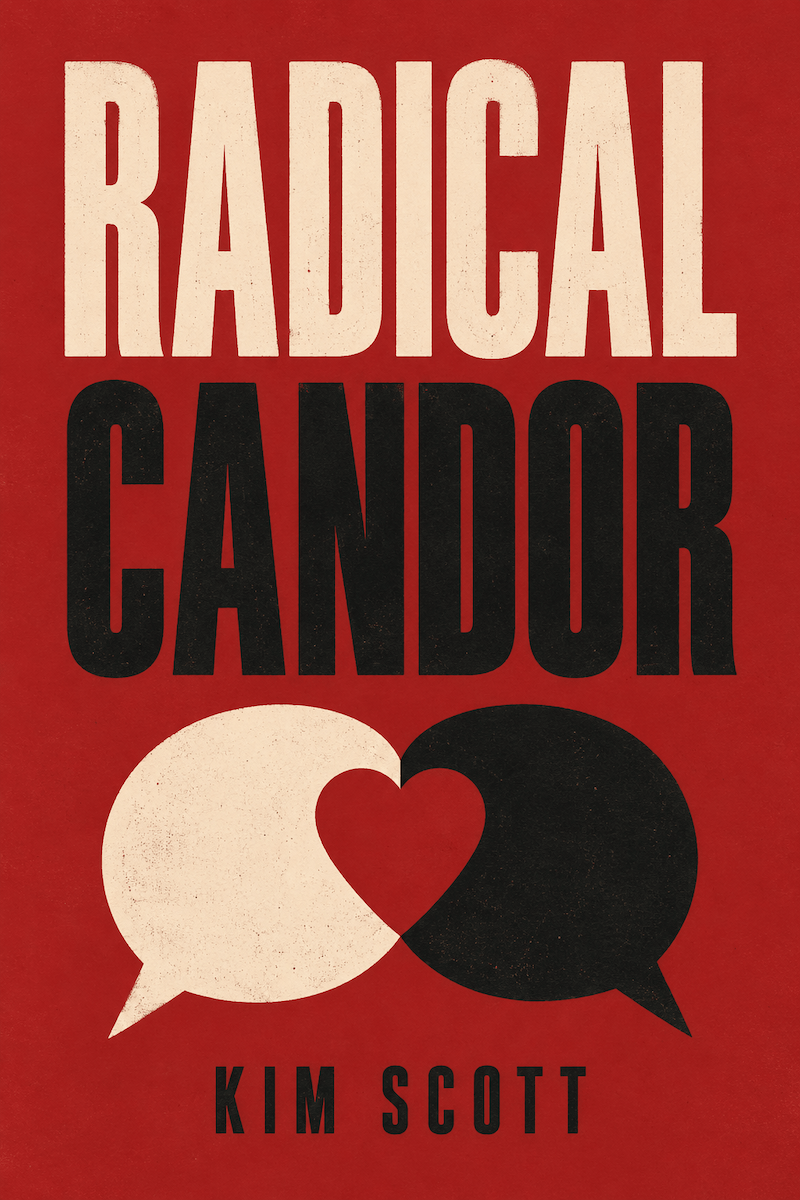
Radical Candor Book Summary
This Radical Candor Book Summary covers the key ideas, lessons, and takeaways in about 20 minutes.
The book redefines feedback as guidance rather than criticism. When leaders model openness by seeking feedback first, it builds psychological safety and encourages others to do the same. Radical Candor also transforms how teams operate: instead of avoiding tension, they debate ideas, learn continuously, and make decisions collaboratively.
Ultimately, Scott’s message is that being a “kick-ass boss” means being both compassionate and courageous. Leaders who practice Radical Candor empower people to do their best work, cultivate accountability without resentment, and build teams that are not only high-performing but deeply connected and motivated by mutual respect.
Helps with these goals
Want the complete 20-minute summary?
- Full structured summary
- Video Summary
- Podcast Summary
- Audio summary
- Infographic
- Key takeaways
- Exercises
- Quiz
- Highlights and notes
- Ask the book with AI
What is in the Radical Candor book summary?
Below is a preview of Sumizeit’s expert-written summary of Radical Candor by Kim Scott. The full summary covers the book’s key ideas in text, audio, and video.
Overview
In Radical Candor, Kim Scott reimagines what it truly means to lead people. The book argues that effective management is neither about being overly harsh nor about being overly nice—it’s about mastering the delicate art of balancing honesty with empathy. A great boss, according to Scott, is one who both cares deeply about their people and challenges them directly. When these two elements work together, they create trust, growth, and a culture where everyone can thrive.
Drawing from her experiences as a leader at Google, a coach at Apple, and a mentor to Silicon Valley executives, Scott introduces practical strategies for building a transparent, high-performing team. Through personal anecdotes—like her time working with Sheryl Sandberg and lessons learned from leaders like Steve Jobs and Tim Cook—she breaks down how to have tough conversations, encourage feedback, develop individual potential, and get extraordinary results without losing humanity in the process.
The Foundation: Care Personally and Challenge Directly
The heart of Radical Candor lies in the intersection of two principles: Caring Personally and Challenging Directly.
Caring personally means genuinely understanding your employees beyond their job titles—knowing what motivates them, what worries them, and what they aspire to become. It’s showing that you see them as people, not as “resources.” This care fosters psychological safety—a vital condition for innovation and honest dialogue.
Challenging directly, on the other hand, means being forthright and clear about performance issues or areas for growth. It’s not about sugarcoating or avoiding hard truths—it’s about communicating them with compassion and precision. When managers care personally but fail to challenge, they fall into Ruinous Empathy—a place where kindness turns counterproductive. When they challenge without care, they slip into Obnoxious Aggression, delivering feedback that feels cruel. And when they do neither, they embody Manipulative Insincerity, the worst zone where dishonesty and apathy dominate.
Radical Candor is achieved when a leader truly listens, gives feedback honestly, and helps team members succeed in their own right.
Building a Feedback-Driven Culture
Scott emphasizes that to build a healthy culture of feedback, managers must lead by example. Before giving feedback, they should show vulnerability by soliciting it first. Asking, “What’s one thing I could do differently to make working with me easier?” signals openness and humility.
Once feedback is received, the key is to listen without defensiveness. If you react negatively, employees will stop being honest. Managers should reward candor—by acting on it when possible or explaining transparently why they can’t. This openness fosters psychological safety, where employees know their voices matter.
Over time, this practice creates a feedback loop that strengthens trust and communication across all levels of the organization. Scott calls this “building the listening muscle.”
Balancing Praise and Criticism
Scott teaches that effective guidance requires both positive and corrective feedback. Praise fuels confidence and reinforces desired behaviors; criticism sparks growth and learning. However, both must be genuine, specific, and timely.
For example, instead of vague compliments like “good job,” meaningful praise would be: “Your presentation clearly…
Want the complete 20-minute summary?
- Full structured summary
- Video Summary
- Podcast Summary
- Audio summary
- Infographic
- Key takeaways
- Exercises
- Quiz
- Highlights and notes
- Ask the book with AI
Who should read Radical Candor?
Radical Candor is essential for managers, team leaders, and executives who want to improve their leadership effectiveness. It's particularly valuable for anyone struggling to balance being likable with being direct, or those who sense that their team relationships lack authentic connection and honest feedback.
Why does Radical Candor matter?
In today's competitive workplace, retaining top talent and building high-performing teams requires more than standard management techniques. Radical Candor addresses a critical gap: most leaders default to either being too nice (avoiding hard conversations) or too harsh (damaging relationships), when what teams actually need is genuine care paired with direct, honest feedback that drives growth and trust.
What are the key themes in Radical Candor?
- Balancing care for people with direct challenge and feedback
- Building psychological safety through vulnerability and openness
- Understanding diverse growth trajectories and employee motivations
- Creating a feedback-driven culture where honesty fuels trust
- Collaborative decision-making and inclusive listening
- Distinguishing performance accountability from development conversations
What are the key lessons from the Radical Candor book summary?
Care Personally and Challenge Directly
The foundation of great leadership is combining genuine care for your people with clear, honest feedback about their performance. These two forces together create trust and growth; without both, you fall into ineffective zones like ruinous empathy or obnoxious aggression.
Solicit Feedback Before Giving It
Leaders who ask for feedback first demonstrate humility and openness, which gives employees permission to be candid in return. This builds psychological safety and strengthens the feedback muscle across the entire team.
Listen Without Defensiveness
When you receive feedback, responding defensively or dismissively signals that you don't actually want honest input. Listening openly and acting on feedback when possible shows that you truly value candor.
Be Specific and Timely With Praise and Criticism
Vague compliments and general criticism waste opportunities for growth. Specific, timely feedback tied to clear examples helps employees understand exactly what they did well and what they need to improve.
Maintain a Ratio of Praise to Criticism
Sustain motivation and trust by delivering roughly three to five pieces of genuine praise for every piece of constructive criticism. This balance reinforces desired behavior while keeping improvement on track.
Recognize Steep and Gradual Growth Trajectories
Some employees thrive on rapid growth and challenge (superstars), while others value deep expertise and stability (rockstars). High-performing teams need both types, and recognizing which trajectory fits each person allows you to motivate them appropriately.
Understand That Growth Trajectories Can Shift
People may move between steep and gradual growth paths as their life circumstances change. A leader on a steep trajectory might shift to gradual when starting a family, and this is normal and acceptable.
Have Three Key Conversations With Each Team Member
Deep understanding comes from discussing their life story (defining experiences), their dreams (aspirations), and a concrete 18-month plan (near-term growth roadmap). These conversations align personal goals with team needs.
Align Tasks With Aspirations
When you assign work that connects to an employee's long-term goals—like having a future teacher lead training sessions—you build motivation, loyalty, and purpose beyond the paycheck.
Use the GSD Wheel for Collaborative Decision-Making
The Get Stuff Done Wheel moves through Listen, Clarify, Debate, Decide, Persuade, Execute, and Learn. This framework ensures all voices are heard, conflicts are managed constructively, and decisions are owned collectively.
Listen More Than You Talk
The most respected leaders are those who create space for others' ideas through active, reflective listening. Whether quiet like Tim Cook or provocatively engaged like Steve Jobs, effective leaders are fundamentally good listeners.
Encourage Open Debate Before Deciding
Respectful disagreement and conflict lead to stronger decisions and deeper buy-in. Create an environment where people feel safe challenging ideas, then make a decisive call and explain the reasoning.
Praise in Public, Criticize in Private
Public recognition reinforces desired behavior and builds morale, while private feedback shows respect and care. This simple rule prevents embarrassment and preserves psychological safety.
Use Micro-Conversations for Continuous Guidance
Brief, informal feedback moments over coffee or in the hallway are often more impactful than formal reviews. Regular two-minute conversations keep communication flowing and prevent buildup of unaddressed issues.
Share Your Own Mistakes Openly
When leaders demonstrate vulnerability by admitting their errors, it normalizes feedback and shows that mistakes are learning opportunities rather than failures to hide.
Separate Performance and Development Conversations
Performance conversations focus on results and accountability, while development conversations center on growth and learning. Mixing them creates confusion; keeping them distinct makes each more effective.
Address Falling Stars With Honesty and Empathy
When performance declines, direct feedback and support should come first. If improvement doesn't follow, parting ways with transparency and care preserves team morale and demonstrates integrity.
Don't Neglect High Performers
It's easy to focus energy on struggling employees while top performers are left to fend for themselves. High achievers need your time, feedback, and growth opportunities to stay engaged and motivated.
Accept That Not Everyone Needs a Calling
Many employees work primarily for stability and a livable income rather than passionate purpose. Your job is to help them find meaning and satisfaction in their actual work, not to manufacture enthusiasm they don't feel.
Make Regular One-on-Ones Non-Negotiable
Consistent individual conversations are where you truly understand your people's aspirations, challenges, and development needs. These meetings are the foundation of Radical Candor in practice.
Want the complete 20-minute summary?
- Full structured summary
- Video Summary
- Podcast Summary
- Audio summary
- Infographic
- Key takeaways
- Exercises
- Quiz
- Highlights and notes
- Ask the book with AI
How can you apply ideas from Radical Candor?
- Ask your team weekly: 'What's one thing I could do differently to make working with me easier?' and genuinely listen without defending yourself
- Structure one-on-ones around three conversations: life story, dreams, and 18-month plan—then align upcoming assignments with what you learn
- Implement the GSD Wheel by explicitly walking through each stage (Listen, Clarify, Debate, Decide, Persuade, Execute, Learn) when making significant team decisions
- Create a feedback norm by delivering specific, timely praise and criticism in micro-conversations throughout the week, not just in formal reviews
- Assess each team member's growth trajectory and tailor your leadership approach—offer stretch goals and leadership opportunities for superstars, deep expertise and stability for rockstars
- Conduct transparent performance reviews using clear categories (results, teamwork, innovation, efficiency) with peer input and calibration to ensure fairness
- Practice 'loud listening' by asking provocative questions and showing genuine curiosity about your team's ideas before you share your own perspective
What common mistakes do readers make with Radical Candor?
- Avoiding difficult conversations out of fear of damaging relationships—this creates the 'ruinous empathy' zone where kindness becomes counterproductive
- Giving feedback that is harsh without care, which breeds resentment rather than growth and falls into 'obnoxious aggression'
- Over-focusing support and feedback on struggling employees while neglecting top performers who need challenge and investment to stay engaged
- Mixing performance accountability conversations with development and growth conversations, which confuses employees and undermines both goals
Sumizeit Exercises Apply what you've learned
Turn ideas from Radical Candor into action with a short guided reflection: identify the biggest takeaway, connect it to your life, and commit to one step you can take in the next 24 hours.
What is the expert analysis of Radical Candor?
Overview
Radical Candor, authored by Kim Scott, stands as a seminal work in contemporary leadership literature, particularly within the realms of business management and organizational psychology. Scott’s pedigree as a former executive at Google and Apple, coupled with her experience coaching Silicon Valley leaders, lends the book both credibility and practical insight. This work is significant because it challenges traditional paradigms of leadership that oscillate between authoritarianism and overly permissive management, advocating instead for a nuanced balance of empathy and directness. The book’s enduring influence stems from its actionable framework that addresses the human complexities of managing teams without sacrificing performance or authenticity.
Core Thesis
At the heart of Radical Candor lies the dual imperative for leaders to Care Personally while simultaneously Challenging Directly. Scott argues that effective leadership is not a zero-sum game between kindness and candor; rather, it is the intersection of these two qualities that fosters trust, psychological safety, and high performance. By genuinely caring about employees as individuals and delivering honest, compassionate feedback, leaders can cultivate a culture where open communication thrives, enabling growth for both individuals and organizations. This thesis reframes feedback from a dreaded managerial chore into a vital, ongoing dialogue that empowers rather than alienates.
Strengths
- Practical Framework: Scott’s quadrant model distinguishing Radical Candor from Ruinous Empathy, Obnoxious Aggression, and Manipulative Insincerity provides a clear, memorable heuristic for managers to self-assess and improve their communication style.
- Integration of Empathy and Directness: The book adeptly reconciles the tension between caring and challenging, offering a balanced approach that is psychologically astute and pragmatically effective.
- Rich Anecdotal Evidence: Drawing on Scott’s experiences with leaders like Sheryl Sandberg, Steve Jobs, and Tim Cook, the book grounds its concepts in real-world examples that resonate with readers familiar with high-stakes corporate environments.
- Actionable Strategies: Techniques such as soliciting feedback first, the GSD Wheel for collaborative decision-making, and structured career conversations provide concrete tools rather than abstract theory.
- Focus on Psychological Safety: The emphasis on creating an environment where employees feel safe to speak candidly aligns with contemporary research on innovation and team dynamics.
Critiques & Counterarguments
- Potential Oversimplification: While the quadrant framework is elegant, real-world interpersonal dynamics often resist such neat categorization. Human relationships and feedback exchanges can be more ambiguous and context-dependent than the model suggests.
- Limited Cultural Context: The book’s Silicon Valley-centric examples and assumptions may not translate seamlessly across diverse cultural or organizational contexts where norms around hierarchy, feedback, and communication differ significantly.
- Evidence Base: The book relies heavily on anecdotal evidence and Scott’s personal experience, with limited engagement with broader empirical research or countervailing studies in organizational behavior and psychology.
- Competing Theories: Alternative leadership models, such as servant leadership or transformational leadership, emphasize different virtues like humility or inspiration without the explicit focus on direct confrontation, suggesting that Radical Candor may not be universally optimal.
- Risk of Misapplication: Without careful calibration, attempts at Radical Candor could devolve into Obnoxious Aggression or be perceived as insincere, especially in environments lacking foundational trust or where power imbalances are pronounced.
Who Should Read This
Radical Candor is ideally suited for mid-to-senior level managers, team leaders, and executives who seek to refine their leadership style beyond traditional command-and-control or overly permissive approaches. It is particularly valuable for those operating in fast-paced, innovation-driven industries where candid feedback and rapid iteration are critical. Additionally, HR professionals and organizational development consultants may find Scott’s framework useful for designing leadership training and feedback systems. Readers interested in the intersection of emotional intelligence and practical management will appreciate the book’s blend of empathy and accountability. However, those working in highly hierarchical or culturally distinct environments should approach the book with a critical eye toward adaptation.
Frequently asked questions about the Radical Candor book summary
What is Radical Candor about?
Radical Candor by Kim Scott is about redefining leadership through a balance of two core principles: caring personally about your people while challenging them directly. The book teaches that great managers build trust and drive performance by combining genuine empathy with honest, specific feedback—avoiding the traps of being overly nice (ruinous empathy) or overly harsh (obnoxious aggression). Scott draws on her experience at Google, Apple, and as a coach to Silicon Valley executives to provide practical frameworks for building high-performing, human-centered teams.
Who should read Radical Candor?
Radical Candor is essential for managers, team leaders, directors, and executives who want to improve their leadership effectiveness and build stronger relationships with their teams. It's also valuable for anyone who struggles to balance being likable with being direct, or who feels that their team lacks authentic connection and honest communication. Whether you're new to managing or an experienced leader, this book offers frameworks and insights to transform how you lead.
What are the main takeaways from Radical Candor?
The core takeaways from Radical Candor are: (1) combine care for your people with direct feedback to build trust and growth; (2) create psychological safety by soliciting feedback first and listening without defensiveness; (3) understand that your team has different growth trajectories—some need challenge and rapid growth, others thrive on stability and deep expertise; (4) use the GSD Wheel framework for inclusive, collaborative decision-making; (5) give specific, timely feedback through regular micro-conversations rather than only formal reviews. Together, these practices reshape culture into one rooted in honesty, mutual respect, and continuous learning.
What is the difference between Ruinous Empathy and Radical Candor?
Ruinous Empathy happens when you care about your team but avoid challenging them directly—you prioritize being nice over giving honest feedback, which prevents growth and allows problems to fester. Radical Candor combines care with directness: you genuinely care about your people as individuals and also give them clear, honest feedback about their performance. The key difference is that Radical Candor shows more respect because you're willing to have hard conversations that actually help people improve, rather than protecting them from truth out of misplaced kindness.
What are superstars and rockstars in Radical Candor?
In Radical Candor, superstars are employees on a steep growth trajectory who thrive on challenge, rapid learning, and advancement. They drive innovation and need stretch goals and leadership opportunities. Rockstars are on a gradual growth trajectory—they value stability, deep expertise, and mastery in their roles. They provide continuity and are the reliable anchors of your team. High-performing organizations need both types, and great leaders recognize which trajectory fits each person and adapt their approach accordingly.
How do you implement the GSD Wheel?
The GSD (Get Stuff Done) Wheel is a seven-stage framework for collaborative decision-making: Listen (invite ideas from all corners), Clarify (refine and ensure understanding), Debate (encourage respectful disagreement), Decide (make a clear decision), Persuade (explain the 'why' to align everyone), Execute (act efficiently), and Learn (reflect on outcomes and feed learning back into the next cycle). To implement it, walk your team explicitly through each stage when making significant decisions, ensure everyone feels heard in the Listen and Debate phases, be decisive in the Decide phase, and close the loop by reflecting on results.
What are the three key conversations Kim Scott recommends having with team members?
Kim Scott recommends three conversations to deeply understand your people: (1) The Life Story Conversation—learn the defining experiences and decisions that shaped their career; (2) The Dream Conversation—explore their long-term aspirations, both professional and personal; (3) The 18-Month Plan—collaborate on a short-term roadmap for skill development and growth aligned with both their goals and team needs. Having these conversations allows you to tailor your leadership, assign meaningful work, and build genuine connection and motivation.
How do you give effective feedback according to Radical Candor?
Effective feedback in Radical Candor is specific, timely, and genuine. Instead of vague praise like 'good job,' say 'Your presentation clearly explained our goals and made the strategy easy for follow.' Instead of generic criticism, be precise: 'Your report was missing key metrics—let's review how to include those next time.' Deliver praise in public to reinforce behavior and build morale, and criticize in private to show respect and care. Maintain roughly a 3:1 to 5:1 ratio of praise to criticism, and use brief micro-conversations throughout the week rather than waiting for formal reviews.
About Sumizeit
Sumizeit is a profitable Scomy LLC company based in Miami, Florida. It has been helping readers learn from nonfiction books for 7 years with expert-written summaries in text, audio, podcast, and video.
Want the complete 20-minute summary?
- Full structured summary
- Video Summary
- Podcast Summary
- Audio summary
- Infographic
- Key takeaways
- Exercises
- Quiz
- Highlights and notes
- Ask the book with AI
Here's why readers love Sumizeit
Join thousands of learners getting smarter every day
"Great experience. Detailed summaries. Loved the gamification feature. Makes learning fun. Good customer service. I recommend Sumizeit to anyone. You'll learn a lot."
"I always felt busy but still wanting to keep up with the book discussion in my friend group. This was a great supplement to help me keep reading the books I find fun while keeping up with important books."
"I love this website. Instead of scrolling social media, I find myself learning a lot. I use it everyday. I recommend this app for anyone who is too busy and wants to get up to speed with their favorite books."
Radical Candor Book Summary PDF
Looking for a Radical Candor Book Summary PDF you can save and revisit offline? Our Radical Candor Book Summary PDF captures the book’s core ideas in a clean, printable format — the key frameworks, takeaways, and structure without the fluff. Download the Radical Candor Book Summary PDF when you want a reference you can annotate, share with your team, or review on the go. Get your Radical Candor Book Summary PDF from the download page below.
Download Radical Candor Book Summary PDFPeople also liked these summaries
Readers who explored Radical Candor often enjoyed these titles next.




Want the complete 20-minute summary?
- Full structured summary
- Video Summary
- Podcast Summary
- Audio summary
- Infographic
- Key takeaways
- Exercises
- Quiz
- Highlights and notes
- Ask the book with AI
Featured Book Titles
Popular Book Summaries at sumizeit, leading book summary app