


As an Amazon Associate, Sumizeit earns from qualifying purchases.
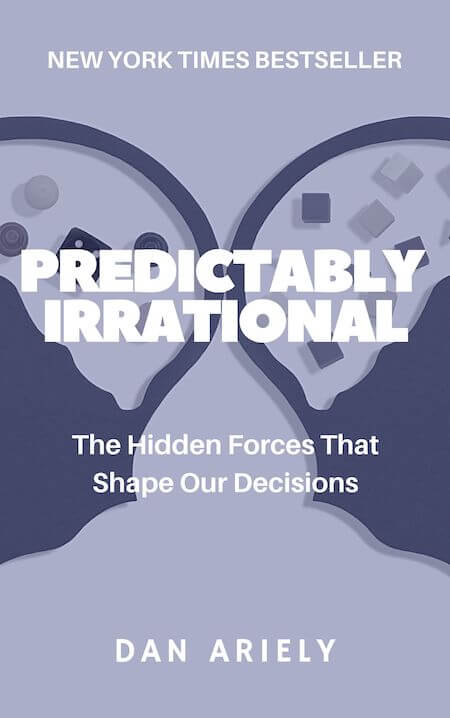
Predictably Irrational Book Summary
This Predictably Irrational Book Summary covers the key ideas, lessons, and takeaways in about 20 minutes.
Regardless of your answer, the point remains the same. If we are willing to take the time to break down our decisions--even small ones--into their base components, we start to develop a sense of what motivates us to make the choices that we do. We can use this awareness to better our lives, better ourselves, and to avoid falling victim to the same psychological traps that worm their way into our decision-making processes time and time again.
Helps with these goals
Want the complete 20-minute summary?
- Full structured summary
- Video Summary
- Podcast Summary
- Audio summary
- Key takeaways
- Exercises
- Quiz
- Highlights and notes
- Ask the book with AI
What is in the Predictably Irrational book summary?
Below is a preview of Sumizeit’s expert-written summary of Predictably Irrational by Dan Ariely. The full summary covers the book’s key ideas in text, audio, and video.
While we all like to think of ourselves as wholly pragmatic and objective in our decision-making capabilities, the processes we follow when choosing a product or service are heavily influenced by outside factors, many of which are unconscious. Our memories, our personal biases, our experiences, and our present circumstances all play a key role in every choice we make. By becoming even slightly more aware of our subconscious inclinations, we can start to recognize maladaptive patterns and teach ourselves to become savvier consumers and humans.
On Comparison
You may have heard the expression, “Comparison is the thief of joy.” This phrase, originally coined by former President Theodore Roosevelt, expresses that when we compare our accomplishments to those of others who are presumably more successful than us, we diminish our ability to find happiness in our own lives.
A modern-day example of this effect?
Instagram.
We might be feeling good about our recent trip to the Adirondacks until we see someone else’s picture of a week spent in Paris. Suddenly, our adventure in the mountains feels less significant than it did five minutes ago.
Rationally, we know that comparison leads to negative feelings of self-worth. And yet, we are still hard-wired to compare, over and over again.
Nowhere is the role of comparison more prevalent than in the retail and foodservice industries. In designing products, many companies capitalize on the consumer’s tendency to compare by purposefully manipulating prices. Take restaurants, for example. Some restaurants intentionally put expensive items on their menus so that people view the alternate options as cheaper by comparison.
You see that the $50 steak is expensive, so you justify your decision to order the $35 hamburger because at least you are not spending as much money as you would have on the steak! In your mind, you have made a smart decision...when, in reality, $35 is still a lot of money for a hamburger!
In social science, this phenomenon is referred to as the anchoring bias. You are basing your order on the menu items you see in front of you rather than considering what a particular dish would typically cost at other, similar restaurants nearby.
The Power of Free
To humans, the word free is more than just a string of letters put together--it is also an incredibly powerful emotional trigger. When a no-cost item is made available to us, we almost always go after it, even if it is an item that we absolutely do not need. In an attempt to rationalize our choice, we are quick to invent a reason as to why our acquisition could be useful in the future.
Oh? You are giving away those key chains? It will take twelve! When my toddler grows up and turns sixteen, she will use them for her car keys and so will all of her friends!
Our minds respond to the promise of freedom in a very specific way.
Consider chocolate, one of America’s favorite drugs.
In a study, a group of people was…
Want the complete 20-minute summary?
- Full structured summary
- Video Summary
- Podcast Summary
- Audio summary
- Key takeaways
- Exercises
- Quiz
- Highlights and notes
- Ask the book with AI
Who should read Predictably Irrational?
Predictably Irrational is for anyone who wants to understand why they make the choices they do—whether you're a consumer, business leader, or simply curious about human behavior. If you've ever wondered why you bought something you didn't need or chose one option over another for reasons you can't quite explain, this book reveals the hidden forces behind those decisions.
Why does Predictably Irrational matter?
In a world saturated with marketing, pricing strategies, and digital manipulation, understanding your own irrationality is a form of self-defense. Dan Ariely's research shows that our decisions are shaped by unconscious biases and external factors far more than we'd like to admit, making this knowledge essential for making smarter choices in every area of life.
What are the key themes in Predictably Irrational?
- The power of anchoring bias in shaping perception and value
- How free items trigger irrational emotional responses
- The role of expectations and memory in shaping experiences
- The distinction between social and market norms in relationships
- The influence of comparison on satisfaction and self-worth
- Psychological pricing and how brands manipulate decision-making
What are the key lessons from the Predictably Irrational book summary?
We're Wired to Compare, Even When It Hurts
Humans are hardwired to compare themselves to others, which often diminishes their happiness with their own accomplishments. Being aware of this tendency can help you resist the comparison trap that social media and marketing deliberately exploit.
Anchoring Bias Controls More Decisions Than You Realize
The first piece of information we encounter—like a high price on a menu—becomes an anchor that shapes all subsequent judgments. Retailers exploit this by placing expensive items next to moderately priced ones to make the latter seem like bargains.
The Irrational Power of 'Free'
Free items trigger an emotional response that overrides rational cost-benefit analysis because free eliminates perceived risk. Corporations weaponize this zero price effect to drive purchasing decisions and customer loyalty.
Your Expectations Shape Your Experience More Than Reality
Branding, price points, and prior beliefs influence how we experience products far more than their actual quality. A expensive pill works better than a cheap one because expectation activates real physiological responses.
Confirmation Bias Locks You Into Choices
Once you've chosen a brand or product, you unconsciously seek information that confirms your choice and ignore contradictory evidence. This self-reinforcing cycle makes it hard to objectively evaluate alternatives.
The Placebo Effect Is Remarkably Powerful
In drug trials, people who believe they received medicine experience genuine health improvements even when given placebos. This reveals how deeply our minds can influence our bodies when expectations are activated.
Social Norms and Market Norms Don't Mix Well
Introducing money into a social relationship fundamentally changes the dynamic; once market norms are established, it's difficult to return to the warmth of pure social exchange. Understanding which norm applies to each relationship prevents awkwardness and damaged connections.
Monetary Payment Can Kill Intrinsic Motivation
When you shift from social to market norms by introducing payment, people may become less willing to help without compensation. This explains why paying family members for favors can backfire.
Price Signals Quality, Even When There's No Real Difference
Higher prices are often interpreted as indicators of superior quality, which can actually enhance the product's perceived effectiveness through psychological pathways. Marketing relies on this price-quality heuristic constantly.
Blind Taste Tests Reveal Branding's True Power
When brand cues are removed, consumer preferences often shift dramatically, showing that branding and packaging influence taste perception as much as actual flavor. This demonstrates how much of our experience is psychological rather than sensory.
Your Memories Shape Future Choices More Than Facts
If you remember Advil working for your headache, you'll choose it again over Tylenol regardless of objective evidence, creating a self-fulfilling prophecy. Memories are sticky and hard to update with new information.
Small Decisions Reveal Your True Decision-Making Patterns
By examining why you chose specific breakfast cereal or other mundane items, you can uncover the unconscious forces that drive all your decisions. Self-awareness about small choices translates to better judgment on major ones.
We Rationalize Irrational Choices After the Fact
When we grab a free item we don't need, we quickly invent logical reasons to justify the choice, hiding the real driver—the emotional pull of free. This post-hoc rationalization masks our true motivations.
Context Changes Everything, Even Basic Preferences
The same product in different contexts—blind vs. branded, expensive vs. free—generates completely different choices. There is no fixed preference; decisions are malleable and context-dependent.
Awareness of Bias Is the First Step to Avoiding It
Simply knowing that you're susceptible to anchoring, comparison, and other biases doesn't eliminate them, but it creates a pause where you can question your impulses. This gap between knowledge and behavior is where real change happens.
Corporations Design Products Knowing How You'll Irrationally Respond
From menu pricing to free shipping incentives, businesses deliberately engineer situations that exploit predictable human irrationality. Understanding these tactics helps you recognize manipulation when it happens.
Loss Aversion Drives the Appeal of Free More Than Savings
Free eliminates the risk of loss, which humans fear disproportionately compared to equivalent gains, making free more compelling than a great discount. This loss-aversion principle shapes behavior across all domains.
You're a Worse Judge of Your Own Decisions Than You Think
We overestimate our rationality and underestimate how much unconscious factors influence us, making us vulnerable to repeating mistakes. Humility about your judgment is the foundation of better decision-making.
Want the complete 20-minute summary?
- Full structured summary
- Video Summary
- Podcast Summary
- Audio summary
- Key takeaways
- Exercises
- Quiz
- Highlights and notes
- Ask the book with AI
How can you apply ideas from Predictably Irrational?
- Before making a purchase, pause and identify which anchors (prices, first options seen, or comparisons) are influencing your choice
- Resist the lure of 'free' items by asking yourself whether you'd actually buy it if it cost even $0.01
- When comparing products or options, look at them in isolation rather than relative to the most extreme alternative
- Be intentional about whether a relationship operates under social or market norms, and avoid mixing the two carelessly
- Question whether your brand loyalty is based on superior quality or just confirmation bias reinforcing an old choice
- Use expectation strategically—if you believe something will work, it's more likely to; invest in quality packaging and presentation
- When facing a decision, write down the choice you'd make without seeing prices or brand names, then compare to your actual preference
What common mistakes do readers make with Predictably Irrational?
- Assuming your choices are rational and based primarily on objective factors like price or quality
- Believing that simply knowing about a bias (like anchoring) is enough to prevent it from influencing you
- Mixing market and social norms in relationships, then wondering why the warmth has disappeared
- Dismissing the power of expectation and branding as superficial when they measurably shape both perception and physiology
Sumizeit Exercises Apply what you've learned
Turn ideas from Predictably Irrational into action with a short guided reflection: identify the biggest takeaway, connect it to your life, and commit to one step you can take in the next 24 hours.
What is the expert analysis of Predictably Irrational?
Overview
Predictably Irrational, authored by Dan Ariely, is a seminal work in the field of behavioral economics and psychology. Ariely, a distinguished professor with dual PhDs in cognitive psychology and marketing, brings a rigorous academic background combined with entrepreneurial insight to explore the irrational forces that govern human decision-making. Since its publication, the book has become a cornerstone for understanding how subconscious biases and social influences shape consumer behavior, challenging the classical economic assumption of rational actors.
Core Thesis
Ariely’s central argument is that human decisions are systematically and predictably irrational. Contrary to the traditional economic model that assumes individuals act rationally to maximize utility, Ariely demonstrates that our choices are frequently influenced by hidden psychological forces such as anchoring bias, the zero price effect, social and market norms, and confirmation bias. These forces lead us to make decisions that deviate from pure logic, yet these deviations follow consistent patterns that can be studied and anticipated.
Strengths
- Accessible yet Rigorous: Ariely excels at translating complex behavioral economic concepts into engaging, relatable anecdotes and experiments, making the science approachable without sacrificing intellectual depth.
- Empirical Foundation: The book is grounded in well-designed experiments that reveal the mechanisms behind irrational behavior, providing compelling evidence for its claims.
- Interdisciplinary Insight: By weaving together psychology, marketing, and economics, Ariely offers a multifaceted perspective that enriches understanding across domains.
- Practical Relevance: The insights have direct applicability in consumer behavior, marketing strategies, and personal decision-making, empowering readers to recognize and mitigate their own cognitive biases.
- Innovative Concepts: Concepts like the zero price effect and the nuanced distinction between social and market norms have influenced both academic research and business practices.
Critiques & Counterarguments
- Overgeneralization of Findings: Some critics argue that Ariely’s experiments, often conducted in controlled or artificial settings, may not fully capture the complexity of real-world decision-making, where context and individual differences play a larger role.
- Limited Cultural Scope: The majority of studies referenced are based on Western populations, raising questions about the universality of these behavioral patterns across diverse cultures.
- Competing Theories: Rational choice theorists and proponents of dual-process models might contend that Ariely underestimates the role of conscious, deliberative reasoning that can override irrational impulses under certain conditions.
- Dynamic Preferences: Behavioral economists like Richard Thaler have emphasized that preferences can evolve with experience and feedback, suggesting that irrationality may be less stable or predictable than Ariely proposes.
- Economic Context Variability: Real-world economic decisions often involve stakes and complexities that differ substantially from experimental scenarios, which can affect the applicability of Ariely’s conclusions to high-stakes or long-term decisions.
Who Should Read This
Predictably Irrational is essential reading for scholars and practitioners in behavioral economics, psychology, marketing, and business strategy who seek a foundational understanding of human decision-making biases. It is equally valuable for informed consumers and self-improvement enthusiasts eager to gain insight into the subconscious drivers of their choices. The book’s accessible style makes it suitable for a sophisticated general audience interested in the intersection of science and everyday life, while its empirical rigor ensures it remains a respected reference within academic and professional circles.
Frequently asked questions about the Predictably Irrational book summary
What is Predictably Irrational about?
Predictably Irrational by Dan Ariely explores the hidden psychological forces and cognitive biases that drive human decision-making. The book reveals that our choices are far less rational than we believe, influenced by factors like anchoring bias, comparison, expectations, and social norms rather than pure logic or self-interest.
Who should read Predictably Irrational?
Anyone who wants to understand their own behavior and make smarter decisions should read this book—consumers vulnerable to marketing manipulation, business leaders designing pricing strategies, and anyone curious about why humans behave the way they do. It's particularly valuable for people who've ever wondered why they make choices that don't align with their stated values or rational self-interest.
What are the main takeaways from Predictably Irrational?
The core takeaway is that humans are predictably irrational in consistent, exploitable ways. Key lessons include: free triggers irrational responses because it eliminates perceived risk, expectations and branding shape experience as much as reality, anchors influence all subsequent judgments, comparison diminishes satisfaction, and mixing social and market norms damages relationships. Understanding these patterns helps you recognize manipulation and make more intentional choices.
How does anchoring bias affect my spending?
Anchoring bias means the first price or option you see becomes a reference point that shapes all subsequent judgments. Restaurants exploit this by placing expensive items on menus to make moderately priced items seem like bargains by comparison, even if those prices are objectively high. Recognizing what's anchoring your decision helps you evaluate options independently.
Why do we choose free items even when they're not useful?
Free items appeal to us because they eliminate perceived risk and loss—core human fears. When something costs money, we fear wasting that money if it's not useful. Free removes that downside, making it feel like a safe, risk-free choice, regardless of whether we actually need the item. Corporations capitalize on this zero price effect constantly.
How much does branding influence what we actually experience?
Branding influences experience dramatically—more than most people realize. Studies show that in blind taste tests, Pepsi outperforms Coke, but in branded tests, Coke wins. Similarly, expensive placebos work better than cheap ones because expectation activates real physiological responses. Our minds create the experience we expect to have.
What's the difference between social and market norms?
Social norms govern friendly interactions based on genuine care and reciprocity without expecting immediate payment—like helping a friend move. Market norms involve calculated exchanges where you provide X and receive Y in payment. Once you introduce money into a social relationship, it's difficult to return to pure social exchange, which is why offering to pay family for favors can backfire.
About Sumizeit
Sumizeit is a profitable Scomy LLC company based in Miami, Florida. It has been helping readers learn from nonfiction books for 7 years with expert-written summaries in text, audio, podcast, and video.
Want the complete 20-minute summary?
- Full structured summary
- Video Summary
- Podcast Summary
- Audio summary
- Key takeaways
- Exercises
- Quiz
- Highlights and notes
- Ask the book with AI
Here's why readers love Sumizeit
Join thousands of learners getting smarter every day
"Great experience. Detailed summaries. Loved the gamification feature. Makes learning fun. Good customer service. I recommend Sumizeit to anyone. You'll learn a lot."
"I always felt busy but still wanting to keep up with the book discussion in my friend group. This was a great supplement to help me keep reading the books I find fun while keeping up with important books."
"I love this website. Instead of scrolling social media, I find myself learning a lot. I use it everyday. I recommend this app for anyone who is too busy and wants to get up to speed with their favorite books."
Predictably Irrational Book Summary PDF
Looking for a Predictably Irrational Book Summary PDF you can save and revisit offline? Our Predictably Irrational Book Summary PDF captures the book’s core ideas in a clean, printable format — the key frameworks, takeaways, and structure without the fluff. Download the Predictably Irrational Book Summary PDF when you want a reference you can annotate, share with your team, or review on the go. Get your Predictably Irrational Book Summary PDF from the download page below.
Download Predictably Irrational Book Summary PDFPeople also liked these summaries
Readers who explored Predictably Irrational often enjoyed these titles next.



Want the complete 20-minute summary?
- Full structured summary
- Video Summary
- Podcast Summary
- Audio summary
- Key takeaways
- Exercises
- Quiz
- Highlights and notes
- Ask the book with AI
Featured Book Titles
Popular Book Summaries at sumizeit, leading book summary app