


As an Amazon Associate, Sumizeit earns from qualifying purchases.
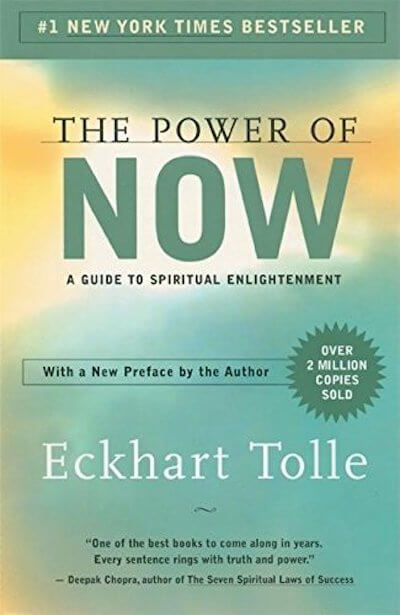
The Power of Now Book Summary
This The Power of Now Book Summary covers the key ideas, lessons, and takeaways in about 20 minutes.
Helps with these goals
Want the complete 20-minute summary?
- Full structured summary
- Video Summary
- Podcast Summary
- Audio summary
- Key takeaways
- Exercises
- Quiz
- Highlights and notes
- Ask the book with AI
What is in the The Power of Now book summary?
Below is a preview of Sumizeit’s expert-written summary of The Power of Now by Eckhart Tolle. The full summary covers the book’s key ideas in text, audio, and video.
Do you spend tireless nights consumed by memories of someone who hurt your feelings 7 years ago? Are you concerned about whether you will get married or gain a million-dollar bank account? While these thoughts are normal, they don’t help you to be your best self, right now. Spiritual guide Eckhart Tolle teaches readers to gain power in the present, in his 1997 best-selling, self-help book The Power of Now.
The main takeaways from the book are:
To be empowered right now, you must separate your idea of who you are from your thoughts. We all have some of the most ridiculous, profane, silly, angry thoughts circulate our minds daily. If those thoughts were a representation of our true selves, no one would come close to spiritual enlightenment.
Tolle encourages you to analyze your thinking so that you don’t become your thoughts. In other words, if you identify with your thoughts, then you might believe that the moment you thought about slapping your boss was a true representation of your character instead of a passing thought that you can prevent from actually happening. Identifying with your thoughts is what Tolle calls identifying with the egoic mind.
Tolle even goes on to make a shocking argument that time doesn’t exist!!! His belief is that time is man-made and if you imagine a world where there is no 6am or 5:42pm, the only real time is right now. The future is not guaranteed and can you really talk about the past without a time reference?
Lastly, the more you are conscious of your thoughts instead of identifying with your thoughts, the healthier you become--spiritual and physical well-being work hand in hand.
But let’s take a closer at what this really means:
You are Not Your Mind
According to Buddha, enlightenment is considered the end of suffering.
Tolle believes you can gain enlightenment once you realize that your thoughts are not an actual reflection of you. He believes your awareness of your thoughts offers a more accurate understanding of who you are.
Consciousness: The Way out of Pain
The collection of painful memories is called the pain-body, and it can be active or dormant.
The dormant pain-body becomes activated when experiences similar to the one that caused pain occur.
The pain-body is much like a dormant virus. It feeds on more pain, not joy, and it wants to be activated. To stop the virus from attacking your emotional and physical well-being, it is important to transition thoughts when negative thoughts pop up.
Tolle defines presence as when a person is aware of his or her pain-body being activated.
Moving Deeply into the Now
Your ego is vulnerable and needy--it needs you to be loved by everyone. The ego is like a defensive child who wants to appear big and tough but truly feels small and afraid.
Once you become aware of your egoic mind (or the defensive child in you), you can discipline it by refusing to give it the treat of of…
Want the complete 20-minute summary?
- Full structured summary
- Video Summary
- Podcast Summary
- Audio summary
- Key takeaways
- Exercises
- Quiz
- Highlights and notes
- Ask the book with AI
Who should read The Power of Now?
The Power of Now is for anyone trapped in cycles of anxiety, regret, or future-focused worry. Whether you're struggling with past trauma, relationship conflicts, or simply feeling disconnected from your life, this book offers a spiritual framework for finding peace in the present moment. It appeals to those seeking personal transformation beyond conventional self-help approaches.
Why does The Power of Now matter?
In our fast-paced, digitally-driven world, most people live mentally in the past or future, missing the only moment where real peace and power exist: now. Eckhart Tolle's The Power of Now addresses the epidemic of stress, anxiety, and emotional suffering by teaching readers to break free from the egoic mind that keeps them imprisoned in thought. This wisdom has resonated with millions worldwide and remains profoundly relevant for anyone seeking mental clarity, emotional healing, and spiritual awakening.
What are the key themes in The Power of Now?
- The present moment is the only time where life actually exists
- Your thoughts do not define who you are
- The ego creates suffering through judgment and fear
- Consciousness and awareness are the path to healing
- Inner peace transcends happiness and unhappiness
- Relationships mirror our inner dysfunction and growth
What are the key lessons from the The Power of Now book summary?
You Are Not Your Thoughts
Your mind generates thousands of thoughts daily, many of them ridiculous, angry, or contradictory. Realizing you are the observer of thoughts rather than being defined by them is the foundation of freedom and enlightenment.
The Egoic Mind Is a Defense Mechanism
The ego operates like a frightened child trying to appear big and tough. Understanding this vulnerability allows you to recognize when ego is driving your reactions rather than taking its demands seriously.
Pain-Body: The Collection of Stored Trauma
Past painful experiences accumulate in your body and mind as dormant energy. This pain-body activates when triggered by similar experiences, creating cycles of suffering you can learn to recognize and interrupt.
Presence Is the Antidote to Pain
When you become fully conscious of the present moment and aware of your pain-body being activated, you gain the power to choose how you respond rather than reacting automatically.
Time Is a Mental Construct
Tolle argues that only the present moment truly exists. The past is memory and the future is imagination; without the mind's framework of clock time, there is only now.
Stress Lives in Past or Future Thinking
There is no stress in each present moment. Stress arises only when you focus mentally on regrets about the past or anxieties about the future.
The Space Between Stimulus and Response
Conscious people create a gap between feeling offended and reacting with anger. This space is where your power lies—the ability to choose your response rather than being controlled by habit.
Surrender Is Not Weakness
Surrendering means accepting what is happening now rather than fighting reality. This acceptance releases the mental resistance that creates suffering and opens pathways to solutions.
Love Exists Beyond the Egoic Mind
True love operates outside the mind's need to define, judge, and control. It is not the opposite of hate but rather a state of being that transcends emotional reactivity.
Relationships Reveal Your Unconsciousness
Intimate relationships are designed to make you aware of your own dysfunctional thoughts and patterns, not to make you happy. This awareness is the gift they offer.
Inner Peace Versus Happiness
Happiness depends on external circumstances, while inner peace is independent of situations. True peace comes from accepting what cannot be changed and focusing on the present.
Judgment Perpetuates Dysfunction
Judging others as crazy or wrong keeps you trapped in ego reactivity. You can recognize dysfunction without reacting to it, which paradoxically helps others move toward consciousness.
Stop Waiting for the Future to Save You
Many people believe a future relationship, job, or circumstance will finally make them happy. Tolle argues the future is just a series of present moments, and only the now can transform your life.
The Inner Body as Gateway to Presence
Spending 10-15 minutes daily tuning into the energy within your body reveals whether you are in resistance, worry, anger, or peace. This body awareness anchors you in the present.
Accept Your Partner as They Are
Once you stop judging yourself harshly, you create mental space to fully accept your partner without expecting them to fulfill your needs or validate your worth.
Every Challenge Is an Opportunity for Awakening
Painful experiences and difficult people in your life are invitations to become conscious of your thoughts and ego patterns rather than victims of circumstances.
The Opposite of Love Is Not Hate
True love transcends the mind's dualistic thinking. Hate and love are both within the realm of ego; consciousness exists beyond this polarity.
Consciousness Is the Healing Force
Bringing awareness to your pain-body and egoic patterns is itself the cure. You don't have to fight or fix anything; consciousness naturally transforms what it observes.
Want the complete 20-minute summary?
- Full structured summary
- Video Summary
- Podcast Summary
- Audio summary
- Key takeaways
- Exercises
- Quiz
- Highlights and notes
- Ask the book with AI
How can you apply ideas from The Power of Now?
- Practice observing your thoughts without judgment when negative thinking arises, creating distance between yourself and your mind
- Set aside 10-15 minutes daily for stillness to tune into your inner body and assess your emotional and mental state
- When triggered by a situation, consciously create a pause between the trigger and your reaction by taking a breath
- Identify patterns in your relationships that reflect your own unhealed wounds and use them as mirrors for personal growth
- Replace future-focused worry with present-moment awareness by grounding yourself in your five senses
- Practice acceptance of difficult people and situations without judgment, recognizing they are teachers for your awakening
- Release the expectation that a future event or relationship will finally make you happy, and find peace in what is happening now
What common mistakes do readers make with The Power of Now?
- Believing your thoughts are an accurate reflection of your character rather than temporary mental events
- Waiting for future circumstances or relationships to finally bring happiness instead of finding peace in the present
- Identifying with your ego's defensive reactions and treating them as truth rather than observing them with curiosity
- Judging and condemning others as dysfunctional rather than recognizing their unconsciousness as an invitation for your own growth
Sumizeit Exercises Apply what you've learned
Turn ideas from The Power of Now into action with a short guided reflection: identify the biggest takeaway, connect it to your life, and commit to one step you can take in the next 24 hours.
What is the expert analysis of The Power of Now?
Overview
The Power of Now, authored by Eckhart Tolle, stands as a seminal work in contemporary spiritual literature and self-improvement. Published in 1997, this book catapulted Tolle into global recognition, especially after Oprah Winfrey’s endorsement in 2000. Drawing from a synthesis of Eastern philosophies—Buddhism, Hinduism—and Western thought, Tolle presents a transformative approach to consciousness and presence. His background, marked by personal trauma and philosophical study, enriches the book’s depth, making it resonate with a broad audience seeking relief from psychological suffering and existential angst.
Core Thesis
Tolle’s central argument posits that true empowerment and spiritual awakening arise from disentangling the self from the incessant flow of thoughts—what he terms the “egoic mind.” He challenges conventional notions of time, asserting that only the present moment—the “Now”—is real, while past and future are mental constructs that often imprison individuals in cycles of pain and anxiety. By cultivating conscious awareness of one’s thoughts and emotional patterns, particularly the “pain-body,” readers can achieve a state of presence that fosters inner peace, healthier relationships, and liberation from suffering.
Strengths
- Accessible Spirituality: Tolle’s prose is approachable, bridging complex spiritual concepts with everyday language, making profound ideas digestible for a wide readership.
- Integration of Mind and Body: The emphasis on bodily awareness as a portal to presence adds a somatic dimension often neglected in purely cognitive approaches to mindfulness.
- Practical Framework: The book offers actionable guidance—such as observing the egoic mind and recognizing the pain-body—that readers can apply to interrupt negative mental patterns.
- Timeless Appeal: By focusing on the universal experience of time and suffering, Tolle’s insights transcend cultural and religious boundaries, appealing to diverse audiences.
- Influential Legacy: The book’s impact on popular culture and the mindfulness movement is significant, inspiring numerous practitioners and teachers worldwide.
Critiques & Counterarguments
- Empirical Ambiguity: Tolle’s assertions about the nonexistence of time and the nature of consciousness lack rigorous scientific backing, relying heavily on subjective experience and metaphysical claims.
- Oversimplification of Psychological Processes: The depiction of the ego as a “defensive child” and the pain-body as a dormant virus may understate the complexity of psychological trauma and mental illness, which often require clinical intervention beyond mindfulness.
- Potential for Passivity: The emphasis on surrender and acceptance might inadvertently discourage proactive engagement with social injustices or personal challenges that necessitate change rather than mere acceptance.
- Competing Research: Cognitive-behavioral therapy and neuroscience research emphasize the constructive role of future-oriented thinking and memory in planning and identity formation, challenging Tolle’s wholesale dismissal of past and future.
- Philosophical Opposition: Existentialist and phenomenological traditions argue for the integral role of temporality in human experience, suggesting that negating past and future risks impoverishing the fullness of being.
Who Should Read This
The Power of Now is ideally suited for readers seeking a spiritual or philosophical framework to alleviate anxiety, depression, or existential dissatisfaction. It appeals to those interested in mindfulness, meditation, and Eastern-inspired spirituality who are open to introspective practices that emphasize presence over intellectual analysis. Additionally, individuals grappling with emotional pain or relationship challenges may find Tolle’s insights into the ego and pain-body illuminating. However, readers looking for empirically grounded psychological strategies or active problem-solving methodologies might find the book’s approach too abstract or metaphysical.
Frequently asked questions about the The Power of Now book summary
What is The Power of Now about?
The Power of Now by Eckhart Tolle is about liberating yourself from the tyranny of past regrets and future anxieties by learning to live fully in the present moment. The book teaches that the only time where true peace, power, and life actually exist is now, and that your thoughts and ego are not who you really are. Through understanding consciousness and presence, readers can break free from suffering and experience inner peace.
Who should read The Power of Now?
Anyone struggling with anxiety, regret, relationship conflict, or a sense of disconnection from their life will benefit from The Power of Now. It's ideal for people seeking spiritual growth, emotional healing, and freedom from the patterns of the egoic mind. The book appeals to those willing to challenge conventional thinking and explore a deeper understanding of consciousness and presence.
What are the main takeaways from The Power of Now?
The main takeaways include: you are not your thoughts, the present moment is the only place where life exists, your ego creates suffering through judgment and fear, and consciousness is the path to healing. Additionally, true inner peace comes from accepting what is and releasing the need to change situations, and relationships are mirrors that reveal your inner dysfunction so you can grow.
How can I live more in the present moment?
Eckhart Tolle recommends spending 10-15 minutes daily in stillness to tune into your inner body and assess your mental state. Practice observing your thoughts without judgment, grounding yourself in your five senses when anxious, and creating a conscious pause between triggers and your reactions. Most importantly, recognize that the present moment is all that truly exists.
What does Eckhart Tolle mean by the pain-body?
The pain-body is the accumulated collection of painful memories and emotional wounds stored in your body and mind. It remains dormant until triggered by experiences similar to the original pain, at which point it activates and feeds on more pain. By developing presence and consciousness, you can observe your pain-body being activated and prevent it from controlling your responses.
Why does Eckhart Tolle say time doesn't exist?
Tolle argues that time is a mental construct created by humans. In reality, only the present moment exists; the past is memory and the future is imagination. Without the mind's framework of clock time, there is no 6am or 5:42pm—only now. This perspective shifts focus from regret and anxiety toward the actual moment where life and transformation occur.
How can The Power of Now improve my relationships?
The Power of Now teaches that relationships are designed to reveal your unconscious patterns and ego reactions, not to make you happy. By observing your thoughts and pain-body without judgment, releasing expectations, and accepting your partner as they are, you create space for genuine connection. Understanding that love transcends the mind's need to judge and control transforms how you relate to others.
About Sumizeit
Sumizeit is a profitable Scomy LLC company based in Miami, Florida. It has been helping readers learn from nonfiction books for 7 years with expert-written summaries in text, audio, podcast, and video.
Want the complete 20-minute summary?
- Full structured summary
- Video Summary
- Podcast Summary
- Audio summary
- Key takeaways
- Exercises
- Quiz
- Highlights and notes
- Ask the book with AI
Here's why readers love Sumizeit
Join thousands of learners getting smarter every day
"Great experience. Detailed summaries. Loved the gamification feature. Makes learning fun. Good customer service. I recommend Sumizeit to anyone. You'll learn a lot."
"I always felt busy but still wanting to keep up with the book discussion in my friend group. This was a great supplement to help me keep reading the books I find fun while keeping up with important books."
"I love this website. Instead of scrolling social media, I find myself learning a lot. I use it everyday. I recommend this app for anyone who is too busy and wants to get up to speed with their favorite books."
The Power of Now Book Summary PDF
Looking for a The Power of Now Book Summary PDF you can save and revisit offline? Our The Power of Now Book Summary PDF captures the book’s core ideas in a clean, printable format — the key frameworks, takeaways, and structure without the fluff. Download the The Power of Now Book Summary PDF when you want a reference you can annotate, share with your team, or review on the go. Get your The Power of Now Book Summary PDF from the download page below.
Download The Power of Now Book Summary PDFPeople also liked these summaries
Readers who explored The Power of Now often enjoyed these titles next.

Want the complete 20-minute summary?
- Full structured summary
- Video Summary
- Podcast Summary
- Audio summary
- Key takeaways
- Exercises
- Quiz
- Highlights and notes
- Ask the book with AI
Featured Book Titles
Popular Book Summaries at sumizeit, leading book summary app