New users get 3 free summaries! Upgrade for unlimited access to 2,500+ book summaries.

Upgrade Now

Get the Sumizeit app

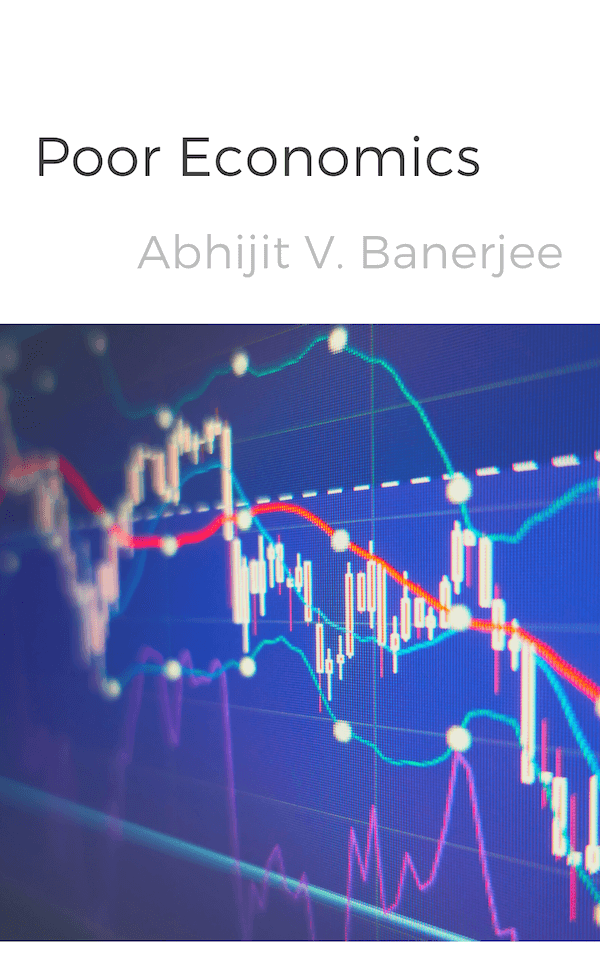
Poor Economics by Abhijit V. Banerjee,Esther Duflo book cover

As an Amazon Associate, Sumizeit earns from qualifying purchases.

Book Summary

Poor Economics Book Summary

By Abhijit V. Banerjee,Esther Duflo


This Poor Economics Book Summary covers the key ideas, lessons, and takeaways in about 20 minutes.

20 min read Audio available
Global poverty is a huge problem with no clear solution. In order to provide real, lasting improvements to the poverty problem, economists need to understand the social, cultural, and psychological, not just economic, reasons behind why poor people make the decisions they do. When economists understand the real everyday experiences and motivations of poor people, they will be better able to incentivize them to make choices that can lead to lasting change. Finding methods to encourage poor people to educate all their children, take advantage of health care, consume nutritionally dense food, and sign up for insurance, are significant steps to helping reduce poverty. To bring about lasting change, women must be empowered, strong social support systems, and steady, stable jobs must be available in developing nations. Big political change, as well as local problem solving, also has to happen in order to eradicate global poverty.

Helps with these goals

4.8

Stars

Average ratings on iOS and Google Play

100,000+

Users

On all platforms

6+

Years

Experience igniting personal growth

Want the complete 20-minute summary?

  • Full structured summary
  • Video Summary
  • Podcast Summary
  • Audio summary
  • Key takeaways
  • Exercises
  • Quiz
  • Highlights and notes
  • Ask the book with AI

Want a Free Weekly Read?

Get a free summary every week straight to your mailbox.

Preview the Poor Economics book summary

Below is a preview of Sumizeit’s comprehensive human-written summary of Poor Economics by Abhijit V. Banerjee,Esther Duflo. The full summary is 15-20 minutes long and covers the book’s key ideas in text, audio, visual, and video formats. Unlock the full 20 Minute Summary

Global poverty is a huge problem, with around 13 percent of the world’s population making due on less than a dollar a day. However, most people fail to make changes that lead to significant improvement in the lives of poor people, because they are busy studying the big economic questions and they ignore the everyday lived experiences of the poor. People living in poverty make complex economic decisions every day that are shaped by economics, society, culture, and education. Understanding all the economic, social, and psychological factors that come into play are essential to bringing about real world change. Providing access to nutritious food, reliable education and healthcare, and insurance for poor populations would be a significant step in helping reduce global poverty. Empowering women is also an essential step that must be taken to reduce population growth and decrease poverty. While global poverty is a complex problem, there are both large and small scale solutions that can be implemented both on a local and global scale that can have a significant impact on the fight to end global poverty.

Less Than A Dollar A Day

Global poverty is an overwhelming problem that does not have a clear solution. About 13 percent of the world’s population lives on the equivalent of 99 US cents per day, and poverty is the cause of millions of deaths per year. While many individuals and organizations, from politicians and economists to famous actors, have fought to help eradicate poverty, the problem remains far from solved. This is because most people view the problem of global poverty in more general terms while ignoring the day-to-day real-life experiences of the poor people themselves. 

Economists focus on big, general economic questions, such as the role that outside aid should play in economic development in poorer countries. However, no one can agree on the answers to these questions. For example, economists such as Jeffrey Sachs argue that outside aid is essential for developing countries to get rid of poverty, saying that it could be completely eradicated in 20 years if more well-off countries spent $195 billion per year on aid. There is some evidence that foreign aid does help some countries prosper. For example, Rwanda saw significant economic growth after it received substantial foreign aid following the Rwandan Genocide.

However, a single case does not prove the whole theory, and many others argue that outside aid has negative consequences that can outweigh the positive benefits. Many other people argue that outside intervention is ineffective and in some cases even harmful to the economic growth of developing countries, and it is better to leave them alone. Research from over 100 developing nations shows that there is no significant difference in growth between countries that received aid and those that did not, so there is no clear answer to this debate. However, this is large because these big questions are not the correct way to view the problem of global poverty. 

Instead of looking for answers to the general problem,…

The full structured summary is available after upgrading

Want the complete 20-minute summary?

  • Full structured summary
  • Video Summary
  • Podcast Summary
  • Audio summary
  • Key takeaways
  • Exercises
  • Quiz
  • Highlights and notes
  • Ask the book with AI

Who should read Poor Economics?

Poor Economics is essential for economists, policymakers, students, and development professionals who want to understand why traditional approaches to ending global poverty have fallen short. If you're interested in the real-world decision-making of people living on less than a dollar a day, or if you work in international development, NGOs, or public health, this book offers evidence-based insights that challenge conventional wisdom.

Why does Poor Economics matter?

With roughly 13% of the world's population living in extreme poverty, understanding what actually works is critical—and Poor Economics reveals that big-picture economic theories miss the point. The book's research-driven approach by Nobel Prize-winning economists shows that lasting poverty reduction requires understanding the complex psychological, social, and cultural factors driving poor people's choices, not just injecting more foreign aid or assuming rational economic behavior.

What are the key themes in Poor Economics?

  • The gap between macro-level economic theory and micro-level lived experience of the poor
  • Complex decision-making under scarcity and its psychological and social dimensions
  • The importance of incentives and behavioral nudges in changing behavior
  • Healthcare, nutrition, education, and insurance as foundational anti-poverty tools
  • Women's empowerment and its link to population control and economic mobility
  • The limitations of common anti-poverty interventions like microcredit
  • The necessity of both systemic institutional reform and local grassroots action

Want the complete 20-minute summary?

  • Full structured summary
  • Video Summary
  • Podcast Summary
  • Audio summary
  • Key takeaways
  • Exercises
  • Quiz
  • Highlights and notes
  • Ask the book with AI

How can you apply ideas from Poor Economics?

  • Design health and nutrition programs with immediate, tangible incentives (like the vaccination plate experiment) rather than relying on long-term benefit messaging alone
  • Implement randomized controlled trials and evidence-based testing before rolling out poverty interventions at scale to identify what actually works
  • Establish reliable, well-staffed public health and education systems rather than assuming access to facilities is sufficient if services are unreliable
  • Create government-backed insurance programs with subsidies to make them affordable and attractive to poor populations initially
  • Focus development resources on universal basic education rather than concentrating on elite students, and ensure quality teaching through accountability systems
  • Build social safety nets and formal insurance to reduce poor families' incentive to have many children as their security
  • Combine policy reform with grassroots accountability mechanisms—publishing data on resource distribution empowers communities to demand better performance
  • Address cultural and psychological barriers alongside technical solutions—if people don't believe oral medicine works, providing free pills won't change behavior

What common mistakes do readers make with Poor Economics?

  • Assuming poor people make random or purely irrational choices rather than recognizing the psychological, social, and cultural logic behind their decisions
  • Relying on macro-level economic theories and debates about foreign aid without studying how specific interventions work in actual poor communities
  • Providing resources (schools, clinics, vaccines) without ensuring they are actually implemented reliably; access is not the same as usable quality
  • Expecting behavior change from information and education alone without understanding what immediate incentives or barriers drive actual decision-making
  • Treating microcredit or small business loans as a complete poverty solution rather than recognizing they must be paired with stable employment opportunities and sustainable demand

Sumizeit Exercises Apply what you've learned

Turn ideas from Poor Economics into action with a short guided reflection: identify the biggest takeaway, connect it to your life, and commit to one step you can take in the next 24 hours.

Unlock book-specific exercises with a Sumizeit membership

Unlock Exercises

What is the expert analysis of Poor Economics?

Overview

Poor Economics is a seminal work by Abhijit V. Banerjee and Esther Duflo, two preeminent economists and Nobel laureates recognized for their pioneering contributions to development economics. Their expertise is grounded in rigorous empirical research and field experiments conducted through the Abdul Latif Jameel Poverty Action Lab (J-PAL), which they co-founded. This book stands out for its granular, evidence-based approach to understanding the multifaceted nature of global poverty, moving beyond abstract economic theories to focus on the lived realities and decision-making processes of the poor themselves. Banerjee and Duflo’s work is significant not only for its academic rigor but also for its practical implications in policy design and implementation aimed at poverty alleviation.

Core Thesis

The central insight of Poor Economics is that global poverty cannot be effectively addressed through broad, one-size-fits-all solutions such as increased foreign aid alone. Instead, the authors argue that poverty is a complex, context-dependent phenomenon shaped by economic, social, cultural, and psychological factors influencing the daily decisions of impoverished individuals. Understanding these nuanced behaviors—such as choices around nutrition, healthcare, education, family planning, and financial risk management—is essential for crafting interventions that truly empower the poor. The book emphasizes the importance of both small-scale, targeted initiatives and systemic institutional reforms, highlighting that sustainable poverty reduction requires a combination of grassroots understanding and large-scale political change.

Strengths

  • Empirical Rigor: The book is grounded in extensive randomized controlled trials and field research, lending credibility and specificity to its conclusions.
  • Nuanced Understanding of Poverty: By focusing on the decision-making processes of the poor, Banerjee and Duflo dismantle simplistic assumptions about poverty, revealing the rationality behind seemingly irrational choices.
  • Interdisciplinary Approach: The integration of economic theory with insights from psychology, sociology, and anthropology enriches the analysis and enhances the applicability of recommendations.
  • Policy-Relevant Insights: The authors provide actionable guidance on improving education quality, healthcare delivery, nutrition, women’s empowerment, and financial inclusion, making the book invaluable for policymakers and practitioners.
  • Balanced Perspective on Aid and Intervention: The book critically assesses the efficacy of foreign aid and microcredit, avoiding ideological extremes and advocating for evidence-based interventions.

Critiques & Counterarguments

  • Potential Overemphasis on Micro-Level Solutions: While the focus on individual decision-making is illuminating, some critics argue that it risks underplaying structural and systemic factors such as global trade policies, historical inequalities, and geopolitical dynamics that perpetuate poverty.
  • Evidence Scope and Generalizability: Although the authors draw from diverse contexts, the reliance on randomized trials may limit the applicability of findings across vastly different cultural and political environments, especially where data is scarce or governance is weak.
  • Complexity of Behavioral Change: The assumption that better information and incentives will reliably change behavior may underestimate deep-rooted social norms, distrust in institutions, and cognitive biases that resist intervention.
  • Competing Schools of Thought: Some development economists advocate for more radical structural reforms, such as wealth redistribution or systemic economic transformation, which are less emphasized in this pragmatic, incrementalist approach.
  • Long-Term Sustainability of Interventions: Questions remain about how scalable and sustainable many of the proposed small-scale solutions are without concurrent political and economic reforms at national and international levels.

Who Should Read This

Poor Economics is essential reading for economists, policymakers, development practitioners, and scholars interested in the empirical foundations of poverty alleviation. It is also valuable for students of economics and social sciences seeking a sophisticated understanding of how microeconomic behaviors intersect with macroeconomic outcomes. Intellectuals and informed readers who wish to move beyond simplistic narratives about poverty will find this book a compelling and nuanced exploration of one of the most pressing global challenges. Its accessible yet rigorous style makes it suitable for anyone committed to evidence-based social change and the complexities of human decision-making under constraint.

Test yourself on Poor Economics 5 sample questions from the summary quiz

Try a few questions from the Poor Economics quiz. Unlock the full summary for the full quiz and answers that will help the ideas stick.

Question 1 of 5

According to the summary, why is simply providing more outside aid not the full solution to ending global poverty?

Question 2 of 5

What proportion of the world’s population does the summary say lives on less than about one US dollar per day?

Question 3 of 5

The summary claims economists often fail to understand poor people’s choices because they:

Question 4 of 5

Regarding food and hunger, what key problem does the summary identify among poor households?

Question 5 of 5

What effect did iron supplements have on men and women in the Indonesian study mentioned in the summary?

Frequently asked questions about the Poor Economics book summary

What is Poor Economics about?

Poor Economics by Abhijit V. Banerjee and Esther Duflo is a research-driven exploration of how poor people actually live and make decisions. Rather than debating broad economic theories, the book examines the everyday realities of people living on less than a dollar a day, revealing the complex psychological, social, and cultural factors that shape their choices—and why traditional poverty-reduction approaches often fail.

Who should read Poor Economics?

Poor Economics is essential for economists, policymakers, development professionals, students, and anyone involved in fighting global poverty or working in international development. It's also valuable for intellectuals and engaged citizens who want to understand why poverty persists despite billions in aid and what evidence-based solutions actually work.

What are the main takeaways from Poor Economics?

The core takeaway is that effective poverty reduction requires understanding the real lived experiences and decision-making of poor people, not just applying top-down economic theories. Key solutions include ensuring access to reliable healthcare, quality nutrition, universal education, women's empowerment, and insurance—combined with stable employment opportunities and both institutional reform and grassroots accountability.

Does Poor Economics say foreign aid works?

Poor Economics argues that the debate over whether foreign aid works misses the point; research shows no clear difference in growth between countries that received aid and those that didn't. Instead of focusing on this macro question, the authors advocate studying which specific interventions—nutrition programs, health services, education, insurance—actually improve individual lives and reduce poverty.

Why do poor people make choices that seem irrational?

Poor Economics reveals that choices like refusing free vaccines or spending money on expensive food instead of calories usually aren't irrational at all. Instead, they reflect psychological barriers (disbelief in long-term benefits), cultural beliefs (medicine must be injected), immediate incentives (taste preferences), or social pressure—factors that economists often overlook when analyzing poverty.

Is microcredit an effective anti-poverty tool?

According to Poor Economics, microcredit helps poor people start small businesses in the short term but is not a lasting solution to poverty. Most businesses fail because they can't access larger loans to scale, there isn't enough market demand, and it doesn't create stable, well-paying jobs—which the authors argue is the real path out of poverty.

How does Poor Economics address women and population growth?

Poor Economics shows that population growth is linked to poverty because poor people have many children as their social safety net. Women actually prefer fewer children but lack the empowerment and economic alternatives to make that choice. The book argues that women's empowerment and strong government social safety nets are essential to reducing fertility and breaking the poverty cycle.

What role does education play in ending poverty?

Poor Economics emphasizes that universal basic education for all children, not elite education for the most promising, is most effective at reducing poverty. However, the quality of education matters—teachers must actually be present and engaged. The authors also warn against elitist thinking that concentrates resources on top students while neglecting others, which perpetuates inequality.

About Sumizeit

Sumizeit is a profitable Scomy LLC company based in Miami, Florida. It has been helping readers learn from nonfiction books for 7 years with expert-written summaries in text, audio, podcast, and video.

Want the complete 20-minute summary?

  • Full structured summary
  • Video Summary
  • Podcast Summary
  • Audio summary
  • Key takeaways
  • Exercises
  • Quiz
  • Highlights and notes
  • Ask the book with AI

Here's why readers love Sumizeit

Join thousands of learners getting smarter every day

"Great experience. Detailed summaries. Loved the gamification feature. Makes learning fun. Good customer service. I recommend Sumizeit to anyone. You'll learn a lot."

Chen, TrustPilot

"I always felt busy but still wanting to keep up with the book discussion in my friend group. This was a great supplement to help me keep reading the books I find fun while keeping up with important books."

Daniel, TrustPilot

"I love this website. Instead of scrolling social media, I find myself learning a lot. I use it everyday. I recommend this app for anyone who is too busy and wants to get up to speed with their favorite books."

Erica, TrustPilot

Poor Economics Book Summary PDF

Looking for a Poor Economics Book Summary PDF you can save and revisit offline? Our Poor Economics Book Summary PDF captures the book’s core ideas in a clean, printable format — the key frameworks, takeaways, and structure without the fluff. Download the Poor Economics Book Summary PDF when you want a reference you can annotate, share with your team, or review on the go. Get your Poor Economics Book Summary PDF from the download page below.

Download Poor Economics Book Summary PDF

People also liked these summaries

Readers who explored Poor Economics often enjoyed these titles next.

Browse all books →

Want the complete 20-minute summary?

  • Full structured summary
  • Video Summary
  • Podcast Summary
  • Audio summary
  • Key takeaways
  • Exercises
  • Quiz
  • Highlights and notes
  • Ask the book with AI


View Full Summary