
Question 1 of 10


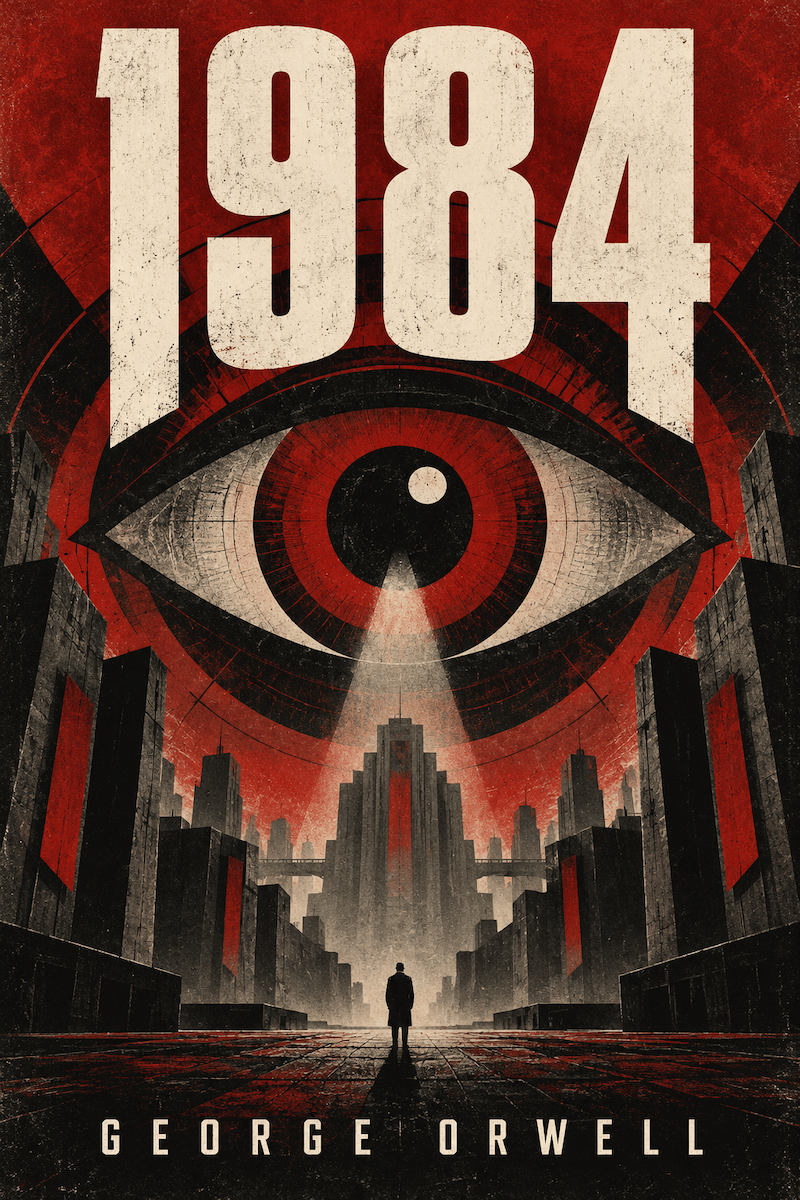
Prefer the print book? Buy on Amazon
As an Amazon Associate, Sumizeit earns from qualifying purchases.
Book Summary
1984 Book Summary
This 1984 Book Summary covers the key ideas, lessons, and takeaways in about 20 minutes.
Short Description:
Orwell’s warning about total government control
1984 is a warning about what happens when a government gains total control over truth. Orwell shows that power doesn't need to rely on force alone. It can reach into your language, your memories, and your private feelings, until you can no longer tell what you really believe. The book isn't saying that people are helpless. It's saying that the habits that protect us, like honest words, a clear memory, and loyalty to the people we love, are the first things a controlling state attacks. If you want to keep your freedom, you have to guard those things before they're gone.
Helps with these goals
Preview the 1984 book summary
Below is a preview of Sumizeit’s comprehensive human-written summary of 1984 by George Orwell. The full summary is 15-20 minutes long and covers the book’s key ideas in text, audio, visual, and video formats. Unlock the full 20 Minute Summary
The story takes place in London in the year 1984, but it isn't the London you know. Britain is now part of a superstate called Oceania, and it is ruled by a single political group known only as the Party. At the top sits Big Brother, a face on posters whose dark eyes seem to follow you everywhere. Nobody has ever met him. Nobody is sure he exists. That doesn't matter, because the Party has made him the center of everyone's life.
The city is grey, cold, and falling apart. Food is bad, the elevators don't work, and the gin tastes awful. Oceania is always at war with one of the other two superstates, Eurasia or Eastasia. People are told that the enemy has always been the enemy. The truth is that the sides change, and the Party simply rewrites the past to match.
Winston Smith and the telescreen
Winston Smith is thirty nine, thin, and tired, with a bad ankle and a painful skin condition on his leg. He works at the Ministry of Truth, which is really the place that produces lies. His job is to change old newspaper articles so they agree with whatever the Party says today. If the Party predicted something that didn't happen, he fixes the record so the prediction was right all along. Then the old copy is dropped into a hole and burned.
Every home in Oceania has a telescreen. It's a screen on the wall that plays Party messages and also watches and listens to whoever is in the room. You can't turn it off. In his apartment, Winston has found one small corner out of its view. There he sits down with an old notebook he bought in a junk shop and starts to write. It's a crime, and the Party has a name for it, thoughtcrime. There are no laws against it, because the Party doesn't need them. It's enough to feel the wrong thing.
Winston writes that he hates Big Brother. He also writes that freedom is the freedom to say that two plus two make four. He knows that if he is caught, he will be killed. He keeps writing anyway.
The machinery of control
The book spends a good deal of time showing how the Party works. It runs four ministries with names that mean the opposite of what they do. The Ministry of Truth handles lies. The Ministry of Peace runs the war. The Ministry of Love tortures people. The Ministry of Plenty keeps everyone short of food.
The Party also has three slogans. WAR IS PEACE. FREEDOM IS SLAVERY. IGNORANCE IS STRENGTH. People repeat them without a second thought, and that's the point. The Party wants you to hold two opposite ideas in your head and believe both. The word for this is doublethink.
There are daily rituals that keep everyone in line. Each morning there are exercises in front of the telescreen.
Want the complete 20-minute summary?
- Full structured summary
- Video Summary
- Podcast Summary
- Audio summary
- Key takeaways
- Exercises
- Quiz
- Highlights and notes
- Ask the book with AI
Who should read 1984?
1984 by George Orwell is essential for anyone concerned with how power shapes society, language, and individual thought. It speaks to political activists, students of history, and citizens who want to recognize and resist authoritarian control. The novel resonates with readers of all ages who value truth, freedom, and personal autonomy.
Why does 1984 matter?
1984 remains urgently relevant because it exposes the mechanics of totalitarian control—mechanisms that persist in modern surveillance, propaganda, and information manipulation. Orwell's exploration of how governments rewrite reality and reshape language offers a blueprint for understanding contemporary threats to democracy and independent thought. The book teaches us to recognize and protect the foundations of freedom before they're dismantled.
What are the key themes in 1984?
- Total surveillance and the erosion of privacy
- The weaponization of language to control thought
- Rewriting history to consolidate power
- The destruction of individual identity and autonomy
- The psychology of manipulation and coercion
- Love and loyalty as acts of rebellion
- The difference between forced obedience and genuine belief
- Power as an end in itself
How can you apply ideas from 1984?
- Develop media literacy skills to recognize propaganda techniques and contradictory messaging in news and politics
- Protect and preserve language—resist euphemisms and demand precise, honest terminology in public discourse
- Maintain independent critical thinking by regularly questioning official narratives and seeking multiple sources of truth
- Nurture close personal relationships as a counterbalance to state and corporate surveillance and messaging
- Keep historical records and accurate memory as a defense against revisionism and manipulation
- Support institutions and technologies that protect privacy and enable anonymous speech
- Practice writing, journaling, and documenting your own thoughts to preserve authentic perspective
What common mistakes do readers make with 1984?
- Assuming totalitarianism is obvious and easily recognized, when Orwell shows it often operates through normalized routines and accepted contradictions
- Thinking that surveillance and control only happen in overtly authoritarian nations, missing how similar mechanisms appear in democracies through different means
- Reading 1984 as purely about external government, rather than seeing how people internalize oppression and police their own thoughts
- Believing that individual resistance is futile, when the novel illustrates that dignity and truth matter regardless of whether they succeed
- Overlooking the role of language and propaganda, focusing only on the obvious violence while missing how words reshape reality
Sumizeit Exercises Apply what you've learned
Turn ideas from 1984 into action with a short guided reflection: identify the biggest takeaway, connect it to your life, and commit to one step you can take in the next 24 hours.
What is the expert analysis of 1984?
Overview
1984 by George Orwell stands as a monumental work in the canon of dystopian literature, written by a profoundly insightful author whose experiences as a colonial officer and anti-fascist combatant deeply informed his worldview. Published in 1949, this novel transcends its immediate post-war context to offer a chilling vision of totalitarianism that remains profoundly relevant. Orwell’s acute understanding of political manipulation, surveillance, and language control has cemented 1984 as a critical text for understanding the mechanics of oppressive regimes and the fragility of personal freedom.
Core Thesis
Orwell’s central argument is a stark warning about the dangers of unchecked governmental power, particularly when it monopolizes truth and reality itself. The Party’s absolute control over history, language, and even thought exemplifies a regime that does not merely suppress dissent through force but annihilates the very capacity for rebellion by reshaping perception and belief. The novel posits that freedom is not merely a political condition but a cognitive and emotional one—rooted in the ability to hold objective truth and maintain loyalty to personal memories and human connections.
Strengths
- Psychological Depth: Orwell masterfully explores the internal struggle of Winston Smith, illustrating how totalitarianism invades the mind and emotions, making the novel a profound psychological study as well as a political one.
- Innovative Concepts: The introduction of concepts like doublethink, thoughtcrime, and Newspeak provides a powerful lexicon for understanding ideological control, contributing enduring terminology to political discourse.
- Timeless Relevance: The depiction of surveillance, propaganda, and historical revisionism resonates across eras, making the novel a perennial cautionary tale about the erosion of civil liberties.
- Symbolic Richness: The use of symbols such as Big Brother, the telescreen, and Room 101 encapsulates complex ideas about power, fear, and betrayal with striking economy and emotional impact.
Critiques & Counterarguments
- Deterministic Pessimism: Orwell’s vision is often critiqued for its bleakness, suggesting an almost inevitable triumph of totalitarianism that may understate human resilience and the complexity of political change.
- Oversimplification of Power Structures: The Party is portrayed as monolithic and omnipotent, which some argue simplifies the dynamics of authoritarian regimes that often face internal contradictions and fractures.
- Competing Views on Language and Thought: While Orwell emphasizes language as a tool of control, later linguistic and cognitive research suggests that language shapes but does not wholly determine thought, challenging the absolute efficacy of Newspeak.
- Historical Context Limitations: The novel’s focus on a totalitarian state reflects mid-20th-century anxieties, particularly Stalinism, and may not fully account for the diversity of authoritarian models or the nuances of democratic backsliding.
- Real-World Evidence of Resistance: Historical examples of successful resistance and reform in oppressive regimes complicate the novel’s implication that totalitarian control is unassailable and permanent.
Who Should Read This
1984 is essential reading for scholars and students of political theory, psychology, and philosophy, as well as for anyone interested in the mechanisms of power and the preservation of individual autonomy. It is particularly valuable for those concerned with contemporary issues of surveillance, misinformation, and authoritarianism. The novel offers a profound meditation on the costs of complacency and the vital importance of safeguarding truth and personal integrity in the face of systemic oppression.
Discussion questions for 1984 Short questions you can actually use in a conversation
Frequently asked questions about the 1984 book summary
What is 1984 by George Orwell about?
1984 is a dystopian novel set in a totalitarian superstate called Oceania, where a government called the Party, led by the figure of Big Brother, exerts total control over society through surveillance, propaganda, and psychological manipulation. The story follows Winston Smith, a man who attempts subtle rebellion through private writing and a secret love affair, only to be captured, tortured, and broken by the regime until he genuinely loves Big Brother. The novel is a warning about how governments can control not just behavior but thought, memory, and emotion itself.
Who should read 1984 by George Orwell?
Anyone interested in understanding how power operates, how truth can be manipulated, and how individual freedom is threatened should read 1984. It's essential for students of history and politics, activists concerned with democratic freedoms, and citizens who want to recognize authoritarian tactics in their own societies. The novel speaks to people across all political backgrounds who value honesty, autonomy, and the preservation of private life in an age of increasing surveillance.
What are the main takeaways from 1984 by George Orwell?
The primary takeaway is that total control begins with controlling truth and language—once a regime can rewrite reality and eliminate words, it can reshape what people think and feel. Orwell shows that surveillance and torture are less important than psychological manipulation, and that protecting freedom requires defending honest communication, accurate memory, and personal relationships before they're attacked. The novel teaches readers to recognize propaganda, question official narratives, and understand that privacy and private loyalty are the first things authoritarian systems target.
How does Orwell use language to show the Party's power in 1984?
Orwell introduces Newspeak, a language deliberately shrinking in vocabulary each year, making certain thoughts literally impossible to express. The Party's slogans—'War is Peace,' 'Freedom is Slavery'—train people to accept contradiction without question. By controlling the words available, the regime controls what citizens can conceive, making rebellion not just illegal but cognitively impossible. This demonstrates that language isn't merely a tool of communication but a tool of thought control.
What does Room 101 represent in 1984?
Room 101 is where the Party breaks the last, deepest part of a person's identity—their most primal fear and their most cherished loyalty. For Winston, facing rats forces him to betray Julia, the person he loves most. Room 101 symbolizes the regime's ultimate goal: not obedience, but the complete corruption of a person's inner world, ensuring they voluntarily abandon everything they value and become psychologically dependent on the state.
Is there hope at the end of 1984 by George Orwell?
The novel's ending appears bleak—Winston has been broken and now loves Big Brother—but the appendix on Newspeak is written from the perspective of a future historian, suggesting the Party eventually falls. This hints that even totalitarian systems contain internal contradictions and instability. Orwell also suggests that hope lies in the human capacity to value truth and love, even if those values can be corrupted, and in resistance itself, which has dignity regardless of outcome.
How does 1984 warn about modern threats?
1984 remains relevant because many of its mechanisms—constant surveillance through technology, propaganda and misinformation, rewriting history on digital platforms, and the normalization of contradictory narratives—are present in contemporary society. Orwell's detailed exploration of how language shapes thought applies to modern concerns about media manipulation, algorithmic control, and the erosion of privacy. The novel teaches readers to recognize these patterns early, before they become institutionalized.
What is doublethink in 1984?
Doublethink is the Party's technique of forcing citizens to simultaneously hold and believe two contradictory ideas without recognizing the contradiction. The Party slogans exemplify it: 'War is Peace,' 'Freedom is Slavery.' By training people to accept doublethink, the regime paralyzes critical thinking and makes resistance psychologically exhausting. Orwell uses this concept to show how propaganda doesn't just deceive—it trains minds to abandon logic itself, making people unable to recognize manipulation.
About Sumizeit
Sumizeit is a profitable Scomy LLC company based in Miami, Florida. Our founders, Clemens Raemy and Weina Scott, are successful entrepreneurs with several exits. Sumizeit is a popular book summary app / micro learning app used by busy professionals and entrepreneurs with over 2,500 non-fiction book summaries and 10,000 podcast summaries in text, audio, visual, podcast, and video format. We also have stellar retention tools to make ideas stick - such as flashcards with spaced repetition, quizzes, streaks, highlighting and notes, daily challenges, riddles, mini-courses, meditation, and more. You won't only learn the idea, but also remember it. Over 90% of our users change their habits with Sumizeit.
Upgrade Now
Here's why readers love Sumizeit
Join thousands of learners getting smarter every day
"Great experience. Detailed summaries. Loved the gamification feature. Makes learning fun. Good customer service. I recommend Sumizeit to anyone. You'll learn a lot."
"I always felt busy but still wanting to keep up with the book discussion in my friend group. This was a great supplement to help me keep reading the books I find fun while keeping up with important books."
"I love this website. Instead of scrolling social media, I find myself learning a lot. I use it everyday. I recommend this app for anyone who is too busy and wants to get up to speed with their favorite books."
1984 Book Summary PDF
Looking for a 1984 Book Summary PDF you can save and revisit offline? Our 1984 Book Summary PDF captures the book’s core ideas in a clean, printable format — the key frameworks, takeaways, and structure without the fluff. Download the 1984 Book Summary PDF when you want a reference you can annotate, share with your team, or review on the go. Get your 1984 Book Summary PDF from the download page below.
Download 1984 Book Summary PDFPeople also liked these summaries
Readers who explored 1984 often enjoyed these titles next.





Ready to read the whole thing?
- Full structured summary
- Video Summary
- Podcast Summary
- Audio summary
- Key takeaways
- Exercises
- Quiz
- Highlights and notes
- Ask the book with AI
Featured Book Titles
Popular Book Summaries at sumizeit, leading book summary app
Atomic Habits Book Summary Rich Dad Poor Dad Book Summary The Four Agreements Book Summary The 48 Laws of Power Book Summary When Breath Becomes Air Book Summary Think and Grow Rich Book Summary