


Prefer the print book? Buy on Amazon
As an Amazon Associate, Sumizeit earns from qualifying purchases.
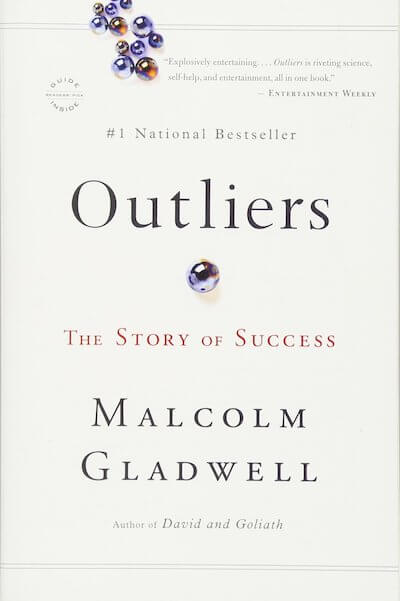
Outliers Book Summary
This Outliers Book Summary covers the key ideas, lessons, and takeaways in about 20 minutes.
Short Description:
Outliers shows success comes from context, effort, and opportunity.
Gladwell’s ultimate message is both humbling and empowering. We can’t control every factor of our birth or background, but we can recognize the patterns that make success possible and build systems that extend those opportunities to more people. By understanding that genius is nurtured, not just born, we can create a society where greatness isn’t a rare accident but a shared possibility.
Helps with these goals
Want a Free Weekly Read?
Get a free summary every week straight to your mailbox.
Preview the Outliers book summary
Below is a preview of Sumizeit’s comprehensive human-written summary of Outliers by Malcolm Gladwell. The full summary is 15-20 minutes long and covers the book’s key ideas in text, audio, visual, and video formats. Unlock the full 20 Minute Summary
In Outliers: The Story of Success, Malcolm Gladwell dismantles the myth of the “self-made” individual. He argues that we tend to celebrate personal achievement while ignoring the cultural, social, and historical forces that make it possible. Success, he explains, isn’t simply a matter of hard work or intelligence—it’s the result of hidden advantages, extraordinary opportunities, and cultural legacies that shape how people perceive and seize those opportunities.
Gladwell begins with the example of Roseto, Pennsylvania, a small town founded by Italian immigrants in the 1800s. In the 1950s, medical researchers discovered something remarkable: Roseto’s residents had some of the lowest rates of heart disease in the nation. At first, scientists suspected their Mediterranean diet, but they ate plenty of fried food and smoked cigars. The real cause was community. In Roseto, families lived in multi-generational homes, neighbors looked after each other, and no one flaunted wealth. This strong social fabric created emotional security, which protected residents’ health. Gladwell uses this story to show that success—whether physical, social, or professional—is often communal, not individual.
Opportunity: The Invisible Advantage
Gladwell argues that opportunity is the foundation of success. Even the most talented individuals need to be in the right place at the right time. He illustrates this with the striking example of Canadian youth hockey players. Almost half of Canada’s top players are born between January and March, while very few are born near the end of the year. This odd pattern stems from the league’s January 1 age cut-off. Players born earlier in the year are bigger and more mature than their younger peers, giving them an early performance advantage. Coaches then select these “better” players for elite teams, which means more training, more practice, and more success. These early differences compound—a dynamic Gladwell calls the Matthew Effect, named after the biblical verse, “For unto everyone that hath shall be given.”
He extends this logic to many other domains. For instance, elite school admissions, corporate promotions, and scholarships often favor those who had small advantages early in life—better teachers, more resources, or simple good timing. Over years, these early breaks multiply, creating the illusion of “natural talent.” Gladwell’s point is that success breeds success, but only when society keeps rewarding initial advantages instead of distributing opportunities more evenly.
Timing, Gladwell shows, can also determine destiny. Bill Gates, Steve Jobs, Bill Joy, and other tech pioneers were all born within a few years of each other in the mid-1950s. This meant they were teenagers when personal computers became accessible in the 1970s—a once-in-history moment. Gates’ story, in particular, demonstrates how random access to resources can change everything. At just 13, he attended a Seattle private school that installed a computer terminal linked to a time-sharing system—a rarity in 1968. By age 20, he had already logged thousands of hours of programming experience, years ahead of his peers. Gladwell’s conclusion: Gates wasn’t merely brilliant; he was lucky enough to encounter his life’s opportunity early.
Want the complete 20-minute summary?
- Full structured summary
- Video Summary
- Podcast Summary
- Audio summary
- Infographic
- Key takeaways
- Exercises
- Quiz
- Highlights and notes
- Ask the book with AI
Who should read Outliers?
Outliers is essential reading for anyone who wants to understand what truly drives success—whether you're an entrepreneur, educator, parent, or simply curious about why some people achieve extraordinary things while others don't. If you've ever wondered whether success is earned purely through talent and hard work, or if you're interested in how culture, timing, and circumstance shape human potential, this book will challenge your assumptions.
Why does Outliers matter?
In a world obsessed with celebrating self-made success stories, Malcolm Gladwell's Outliers reveals the hidden systems, opportunities, and cultural forces that actually create exceptional achievement. Understanding these patterns helps us build fairer institutions, raise children more effectively, and recognize that genius is developed, not simply born—making it possible to extend success to far more people than our current systems allow.
What are the key themes in Outliers?
- Success is shaped by context, not just individual talent
- Opportunity and timing matter more than we acknowledge
- Cultural legacies profoundly influence modern behavior
- Practical intelligence and social skills are as important as raw IQ
- Systems and structures perpetuate or prevent inequality
- Deliberate practice and accumulated experience drive mastery
How can you apply ideas from Outliers?
- Evaluate hiring and admissions decisions by asking what advantages candidates received early in life, then actively recruit from underrepresented groups with hidden potential
- Design educational systems that provide extended learning time and access to resources for low-income students to close summer and opportunity gaps
- Create mentorship and deliberate practice opportunities in your field so emerging talent can accumulate the hours needed for mastery, rather than relying on self-discovery
- Teach children practical intelligence skills—how to communicate with authority, navigate systems, and build social confidence—alongside academic content
- Recognize cultural patterns in teams and organizations, adjusting communication norms to ensure critical information flows regardless of hierarchical position
- Build diverse teams intentionally, understanding that people from different backgrounds bring different inherited values and perspectives that strengthen problem-solving
- Structure work environments to reward and extend opportunities to people with early advantages, recognizing that systemic inequality is often invisible to those benefiting from it
What common mistakes do readers make with Outliers?
- Assuming that success stories are purely products of individual talent and hard work, ignoring the role of timing, opportunity, and circumstance
- Believing that high IQ alone predicts real-world success without considering practical intelligence and social navigation skills
- Overlooking how early small advantages compound over time, leading to misdiagnosis of why achievement gaps exist
- Failing to recognize that cultural values inherited from ancestors still influence modern behavior and performance in ways that can be leveraged or misunderstood
- Designing systems that concentrate opportunities among those who already have advantages, rather than actively extending access to practice, mentorship, and resources to developing talent
Sumizeit Exercises Apply what you've learned
Turn ideas from Outliers into action with a short guided reflection: identify the biggest takeaway, connect it to your life, and commit to one step you can take in the next 24 hours.
What is the expert analysis of Outliers?
Overview
Outliers: The Story of Success, authored by Malcolm Gladwell, stands as a seminal work in contemporary popular nonfiction, bridging sociology, psychology, and cultural analysis to challenge conventional narratives about individual achievement. Gladwell, a Canadian journalist renowned for his accessible yet thought-provoking storytelling, leverages compelling case studies and interdisciplinary research to argue that success is less a product of innate talent or sheer willpower and more an outcome of complex social, cultural, and historical contexts. Since its publication, Outliers has significantly influenced public discourse on meritocracy, opportunity, and the nature of excellence.
Core Thesis
At its core, Outliers dismantles the myth of the "self-made" individual by illustrating that extraordinary success arises not solely from personal attributes but from a confluence of hidden advantages, timely opportunities, cultural legacies, and sustained effort. Gladwell posits that factors such as birthdate, cultural background, social environment, and access to resources create a fertile ground where talent can be nurtured. The book’s central insight is that success is communal and cumulative, shaped by external forces as much as by internal drive, encapsulated in concepts like the "10,000-Hour Rule" and the "Matthew Effect."
Strengths
- Engaging Narrative Style: Gladwell excels at weaving anecdotal evidence with academic research, making complex sociological concepts accessible and compelling to a broad audience.
- Interdisciplinary Approach: By integrating psychology, sociology, history, and economics, the book offers a multifaceted perspective on success that transcends simplistic explanations.
- Illumination of Hidden Variables: The book’s exploration of subtle factors—such as the impact of birth month on Canadian hockey players or cultural legacies influencing behavior—sheds light on often overlooked determinants of achievement.
- Practical Implications: Gladwell’s discussion of educational inequality and programs like KIPP provides actionable insights into how systemic changes can democratize opportunity.
- Challenging Conventional Wisdom: The book effectively questions deeply ingrained beliefs about meritocracy and individualism, prompting readers to reconsider societal structures.
Critiques & Counterarguments
- Oversimplification of Complex Phenomena: Critics argue that Gladwell’s reliance on illustrative anecdotes sometimes glosses over the complexity and variability of social science research, risking reductionism.
- Questionable Generalizability: Some of the examples, such as the 10,000-Hour Rule, have been contested by subsequent studies emphasizing the role of innate ability, quality of practice, and other factors beyond mere hours logged.
- Selection Bias in Case Studies: The focus on extraordinary outliers may obscure the experiences of those with similar advantages who do not achieve comparable success, limiting the explanatory power of the thesis.
- Competing Research on Intelligence and Success: Alternative frameworks, such as Carol Dweck’s growth mindset theory or Howard Gardner’s multiple intelligences, offer nuanced views on talent development that complicate Gladwell’s emphasis on opportunity and practice alone.
- Structural Determinism vs. Individual Agency: Some scholars critique the book for leaning toward structural determinism, potentially underestimating individual resilience, creativity, and agency in overcoming adversity.
Who Should Read This
Outliers is essential reading for intellectuals and practitioners interested in the sociology of success, educators seeking to understand and mitigate achievement gaps, policymakers aiming to foster equitable opportunity, and anyone curious about the interplay between individual effort and systemic factors. Its accessible prose makes it suitable for a sophisticated general audience, while its interdisciplinary insights provide valuable fodder for scholars and professionals in psychology, education, business, and cultural studies. Readers prepared to engage critically with its arguments will find Outliers a provocative catalyst for rethinking how society defines and cultivates excellence.
Frequently asked questions about the Outliers book summary
What is Outliers about?
Outliers: The Story of Success by Malcolm Gladwell explores why some people achieve extraordinary success while examining the hidden forces behind exceptional achievement. Rather than celebrating individual talent alone, Gladwell reveals how opportunity, timing, cultural legacy, community, and accumulated practice combine to create what we recognize as genius or success.
Who should read Outliers?
Anyone interested in understanding what truly drives success should read Outliers, particularly educators, parents, entrepreneurs, hiring managers, and policy makers. The book challenges common assumptions about talent and hard work, making it valuable for anyone designing systems, raising children, or aspiring to understand the patterns behind achievement.
What are the main takeaways from Outliers?
The main takeaways are that success is shaped by context more than inherent talent; that small early advantages compound dramatically over time through the Matthew Effect; that approximately 10,000 hours of deliberate practice drives mastery when combined with opportunity; and that cultural values, birth timing, and access to resources are as important as intelligence or effort in determining outcomes. Ultimately, Gladwell shows that genius is nurtured through systems and circumstance, not simply born.
What is the 10,000-Hour Rule?
The 10,000-Hour Rule, popularized in Outliers, states that achieving world-class expertise in any field requires roughly 10,000 hours of focused, deliberate practice. Gladwell illustrates this through examples like The Beatles' thousands of hours performing in Hamburg and Bill Joy's unlimited access to computer terminals, showing that mastery is built through sustained effort over time rather than innate genius.
How does birth timing affect success?
Gladwell demonstrates that birth timing creates invisible advantages or disadvantages in multiple ways: Canadian hockey players born early in the year have physical maturity advantages that compound throughout their careers; tech pioneers born in the mid-1950s were teenagers when computers emerged in the 1970s, giving them unique early access; and belonging to a smaller generation reduces competition for schools and jobs. These timing factors often determine whether talent ever develops into mastery.
What does Outliers say about cultural differences?
Outliers argues that cultural values persist across generations and continents, influencing modern behavior in profound ways. Gladwell explores how cultures of honor, deference, and diligence inherited from ancestral societies still shape how people respond to insults, communicate with authority, and approach work—explaining real-world outcomes from plane crashes to math achievement gaps.
How does Outliers explain the achievement gap in education?
Rather than attributing achievement gaps to innate ability, Outliers shows that gaps stem from unequal access to learning time and resources. Summer breaks benefit affluent children who receive tutoring and enrichment while low-income students fall behind; these annual gaps compound into widening inequality. Gladwell highlights schools that extended school hours and year length, proving the gap is systemic rather than inherent.
About Sumizeit
Sumizeit is a profitable Scomy LLC company based in Miami, Florida. Our founders, Clemens Raemy and Weina Scott, are successful entrepreneurs with several exits. Sumizeit is a popular book summary app / micro learning app used by busy professionals and entrepreneurs with over 2,500 non-fiction book summaries and 10,000 podcast summaries in text, audio, visual, podcast, and video format. We also have stellar retention tools to make ideas stick - such as flashcards with spaced repetition, quizzes, streaks, highlighting and notes, daily challenges, riddles, mini-courses, meditation, and more. You won't only learn the idea, but also remember it. Over 90% of our users change their habits with Sumizeit.
Upgrade Now
Here's why readers love Sumizeit
Join thousands of learners getting smarter every day
"Great experience. Detailed summaries. Loved the gamification feature. Makes learning fun. Good customer service. I recommend Sumizeit to anyone. You'll learn a lot."
"I always felt busy but still wanting to keep up with the book discussion in my friend group. This was a great supplement to help me keep reading the books I find fun while keeping up with important books."
"I love this website. Instead of scrolling social media, I find myself learning a lot. I use it everyday. I recommend this app for anyone who is too busy and wants to get up to speed with their favorite books."
Outliers Book Summary PDF
Looking for a Outliers Book Summary PDF you can save and revisit offline? Our Outliers Book Summary PDF captures the book’s core ideas in a clean, printable format — the key frameworks, takeaways, and structure without the fluff. Download the Outliers Book Summary PDF when you want a reference you can annotate, share with your team, or review on the go. Get your Outliers Book Summary PDF from the download page below.
Download Outliers Book Summary PDFPeople also liked these summaries
Readers who explored Outliers often enjoyed these titles next.




Ready to read the whole thing?
- Full structured summary
- Video Summary
- Podcast Summary
- Audio summary
- Infographic
- Key takeaways
- Exercises
- Quiz
- Highlights and notes
- Ask the book with AI
Featured Book Titles
Popular Book Summaries at sumizeit, leading book summary app