


As an Amazon Associate, Sumizeit earns from qualifying purchases.
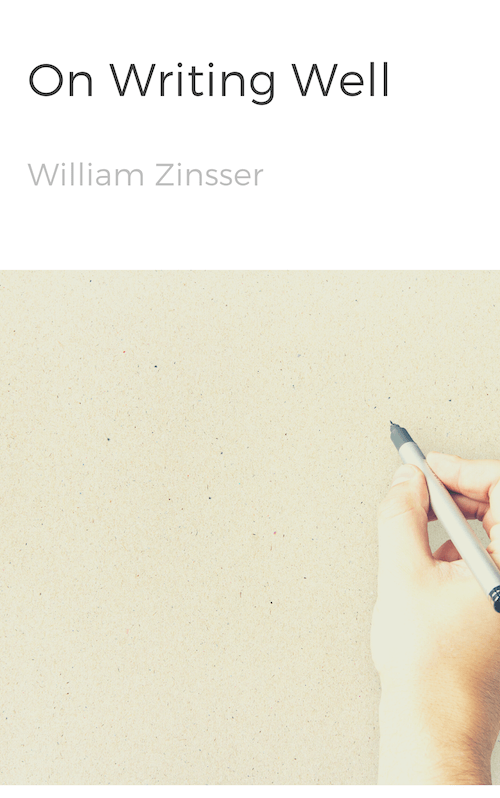
On Writing Well Book Summary
This On Writing Well Book Summary covers the key ideas, lessons, and takeaways in about 20 minutes.
Just remember to keep it simple and easy to understand. It takes a sprinkle of genius to understand something complex and write in a way so a fifth-grader can understand. Couple that with a consistent tone, careful word choice, and most importantly, your inner voice.
Helps with these goals
Want the complete 20-minute summary?
- Full structured summary
- Video Summary
- Podcast Summary
- Audio summary
- Key takeaways
- Exercises
- Quiz
- Highlights and notes
- Ask the book with AI
What is in the On Writing Well book summary?
Below is a preview of Sumizeit’s expert-written summary of On Writing Well by William Zinsser. The full summary covers the book’s key ideas in text, audio, and video.
A blank page can send shivers down your spine. A million questions start whirling inside your head in a hurricane of possibilities. What should you write? Which words to choose? Where to even begin? It’s all very overwhelming.
Don’t panic. We’ll let you in on a couple of tricks that will make writing a breeze. On Writing Well by William Zinsser is a guide to honing your writing skills and perfecting your craft. It offers just the right tools so you can do wonders with your words.
The write way, where less is more
“If you can’t explain it simply, you don’t understand it well enough,” said Albert Einstein.
The secret sauce to good writing is simplicity. What happens when an article rambles on and doesn’t get to the point? Precisely, you toss it aside and say, “Ain’t nobody got time for that.”
Newbies think it’s cool to jam fluff. Remember, the reader wants to read, not read between the lines. Slash down that fluff and declutter like a maniac. Write, rewrite, and repeat.
Clear words come from clear thoughts. Ask yourself, what are you trying to say? Have you said it in the best way possible? Be your critic and be ruthless. Break long sentences into shorter ones. The more concise your craft, the better.
As Zinsser says, “writing improves in direct ratio to the number of things we can keep out of it that shouldn’t be there.”
Be yourself is all that you can do
Is an iPhone different from a Chinese rip-off? Lame question, but in a nutshell, that’s authenticity for you.
Words are your wardrobe. These words reflect your personality. Although finding your voice is no walk in the park, here’s how you get this ball rolling.
For one, don’t just gaze into the paper waiting for inspiration to strike. Start writing. It’ll be uncomfortable at first but after a couple of sentences or paragraphs, you’ll be in the groove. Force yourself to write everyday so you ride that learning curve. Practice is the only name of the game.
Next up, use personal pronouns. The more opinionated you are, the faster you can paint your voice into words. There’s no mass audience waiting to read your words. Take your sweet time and don’t worry whether the reader “gets it” if you throw in a sudden impulse of humor. You are writing for yourself, so enjoy it to the fullest.
The right words can achieve anything
If writing is war, then words are your arsenal. Good writing comes from originality, but also from imitation. Read your favorite authors. If you like being sarcastic in what you write, read the famous authors that have a knack for doing that and you’ll learn as you go.
Words ebb and flow, and that’s where the magic is. If your sentences march in the same plodding gait that puts people to sleep, it’s about time you breathed fresh life into your words.
Want the complete 20-minute summary?
- Full structured summary
- Video Summary
- Podcast Summary
- Audio summary
- Key takeaways
- Exercises
- Quiz
- Highlights and notes
- Ask the book with AI
Who should read On Writing Well?
On Writing Well is essential for anyone who writes—journalists, students, business professionals, and aspiring authors. Whether you're crafting emails, reports, articles, or books, this guide equips you with timeless principles to improve clarity and impact. If you've ever struggled with a blank page or felt your writing fell flat, Zinsser's practical advice will transform your approach.
Why does On Writing Well matter?
In a world drowning in information and competing for reader attention, the ability to write clearly and compellingly is more valuable than ever. On Writing Well cuts through the noise by teaching you to eliminate clutter, find your authentic voice, and engage readers from the first sentence to the last. William Zinsser's insights have shaped generations of writers, making this book a foundational resource for anyone serious about mastering the craft.
What are the key themes in On Writing Well?
- Simplicity and clarity as the foundation of good writing
- Finding and developing your authentic voice
- The power of precise word choice and strong verbs
- Consistency in tone and structure
- The importance of revision and practice over inspiration
- Crafting engaging openings and satisfying endings
What are the key lessons from the On Writing Well book summary?
Simplicity is the ultimate sophistication
Good writing comes from clear thinking and ruthless editing. Remove unnecessary words and fluff to let your core message shine through with maximum impact.
Find your authentic voice through practice
Your unique perspective is your greatest asset. Write daily, use personal pronouns, and inject your personality into every piece to create writing that resonates.
Strong verbs energize your prose
Replace weak, generic verbs with action-packed alternatives. Words like 'stroll' instead of 'walk' and 'dash' instead of 'run' bring energy and specificity to your writing.
Maintain consistent tone throughout
Jarring shifts in tone confuse and alienate readers. Choose your voice—conversational or formal, humorous or serious—and sustain it consistently from beginning to end.
Your opening must hook the reader immediately
A bland introduction loses readers before you've begun. Open with a punchy sentence, surprising fact, or compelling story that answers the reader's question: 'Why should I care?'
Structure your paragraphs for maximum flow
End each paragraph with a springboard sentence that propels readers into the next one. Logical progression and smooth transitions guide readers effortlessly through your narrative.
Learn by reading and imitating great writers
Study authors whose style you admire. Analyze their techniques, patterns, and word choices to absorb their craft and develop your own distinctive approach.
Eliminate adverbs and unnecessary adjectives
Modifiers often dilute meaning and weaken writing. Trust your nouns and verbs to carry the weight; use descriptive words only when they add essential information.
Read your work aloud to catch rhythm problems
Your ear catches what your eyes miss. Listen to how sentences flow, where they stumble, and where the natural breaks should occur. Adjust pacing and word order accordingly.
Know when to end—don't overstay your welcome
A perfect ending surprises readers after you've delivered all necessary information. Stop when you've made your point; lingering conclusions dilute impact and bore your audience.
Qualifiers weaken persuasiveness
Phrases like 'kind of,' 'sort of,' and 'very' hedge your claims and undermine confidence. Commit fully to your statements and remove wishy-washy language.
Contractions create warmth and connection
Using 'I'll' instead of 'I will' and 'won't' instead of 'will not' makes writing feel more human and conversational. Contractions build rapport with readers.
You are the only competition that matters
Focus on continuous self-improvement rather than comparison with others. Every rejection and failure teaches you something invaluable about your craft.
The process is more important than the product
Obsessing over the final result distracts you from the real work. Immerse yourself in the writing journey itself; excellence emerges from loving the craft, not the outcome.
Draw from your lived experience for authentic material
Your unique experiences shape your perspective and fuel your writing. Write about what resonates with you personally, and your passion will shine through to readers.
Inspiration is a myth—discipline is reality
Professional writers don't wait for lightning-strike moments of inspiration. They commit to daily practice and trust that showing up consistently will unlock their best work.
Treat initial plans as hypotheses, not blueprints
Rigid adherence to an outline can stifle creativity and block your true potential. Remain flexible and allow your writing to evolve as new ideas emerge during the process.
Use 'but' at the start of sentences to signal direction shifts
Despite conventional grammar rules, opening with 'but' effectively signals readers that you're changing direction. This natural punctuation keeps readers engaged and alert.
Choose precision over eloquence
Never use a word you don't fully understand or jam in a synonym without clarity. Accurate, simple language serves readers better than impressive but vague terminology.
Enjoy writing as a form of expression, not obligation
You'll never excel at writing unless you genuinely enjoy the act of creating. When writing feels like a burden, reconnect with why you love it and write about topics that move you.
Want the complete 20-minute summary?
- Full structured summary
- Video Summary
- Podcast Summary
- Audio summary
- Key takeaways
- Exercises
- Quiz
- Highlights and notes
- Ask the book with AI
How can you apply ideas from On Writing Well?
- Cut your first draft by 20-30% through ruthless editing to improve clarity and reader engagement
- Create a daily writing habit, even if just for 15 minutes, to build confidence and develop your voice
- Read your work aloud before publishing to catch awkward phrasing and rhythm issues
- Study one piece of writing from an author you admire each week and analyze their techniques
- Revise every paragraph's final sentence to ensure it naturally propels readers to the next section
- Replace weak verbs with strong action words in your editing pass
- Test your opening on someone unfamiliar with your topic—if it doesn't hook them, rewrite it
What common mistakes do readers make with On Writing Well?
- Padding your writing with unnecessary jargon and complicated language to sound impressive
- Changing tone inconsistently, causing confusion and disconnecting readers from your narrative
- Waiting for inspiration instead of sitting down to write regularly and building the habit
- Using excessive adverbs and weak adjectives that dilute meaning rather than strengthen it
Sumizeit Exercises Apply what you've learned
Turn ideas from On Writing Well into action with a short guided reflection: identify the biggest takeaway, connect it to your life, and commit to one step you can take in the next 24 hours.
What is the expert analysis of On Writing Well?
Overview
On Writing Well is a seminal work by William Zinsser, a distinguished American writer and educator renowned for his contributions to literary journalism and writing pedagogy. Zinsser’s extensive career, including his tenure at the New York Herald Tribune and Yale University, underpins the book’s authority. This guide transcends mere technical instruction, offering a philosophy of writing that emphasizes clarity, authenticity, and the joy of the craft. Its enduring significance lies in its practical wisdom, making it a touchstone for writers across genres who seek to refine their voice and connect meaningfully with readers.
Core Thesis
Zinsser’s central argument is that effective writing is rooted in simplicity, clarity, and authenticity. He posits that good writing is not about ornate language or complexity but about stripping away the superfluous to reveal clear thought and genuine voice. The craft demands rigorous editing, consistent tone, and a personal connection to the material. Writing is presented as a disciplined process that requires perseverance and an embrace of imperfection, where the writer’s unique personality and honest expression are paramount.
Strengths
- Clarity and Accessibility: Zinsser’s emphasis on simplicity demystifies writing, making it approachable without sacrificing depth.
- Practical Guidance: The book offers concrete advice on sentence structure, word choice, tone, and the writing process, grounded in real-world examples.
- Encouragement of Authenticity: By urging writers to find and trust their own voice, Zinsser champions individuality over formulaic prose.
- Holistic View of Writing: The integration of mindset, process, and craft provides a comprehensive framework that resonates beyond technical skill.
- Timeless Wisdom: Despite changes in media and technology, the principles articulated remain relevant for contemporary writers.
Critiques & Counterarguments
- Potential Oversimplification: While advocating simplicity, Zinsser’s approach may underplay the value of complexity and nuance in certain literary or academic contexts where layered meanings enrich the text.
- Limited Engagement with Diverse Writing Styles: The book primarily reflects a Western, journalistic tradition and may not fully address the demands or aesthetics of other genres such as poetry, experimental fiction, or non-Western narrative forms.
- Underestimation of Reader Interpretation: The insistence on clarity and directness might overlook the interpretive role of readers who appreciate ambiguity and subtlety as part of literary engagement.
- Competing Schools of Thought: Postmodern and deconstructionist theories challenge the notion of a singular, authentic voice, suggesting that all writing is inherently intertextual and mediated, complicating Zinsser’s emphasis on individual authenticity.
- Real-World Evidence of Varied Success: Many celebrated authors employ elaborate prose and complex structures successfully, indicating that Zinsser’s formula, while effective for many, is not universally prescriptive.
Who Should Read This
On Writing Well is indispensable for aspiring writers, journalists, and professionals who seek to communicate with clarity and impact. It is particularly valuable for those who feel daunted by the writing process or who struggle to find their voice. Educators and students in writing-intensive disciplines will find its principles foundational. However, seasoned literary writers and theorists might approach it as a practical manual rather than a comprehensive treatise on all facets of writing. Ultimately, anyone committed to honing their craft and appreciating the art of clear, authentic expression will benefit from Zinsser’s insights.
Frequently asked questions about the On Writing Well book summary
What is On Writing Well about?
On Writing Well by William Zinsser is a comprehensive guide to improving your writing craft through simplicity, clarity, and authenticity. The book teaches you how to eliminate clutter, find your unique voice, choose precise words, maintain consistent tone, and master structure—providing timeless principles applicable to any form of writing from journalism to creative work.
Who should read On Writing Well?
Anyone who writes should read On Writing Well, including journalists, students, business professionals, bloggers, and aspiring authors. Whether you're struggling with clarity, searching for your voice, or wanting to polish your craft, Zinsser's practical advice applies to all writers regardless of experience level or writing genre.
What are the main takeaways from On Writing Well?
The core takeaways from On Writing Well include: simplicity and clarity trump complexity, your authentic voice matters more than sounding impressive, strong verbs and precise word choice energize prose, consistent tone keeps readers engaged, engaging openings and satisfying endings frame your work, and daily practice and revision matter far more than waiting for inspiration. Zinsser emphasizes that writing is a craft perfected through discipline, not talent alone.
How does William Zinsser define good writing?
Zinsser defines good writing as clear, simple, and authentic. He argues that if you can't explain something simply, you don't understand it well enough. Good writing removes unnecessary clutter, reflects the writer's genuine voice and personality, uses precise and strong language, and maintains consistency in tone and structure throughout.
Why does Zinsser emphasize simplicity in writing?
Zinsser emphasizes simplicity because clear writing comes from clear thinking. Readers want straightforward information presented efficiently; fluff and unnecessary complexity cause them to disengage. By cutting excess words and focusing your message, you maximize impact and respect your reader's time, making your writing far more persuasive and memorable.
How can I find my authentic writing voice according to On Writing Well?
On Writing Well recommends finding your voice through daily writing practice, using personal pronouns, injecting your opinions and personality into your work, and writing about topics that genuinely resonate with you. Zinsser stresses that voice develops naturally over time as you overcome self-consciousness and allow your unique perspective to emerge through consistent, deliberate practice.
What does Zinsser say about the importance of revision?
Zinsser emphasizes that writing improves in direct proportion to the things you remove from it. Revision is not optional—it's essential to the craft. He advocates for ruthless editing, rewriting, and rereading your work multiple times to strengthen clarity, cut unnecessary words, and refine your message until it resonates perfectly with readers.
About Sumizeit
Sumizeit is a profitable Scomy LLC company based in Miami, Florida. It has been helping readers learn from nonfiction books for 7 years with expert-written summaries in text, audio, podcast, and video.
Want the complete 20-minute summary?
- Full structured summary
- Video Summary
- Podcast Summary
- Audio summary
- Key takeaways
- Exercises
- Quiz
- Highlights and notes
- Ask the book with AI
Here's why readers love Sumizeit
Join thousands of learners getting smarter every day
"Great experience. Detailed summaries. Loved the gamification feature. Makes learning fun. Good customer service. I recommend Sumizeit to anyone. You'll learn a lot."
"I always felt busy but still wanting to keep up with the book discussion in my friend group. This was a great supplement to help me keep reading the books I find fun while keeping up with important books."
"I love this website. Instead of scrolling social media, I find myself learning a lot. I use it everyday. I recommend this app for anyone who is too busy and wants to get up to speed with their favorite books."
On Writing Well Book Summary PDF
Looking for a On Writing Well Book Summary PDF you can save and revisit offline? Our On Writing Well Book Summary PDF captures the book’s core ideas in a clean, printable format — the key frameworks, takeaways, and structure without the fluff. Download the On Writing Well Book Summary PDF when you want a reference you can annotate, share with your team, or review on the go. Get your On Writing Well Book Summary PDF from the download page below.
Download On Writing Well Book Summary PDFPeople also liked these summaries
Readers who explored On Writing Well often enjoyed these titles next.



Want the complete 20-minute summary?
- Full structured summary
- Video Summary
- Podcast Summary
- Audio summary
- Key takeaways
- Exercises
- Quiz
- Highlights and notes
- Ask the book with AI
Featured Book Titles
Popular Book Summaries at sumizeit, leading book summary app
