


As an Amazon Associate, Sumizeit earns from qualifying purchases.
Notorious RBG Book Summary
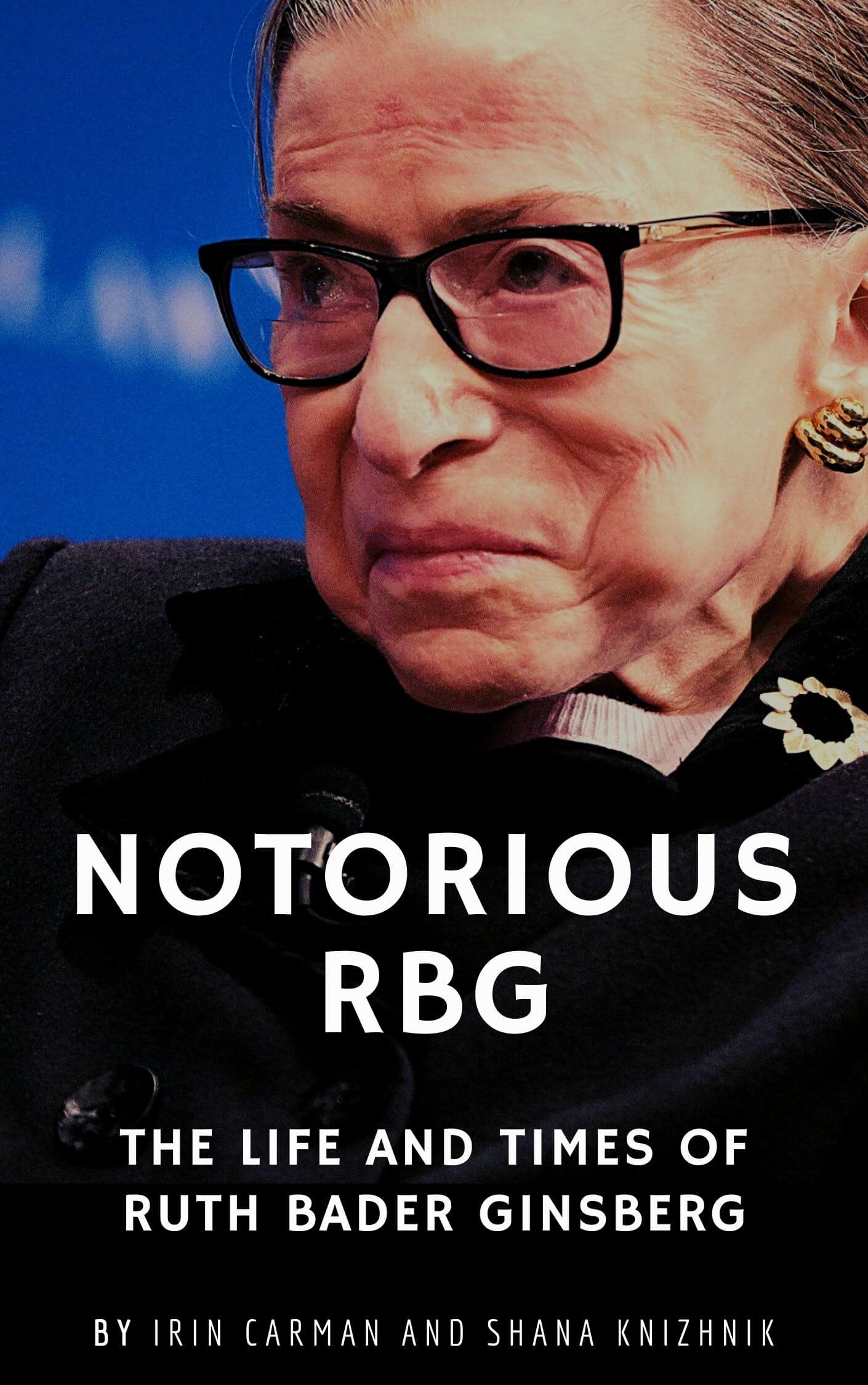
This Notorious RBG Book Summary covers the key ideas, lessons, and takeaways in about 20 minutes.
Helps with these goals
Want the complete 20-minute summary?
- Full structured summary
- Video Summary
- Podcast Summary
- Audio summary
- Key takeaways
- Exercises
- Quiz
- Highlights and notes
- Ask the book with AI
What is in the Notorious RBG book summary?
Below is a preview of Sumizeit’s expert-written summary of Notorious RBG by Irin Carman and Shana Knizhnik. The full summary covers the book’s key ideas in text, audio, and video.
At 5 ft tall and 80 years old, Ruth Bader Ginsberg became a pop icon, dubbed “Notorious RBG” as a play off the then-popular rapper “Notorious B.I.G.” In 2013, she became a viral internet hero by the millennials who looked to her as the champion of their liberal ideals. With a Tumblr and Facebook page, created by the coauthor of this book, Shana Knizhnik, RBG’s fame was built. Although her massive popularity came late in life, her accomplishments dated back to her youth. Notorious RBG shares the life journey and triumphs of Ruth Bader Ginsberg, aka RBG.
Growing Up Kiki
Joan Ruth Bader’s original nickname was Kiki. Her mother was a first-generation American whose family had immigrated to escape the Austro-Hungarian Empire.
Kiki was an intellect and a reader from a young age. Her musical talent included playing the cello and she spent time in the Adirondacks during the summer. It was a relatively normal childhood except for two tragedies: the death of a sister to meningitis when Kiki was just two years old, and her mother’s cervical cancer diagnosis when she was 13.
Her mother always wished for Kiki to receive the higher education that she hadn’t, so Kiki worked hard to please her mom by excelling in her studies. As a result, she was awarded multiple scholarships to attend Cornell University. Sadly, Kiki missed her graduation due to her mother’s passing only the night before.
Two messages of inspiration from her mother were a profound influence on Kiki’s life. One was to always be a lady, never overcome with “pointless emotions” such as anger and envy. The other was simply, “be independent.”
The Formation of Ruth’s Future
During the Cornell years, much of Ruth’s future was in the embryo and began its development. When she arrived at Cornell, the ratio was four men to every woman. Unlike most of the females there, Ruth was not looking for a “Mrs. Degree.” Finding a husband was far from the priority list, as were the parties of the Alpha Epsilon Phi sorority she was in.
Ruth majored in government and studied under Professor Robert E. Cushman, who taught Constitutional Law. There was a “Red Scare” during the Cold War, as fear of communism was widespread. A Zoology professor at her university, Marcus Singer, was removed from his teaching position for not giving up the names of his fellow Marxist study group participants. Ironically, Ruth was working alongside Professor Cushman on a censorship exhibition at the time and was shown how lawyers were involved in defending the censored professor. This led Ruth to decide to pursue a career in law as a way to improve society.
While she settled on a career as a lawyer, Ruth also discovered the man she would marry. Marty Ginsburg met Ruth through friends while they were both dating other people. Ruth quickly noticed how intelligent Marty was and likewise, Marty appreciated her career choice and aptitude to be successful.
Want the complete 20-minute summary?
- Full structured summary
- Video Summary
- Podcast Summary
- Audio summary
- Key takeaways
- Exercises
- Quiz
- Highlights and notes
- Ask the book with AI
Who should read Notorious RBG?
Notorious RBG is essential for anyone interested in American legal history, women's rights, and inspiring personal journeys. Students, feminists, and those seeking to understand how individual persistence can reshape society will find compelling lessons in Ruth Bader Ginsburg's life story. It's also perfect for readers curious about how a Supreme Court Justice became an unexpected pop culture icon.
Why does Notorious RBG matter?
Notorious RBG by Irin Carman and Shana Knizhnik explores how one woman's quiet determination fundamentally challenged gender discrimination through law rather than protest. At a time when gender equality remains contested, Ginsburg's strategic approach to legal change offers timeless insights into systemic reform. Her journey from overlooked lawyer to cultural icon demonstrates how principled dissent can inspire generations and shape public consciousness about justice.
What are the key themes in Notorious RBG?
- Using law as a tool for social change
- Gender discrimination in law and society
- The power of quiet persistence over activism
- How personal integrity shapes legacy
- Unexpected paths to cultural influence
- Balancing compromise with conviction
- Educational access and opportunity inequality
- The role of strategic legal argumentation
What are the key lessons from the Notorious RBG book summary?
Strategic law is more powerful than protest
Rather than marching in the streets, Ginsburg wielded her legal expertise to change discriminatory laws from within the system, demonstrating that technical mastery can achieve lasting social transformation.
Work can substitute for sleep when you're driven
While caring for her family and supporting her cancer-stricken husband through law school, Ginsburg discovered she could thrive on minimal sleep—a discipline that became foundational to her career.
Discrimination harms everyone, not just its direct targets
Ginsburg represented men denied benefits based on gender, showing that fighting sex discrimination benefits society broadly by dismantling harmful stereotypes affecting all people.
Excellence can overcome institutional bias—to a point
Despite graduating first in her class at Columbia, Ginsburg faced rejection from Supreme Court Justice Frankfurter simply because she was a woman, exposing how even exceptional credentials cannot always overcome systemic prejudice.
Independence is a more valuable inheritance than wealth
Ginsburg's mother instilled the value of independence above all else, a principle that guided Ginsburg's career choices and personal resilience throughout her life.
Personal tragedy can deepen commitment to larger causes
The early losses Ginsburg experienced—her sister's death and mother's cancer—deepened her resolve to build systems of fairness rather than accepting injustice as inevitable.
Emotional control is a professional asset
Ginsburg's mother advised her to avoid 'pointless emotions' like anger and envy, a discipline that helped her maintain effectiveness and credibility in male-dominated legal spaces.
Advocate for the vulnerable before power positions open
Ginsburg built her reputation through volunteer work with the ACLU, reading letters from women facing discrimination, long before securing the platform of the Supreme Court.
Moderate positions can mask radical conviction
Early in her judicial career, Ginsburg was seen as a consensus-seeker focused on compromise, but her decades on the bench revealed her deep commitment to protecting individual rights against state power.
Dissent becomes cultural power when society is ready
Ginsburg's dissenting opinions became viral internet content only when younger generations discovered them, showing that principled opposition can inspire movements long after it's written.
Visibility matters even when it comes late
Though Ginsburg didn't become a cultural icon until her 80s, that late-life fame amplified her influence and created a new generation of activists inspired by her work.
Health challenges don't have to end meaningful work
Despite developing pancreatic cancer, Ginsburg refused to retire, demonstrating that physical limitations need not define the scope of professional contribution and influence.
A partner who appreciates your ambition is crucial
Marty Ginsburg's genuine respect for Ruth's career and intelligence became the foundation for her ability to pursue groundbreaking work while maintaining family responsibilities.
Institutional access is denied to women through multiple mechanisms
Ginsburg experienced barriers ranging from library access restrictions to forced pregnancy resignations, revealing how discrimination operated through both explicit rules and implicit assumptions.
Cultural icons need platforms—but authenticity is what resonates
While the Notorious RBG Tumblr and social media amplified Ginsburg's image, her actual dissents and uncompromising positions are what gave the icon substance and meaning.
Prepare strategically before challenging the system
Ginsburg built her case through careful legal research and education before mounting major challenges, showing that effective reform requires deep knowledge of existing law and judicial thinking.
Small victories accumulate into systemic change
Ginsburg's approach emphasized winning one case at a time, gradually educating judges and changing precedent rather than attempting revolutionary overhauls.
Institutional position amplifies individual voice
Ginsburg's path to the Supreme Court gave her dissenting opinions the formal weight needed to influence national conversation and inspire public action.
Timing shapes how messages are received and used
Ginsburg's opinions that seemed moderate in the 1990s became radical dissents when the Court shifted rightward, demonstrating how context transforms the significance of principled positions.
Legacy is shaped by forces beyond the individual
Ginsburg didn't create the Notorious RBG meme or her pop icon status—younger generations claimed her as a symbol, showing that enduring influence requires both principled work and cultural receptivity.
Want the complete 20-minute summary?
- Full structured summary
- Video Summary
- Podcast Summary
- Audio summary
- Key takeaways
- Exercises
- Quiz
- Highlights and notes
- Ask the book with AI
How can you apply ideas from Notorious RBG?
- Study how legal briefs can educate judges about societal harm, using Ginsburg's Reed v. Reed brief as a model for persuasive legal writing
- Identify systemic discriminations affecting multiple groups and develop arguments showing how removing one barrier benefits everyone
- Build expertise in your field before challenging authority, following Ginsburg's pattern of mastering her domain before taking on major cases
- Maintain detailed documentation of discrimination patterns (as Ginsburg did with ACLU letters) to build evidence for systemic change
- Develop strategic partnerships with allies in power (like Professor Gunther's intervention with Judge Palmieri) to overcome initial institutional barriers
- Use dissenting positions as opportunities to educate future generations and shift public opinion over time rather than seeking immediate victory
- Combine personal resilience with institutional change efforts—don't wait for perfect circumstances to begin meaningful work
What common mistakes do readers make with Notorious RBG?
- Assuming that excellence and credentials alone will overcome institutional discrimination—Ginsburg faced rejection despite being exceptional
- Waiting for health to be perfect before pursuing important work—Ginsburg continued despite serious illness, multiplying her impact
- Believing that public visibility is necessary for meaningful change—Ginsburg's most important work happened quietly before she became famous
- Underestimating how older generations' work can resonate with younger ones—Ginsburg's decades-old opinions suddenly became viral decades later
Sumizeit Exercises Apply what you've learned
Turn ideas from Notorious RBG into action with a short guided reflection: identify the biggest takeaway, connect it to your life, and commit to one step you can take in the next 24 hours.
What is the expert analysis of Notorious RBG?
Overview
Notorious RBG: The Life and Times of Ruth Bader Ginsberg is a compelling biographical work co-authored by Irin Carman, an Israeli-American journalist and commentator, and Shana Knizhnik, a civil rights attorney and creator of the viral Notorious R.B.G. Tumblr. This book stands out for chronicling the extraordinary life of Supreme Court Justice Ruth Bader Ginsburg, tracing her transformation from a pioneering legal mind facing systemic gender discrimination to a pop culture icon revered by millennials and feminists alike. The authors bring a unique blend of legal insight and journalistic narrative, making the book both an accessible and informative tribute to a towering figure in American jurisprudence and social justice.
Core Thesis
The central argument of Notorious RBG is that Ruth Bader Ginsburg’s legacy transcends her judicial accomplishments; she symbolizes resilience, intellectual rigor, and progressive change in the face of entrenched societal and legal discrimination. The book posits that Ginsburg’s methodical legal activism—marked by strategic litigation and a commitment to gender equality—laid the groundwork for significant shifts in American law and culture. Furthermore, it highlights how her late-life emergence as a cultural icon reflects broader social movements and the power of digital media in shaping public memory and political discourse.
Strengths
- Comprehensive Life Narrative: The book excels in providing a detailed, chronological account of Ginsburg’s personal and professional journey, contextualizing her achievements within the socio-political challenges of her era.
- Intersection of Law and Culture: By exploring how Ginsburg’s legal work dovetailed with her symbolic status as “Notorious RBG,” the authors illuminate the interplay between jurisprudence and popular culture in modern America.
- Accessible Yet Scholarly: The writing balances scholarly rigor with engaging storytelling, making complex legal battles understandable without sacrificing nuance.
- Highlighting Gender Discrimination: The book effectively documents the systemic barriers faced by women in law and society, using Ginsburg’s experiences as a microcosm of broader feminist struggles.
- Authorial Authenticity: Shana Knizhnik’s role in creating the viral Notorious R.B.G. persona adds a layer of authenticity and immediacy to the narrative, bridging legal history with contemporary digital activism.
Critiques & Counterarguments
- Potential Oversimplification of Judicial Philosophy: While the book portrays Ginsburg’s evolution from a moderate to a liberal icon, it may understate the complexity and pragmatism of her judicial approach, which often sought consensus rather than ideological purity.
- Limited Engagement with Criticism: The narrative largely celebrates Ginsburg’s legacy without deeply engaging with critiques of her dissenting strategies or the limitations of incremental legal change in achieving social justice.
- Pop Culture Emphasis Risks Dilution: The focus on Ginsburg’s meme status and celebrity might overshadow the substantive legal and philosophical contributions she made, potentially reducing her legacy to symbolic gestures rather than transformative jurisprudence.
- Competing Perspectives on Gender Equality: Some feminist legal scholars argue that Ginsburg’s strategy of seeking equality through the courts, while effective, sometimes reinforced existing legal frameworks rather than radically challenging patriarchal structures, a tension not fully explored in the book.
- Historical Context and Broader Movements: The book centers on Ginsburg’s individual story, which may underrepresent the collective activism and socio-political forces that also propelled gender equality forward, thereby risking a “great person” historical narrative.
Who Should Read This
- Students and Scholars of U.S. History and Law: Those interested in the evolution of gender rights and Supreme Court jurisprudence will find a well-documented case study in Ginsburg’s career.
- Feminists and Social Justice Advocates: Readers seeking inspiration from a figure who combined legal acumen with cultural resonance will appreciate the book’s insights.
- General Readers Interested in Biographical Narratives: The accessible prose and engaging storytelling make it suitable for anyone curious about the life of a woman who shaped American legal and cultural landscapes.
- Followers of Contemporary Political and Cultural Movements: Those intrigued by the intersection of law, media, and activism will benefit from understanding how digital culture amplified Ginsburg’s legacy.
Frequently asked questions about the Notorious RBG book summary
What is Notorious RBG about?
Notorious RBG by Irin Carman and Shana Knizhnik is a biography of Supreme Court Justice Ruth Bader Ginsburg that traces her journey from a young woman facing gender discrimination to one of America's most influential legal figures and unexpected cultural icon. The book reveals how Ginsburg systematically challenged discriminatory laws through strategic legal work with the ACLU before joining the Supreme Court, and how she later became a viral phenomenon inspiring millions with her dissenting opinions.
Who should read Notorious RBG?
Students of American history, legal scholars, feminists, and anyone interested in how individual persistence can reshape society will find value in Notorious RBG. The book appeals to readers seeking inspiring stories of overcoming systemic barriers, understanding women's rights advocacy, and exploring how cultural movements build around principled figures. It's also essential for those curious about the Supreme Court and modern American political history.
What are the main takeaways from Notorious RBG?
The central lesson of Notorious RBG is that strategic legal work can be more transformative than protest, and that principled dissent can inspire social movements even decades after being written. The book shows how Ginsburg overcame gender discrimination through excellence and persistence, how she championed equal rights through careful legal argumentation, and how she became an unlikely pop culture icon whose dissenting opinions resonated with a new generation seeking justice.
How did Ruth Bader Ginsburg become Notorious RBG?
Ruth Bader Ginsburg became 'Notorious RBG' when millennial internet users discovered and celebrated her dissenting opinions, particularly after the Supreme Court shifted conservative. Shana Knizhnik, co-author of the book, created a Tumblr and Facebook page dedicated to Ginsburg's work, and her iconic dissent necklace (a glass bead bib necklace given to her at a 2012 awards event) became an instantly recognizable symbol. The nickname, a play on rapper Notorious B.I.G., reflected how younger generations claimed Ginsburg as a cultural hero for her unwavering commitment to justice.
What obstacles did Ruth Bader Ginsburg face as a woman in law?
Throughout her career, Ginsburg faced pervasive gender discrimination including being barred from borrowing library books at Harvard Law School simply for being female, losing government employment when she became pregnant, and being rejected for a Supreme Court clerkship despite graduating at the top of her class. These barriers reflected broader legal systems designed to keep women out of power, which motivated Ginsburg to dedicate her career to systematically dismantling discriminatory laws and assumptions about women's capabilities.
How did Ruth Bader Ginsburg fight for women's rights?
Rather than participating in public protests, Ginsburg used her legal expertise as a weapon for change, volunteering with the ACLU and writing strategic briefs that educated judges about discrimination's harms. She won landmark cases like Reed v. Reed by demonstrating that gender-based laws made women second-class citizens, co-founded the ACLU's Women's Rights Project to systematically challenge sex discrimination, and fought for men and women equally to show that gender discrimination harms everyone.
Why did Ginsburg refuse to retire despite her health struggles?
Ginsburg refused to retire after developing pancreatic cancer because she believed her work on the Supreme Court was too important to abandon. Her refusal meant that President Obama couldn't appoint a replacement who would further liberal causes, a decision that reflected her unwavering commitment to her judicial responsibilities over her personal comfort. This choice also demonstrated her philosophy that meaningful work transcends physical limitations.
About Sumizeit
Sumizeit is a profitable Scomy LLC company based in Miami, Florida. It has been helping readers learn from nonfiction books for 7 years with expert-written summaries in text, audio, podcast, and video.
Want the complete 20-minute summary?
- Full structured summary
- Video Summary
- Podcast Summary
- Audio summary
- Key takeaways
- Exercises
- Quiz
- Highlights and notes
- Ask the book with AI
Here's why readers love Sumizeit
Join thousands of learners getting smarter every day
"Great experience. Detailed summaries. Loved the gamification feature. Makes learning fun. Good customer service. I recommend Sumizeit to anyone. You'll learn a lot."
"I always felt busy but still wanting to keep up with the book discussion in my friend group. This was a great supplement to help me keep reading the books I find fun while keeping up with important books."
"I love this website. Instead of scrolling social media, I find myself learning a lot. I use it everyday. I recommend this app for anyone who is too busy and wants to get up to speed with their favorite books."
Notorious RBG Book Summary PDF
Looking for a Notorious RBG Book Summary PDF you can save and revisit offline? Our Notorious RBG Book Summary PDF captures the book’s core ideas in a clean, printable format — the key frameworks, takeaways, and structure without the fluff. Download the Notorious RBG Book Summary PDF when you want a reference you can annotate, share with your team, or review on the go. Get your Notorious RBG Book Summary PDF from the download page below.
Download Notorious RBG Book Summary PDFPeople also liked these summaries
Readers who explored Notorious RBG often enjoyed these titles next.





Want the complete 20-minute summary?
- Full structured summary
- Video Summary
- Podcast Summary
- Audio summary
- Key takeaways
- Exercises
- Quiz
- Highlights and notes
- Ask the book with AI
Featured Book Titles
Popular Book Summaries at sumizeit, leading book summary app