


As an Amazon Associate, Sumizeit earns from qualifying purchases.
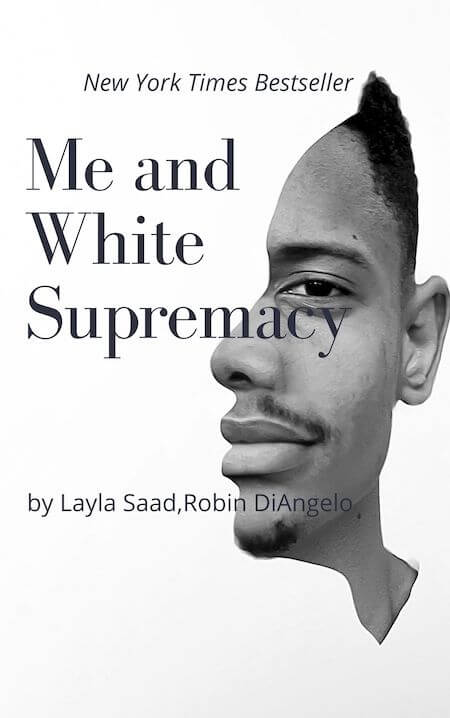
Me and White Supremacy Book Summary
This Me and White Supremacy Book Summary covers the key ideas, lessons, and takeaways in about 20 minutes.
Helps with these goals
Want the complete 20-minute summary?
- Full structured summary
- Video Summary
- Podcast Summary
- Audio summary
- Key takeaways
- Exercises
- Quiz
- Highlights and notes
- Ask the book with AI
What is in the Me and White Supremacy book summary?
Below is a preview of Sumizeit’s expert-written summary of Me and White Supremacy by Layla Saad,Robin DiAngelo. The full summary covers the book’s key ideas in text, audio, and video.
If you are white, you are part of white supremacy. This doesn’t mean that you are purposefully racist. But white supremacy has been part of western society for so long that it is now part of everyday culture.
When steps are taken by white people to embrace diversity and confront white supremacy, it can often go wrong. Declarations of color blindness can be as harmful as intentionally racist actions.
If you want to become an ally to Black, Indigenous, and people of color (BIPOC), you have to learn more about your own white privilege. You have to understand that white supremacy is not just about extremist views, but also about the everyday framework of society that maintains the racial divide.
Being white and looking white comes with privileges, even if you don’t realize it.
If you’re white, you probably don’t feel that you are particularly privileged. You might think that you have just as many obstacles as people of color. But just because you think that doesn’t mean it’s true.
The reality is that white-centered culture is so ingrained into society, you are not even aware of the privileges you experience. From the history books on western civilization to retail marketing, everything is focused on the white cultural identity.
If you’re a parent, white privilege means not having to explain to your children why some people are mean to them. Because being white means that a discussion about racism can be a choice, not a necessity.
White privilege applies to those who can pass for white too, even if their ethnicity is not white. People with lighter skin get the same benefits of white privilege even if they don’t feel white.
So, even if you don’t agree with the racist overtones of white privilege, it is something that exists and that you are permanently associated with based on your skin color.
You have to act against racism.
It’s easy to say that you are not racist and it’s probably true. However, white supremacy and racism are not just about you. It’s a part of western society and it is something that BIPOC have been dealing with for generations.
You have to be able to address the subject of racism without taking critiques of white privilege and white supremacy personally. Tackling racism means taking a critical look at the past actions of society and thinking about your part in them.
So, while you may not consider yourself racist, take a moment to look at the bigger picture. Though you may not agree with the racial divide that occurs in society, do you take any action against it? If someone is being racist in your presence do you call them out or say nothing?
Inaction against racism can be just as harmful as being the antagonist. Do something to prove you’re an ally against racism. This doesn’t mean taking extreme measures to prove your support but taking sensible ones such as educating yourself about the real issues for BIPOC.
Becoming part of…
Want the complete 20-minute summary?
- Full structured summary
- Video Summary
- Podcast Summary
- Audio summary
- Key takeaways
- Exercises
- Quiz
- Highlights and notes
- Ask the book with AI
Who should read Me and White Supremacy?
Me and White Supremacy is essential for white people who want to understand their role in systemic racism and become genuine allies to BIPOC communities. It's also valuable for anyone seeking to move beyond surface-level diversity statements and engage in meaningful anti-racism work. This book challenges readers to examine their own privilege and complicity, making it ideal for those ready to do deep personal and social work.
Why does Me and White Supremacy matter?
In a society where white supremacy is woven into everyday institutions and culture, most white people remain unaware of the systems that benefit them. Me and White Supremacy by Layla Saad exposes how inaction, color blindness, and performative allyship can perpetuate racial harm. The book is critical today because meaningful progress requires white people to stop defending themselves and start actively dismantling the structures that maintain racial inequality.
What are the key themes in Me and White Supremacy?
- White privilege as invisible structural advantage
- Systemic racism embedded in western institutions
- The ineffectiveness of color blindness and surface-level diversity
- Cultural appropriation as a form of domination
- Stereotyping and media representation as tools of oppression
- Performative allyship versus genuine anti-racism work
- Personal accountability and continuous learning
- Active participation required to dismantle white supremacy
What are the key lessons from the Me and White Supremacy book summary?
White supremacy is structural, not just personal
White supremacy exists as an embedded system in western society, not merely as individual racist beliefs. Recognizing this structural reality is the foundation for understanding how you benefit from and perpetuate it, regardless of your personal intentions.
Privilege is often invisible to those who have it
White people rarely see the everyday advantages they receive because white-centered culture has become normalized. From representation in media to how you discuss race with your children, privilege operates silently in ways you may never notice without deliberate examination.
Color blindness causes more harm than good
Claiming not to see color denies people their identity and cultural experiences while masking ongoing racism. This approach actually reinforces white supremacy by suggesting race only matters if you acknowledge it.
Inaction against racism is complicity
Remaining silent when racism occurs or failing to educate yourself about these issues makes you part of the problem. Allyship requires active participation, not just the absence of racist behavior.
Cultural appropriation is identity theft
When dominant white culture takes elements from other cultures without credit or understanding, it strips those communities of ownership and authority over their own identities. This represents domination disguised as appreciation.
Stereotypes in media perpetuate racist bias
Fictional portrayals and assumptions based on race feed into long-held prejudices and marginalize entire groups. These representations shape how people are treated in real life, from hiring to policing.
Diversity without equity is performative
Highlighting diverse friends or colleagues without addressing systemic inequalities is surface-level engagement that benefits white people more than BIPOC. True progress requires examining power structures, not just celebrating diversity.
White savior narratives center white people
Stories about white people helping marginalized communities reinforce the myth of white superiority and dominate narratives that should center BIPOC voices and experiences. This framing puts white interests first, even in discussions about others' struggles.
Being a real ally requires accepting discomfort
Genuine allyship means being willing to hear criticism, acknowledge mistakes, and sit with uncomfortable truths about your role in perpetuating inequality. Defensiveness prevents learning and growth.
Self-education is not the responsibility of BIPOC
People of color should not have to educate white people about their own oppression. Allyship requires white people to independently seek knowledge about systemic racism and the lived experiences of marginalized communities.
Privilege doesn't require acceptance
While you may be born into white privilege, you can choose to work against it through consistent action and advocacy. Acknowledging privilege is the first step toward actively dismantling the systems that created it.
Allyship is an ongoing practice, not a destination
Becoming an ally is not a label you earn and keep; it requires continuous learning, reflection, and action throughout your life. Complacency and one-time gestures are insufficient for meaningful change.
Mistakes are part of the learning process
You will get things wrong as you learn about white supremacy and work toward anti-racism. The key is responding with humility when corrected, not defensiveness, and using those moments to deepen your understanding.
Amplifying BIPOC voices is essential
Real allyship means stepping back and ensuring that people of color lead conversations about their own experiences and solutions. Using your platform to uplift rather than center yourself is critical.
Systemic change requires consistent engagement
Posting anti-racist statements on social media or attending a single march is not enough. Meaningful progress requires sustained commitment through volunteering, supporting BIPOC businesses, and ongoing conversation.
White culture has been positioned as the default
From history books to retail marketing, white perspectives and experiences are presented as universal or normal. Recognizing this centering is essential for understanding how white supremacy operates invisibly in everyday life.
Incremental actions contribute to systemic change
While individuals cannot dismantle white supremacy alone, consistent small actions—educating yourself, speaking up, supporting marginalized communities—collectively contribute to shifting power structures and creating a more equitable society.
Want the complete 20-minute summary?
- Full structured summary
- Video Summary
- Podcast Summary
- Audio summary
- Key takeaways
- Exercises
- Quiz
- Highlights and notes
- Ask the book with AI
How can you apply ideas from Me and White Supremacy?
- Audit the books, media, and educational materials in your home to assess whose perspectives are centered and whose are marginalized
- When you witness racist behavior or stereotyping in your presence, speak up rather than remaining silent
- Deliberately seek out and support BIPOC-owned businesses, artists, writers, and creators instead of defaulting to white-centered options
- Engage in ongoing self-education about systemic racism by reading books, listening to podcasts, and learning from BIPOC educators and leaders
- Have honest conversations with your social circles about white privilege and white supremacy, even when it feels uncomfortable
- Examine your own hiring, promotion, and decision-making processes to identify where unconscious bias may be affecting BIPOC
- Support policy changes and organizational practices that actively work to dismantle systemic racism rather than just add diversity
What common mistakes do readers make with Me and White Supremacy?
- Believing that not being personally racist means you are not part of white supremacy
- Treating allyship as a label to achieve rather than an ongoing practice of learning and action
- Focusing on diversity metrics or representation without addressing underlying power imbalances and inequity
- Asking BIPOC individuals to educate you about racism instead of doing independent research and self-directed learning
- Centering your own feelings of guilt or defensiveness when discussing systemic racism rather than focusing on impact and solutions
Sumizeit Exercises Apply what you've learned
Turn ideas from Me and White Supremacy into action with a short guided reflection: identify the biggest takeaway, connect it to your life, and commit to one step you can take in the next 24 hours.
What is the expert analysis of Me and White Supremacy?
Overview
Me and White Supremacy is a seminal work authored by Layla Saad, a British writer and activist who catalyzed a global conversation on racial awareness through her viral #MeAndWhiteSupremacy challenge. The book builds upon her digital workbook, which gained significant traction for its incisive exploration of whiteness and systemic racism. Co-authored in some editions by Robin DiAngelo, known for her work on whiteness and racial dynamics, the book situates itself as a call to action for white readers to confront their complicity in white supremacy. Its significance lies in its accessible yet profound approach to unpacking ingrained societal structures, making it a pivotal text in contemporary anti-racist literature.
Core Thesis
The central argument of Me and White Supremacy is that white supremacy is not merely the domain of overtly racist individuals but a pervasive, systemic framework embedded within Western society that privileges whiteness at every level. Saad contends that all white people, regardless of intent, participate in this system through unconscious biases, cultural norms, and institutional advantages. The book insists that genuine allyship requires white individuals to actively recognize their privilege, dismantle internalized racism, and engage in continuous self-education and action to support Black, Indigenous, and People of Color (BIPOC).
Strengths
- Personal and Reflective Approach: Saad’s methodical 28-day challenge format encourages deep introspection, making complex systemic issues personally relevant and actionable for readers.
- Clarity and Accessibility: The book demystifies academic concepts of white supremacy and privilege, translating them into everyday language without diluting their complexity.
- Intersectional Awareness: It acknowledges nuances such as colorism and cultural appropriation, broadening the scope beyond simplistic binaries of race.
- Emphasis on Accountability: The insistence on acknowledging mistakes and embracing discomfort fosters a growth mindset essential for sustained anti-racist work.
- Practical Guidance: Beyond theory, it offers tangible steps—like educating oneself, amplifying BIPOC voices, and engaging in community activism—that empower readers to enact change.
Critiques & Counterarguments
- Overgeneralization of Whiteness: The assertion that all white people are inherently complicit risks flattening diverse experiences and may alienate potential allies who seek more nuanced engagement.
- Potential for Performative Allyship: While the book warns against superficial actions, its focus on individual transformation may inadvertently encourage virtue signaling without systemic change.
- Limited Engagement with Structural Solutions: The emphasis on personal reflection sometimes overshadows broader political and economic reforms necessary to dismantle systemic racism.
- Opposing Perspectives on Colorblindness: Some scholars argue that colorblindness, when critically applied, can be a step toward reducing racial bias, contrasting with Saad’s view that it inherently perpetuates white supremacy.
- Empirical Evidence and Historical Context: The book relies heavily on contemporary social critique and anecdotal evidence, which some critics might find insufficiently grounded in rigorous sociological or historical data.
Who Should Read This
Me and White Supremacy is essential reading for white individuals committed to understanding and dismantling their own role within systemic racism. It is particularly suited for those new to anti-racist work who seek a structured, introspective guide to confronting whiteness and privilege. Additionally, educators, diversity trainers, and social activists will find its practical framework useful for facilitating conversations about race. However, readers seeking a purely academic or policy-oriented analysis might find the book’s personal narrative style less comprehensive. Ultimately, it is a vital resource for anyone willing to engage deeply with uncomfortable truths to foster meaningful social change.
Frequently asked questions about the Me and White Supremacy book summary
What is Me and White Supremacy about?
Me and White Supremacy by Layla Saad is a groundbreaking work that examines how white supremacy is embedded in western society and how white people, often unknowingly, benefit from and perpetuate it. The book challenges readers to move beyond surface-level diversity efforts and color blindness to engage in genuine anti-racism work and allyship with BIPOC communities. It originated from Saad's viral social media challenge that encouraged people to reflect on their role in white supremacy over 28 days.
Who should read Me and White Supremacy?
This book is essential for white people who want to understand their role in systemic racism and become genuine allies to BIPOC communities. It's also valuable for anyone interested in anti-racism work and those who recognize that surface-level diversity statements are insufficient. The book is particularly important for those ready to examine their own privilege, accept discomfort, and commit to long-term anti-racism efforts.
What are the main takeaways from Me and White Supremacy?
The main takeaways include recognizing that white supremacy is systemic rather than just personal, understanding that white privilege operates invisibly in everyday life, and realizing that color blindness and performative allyship cause more harm than good. Saad emphasizes that becoming a genuine ally requires consistent self-education, active engagement against racism, acknowledgment of mistakes, and long-term commitment to dismantling white supremacy through both individual and collective action.
How does Me and White Supremacy define white privilege?
The book defines white privilege as invisible structural advantages that come from being white or appearing white, even if you don't realize or acknowledge them. These advantages range from not having to discuss racism with your children as a survival necessity to seeing white perspectives centered in media, education, and institutions. Importantly, white privilege exists regardless of your personal economic status or individual obstacles, as it is built into the framework of western society itself.
What is the difference between being not racist and being anti-racist according to Me and White Supremacy?
According to the book, simply not being racist is passive and insufficient. Being anti-racist requires active engagement against racism, including self-education, speaking up when racism occurs, and working to dismantle white supremacy. The book emphasizes that inaction and silence perpetuate the system, so genuine anti-racism work demands consistent effort and willingness to be uncomfortable.
Why does Me and White Supremacy criticize color blindness?
The book argues that claiming not to see color denies people their cultural identity and experiences while masking ongoing racism. Color blindness suggests that acknowledging race is the problem, when in reality ignoring racial differences means ignoring the injustices and systemic oppression that BIPOC face. This approach reinforces white supremacy by positioning color blindness as progressive when it actually erases lived experiences.
How can I become a genuine ally according to Me and White Supremacy?
Genuine allyship requires consistent self-education about systemic racism, being willing to acknowledge mistakes without defensiveness, amplifying BIPOC voices rather than centering your own, and taking sustained action through volunteering, supporting marginalized businesses, and engaging in conversations about white supremacy. The book emphasizes that allyship is not a destination or label you achieve but an ongoing practice of learning, reflection, and commitment to dismantling white supremacy.
About Sumizeit
Sumizeit is a profitable Scomy LLC company based in Miami, Florida. It has been helping readers learn from nonfiction books for 7 years with expert-written summaries in text, audio, podcast, and video.
Want the complete 20-minute summary?
- Full structured summary
- Video Summary
- Podcast Summary
- Audio summary
- Key takeaways
- Exercises
- Quiz
- Highlights and notes
- Ask the book with AI
Here's why readers love Sumizeit
Join thousands of learners getting smarter every day
"Great experience. Detailed summaries. Loved the gamification feature. Makes learning fun. Good customer service. I recommend Sumizeit to anyone. You'll learn a lot."
"I always felt busy but still wanting to keep up with the book discussion in my friend group. This was a great supplement to help me keep reading the books I find fun while keeping up with important books."
"I love this website. Instead of scrolling social media, I find myself learning a lot. I use it everyday. I recommend this app for anyone who is too busy and wants to get up to speed with their favorite books."
Me and White Supremacy Book Summary PDF
Looking for a Me and White Supremacy Book Summary PDF you can save and revisit offline? Our Me and White Supremacy Book Summary PDF captures the book’s core ideas in a clean, printable format — the key frameworks, takeaways, and structure without the fluff. Download the Me and White Supremacy Book Summary PDF when you want a reference you can annotate, share with your team, or review on the go. Get your Me and White Supremacy Book Summary PDF from the download page below.
Download Me and White Supremacy Book Summary PDFPeople also liked these summaries
Readers who explored Me and White Supremacy often enjoyed these titles next.





Want the complete 20-minute summary?
- Full structured summary
- Video Summary
- Podcast Summary
- Audio summary
- Key takeaways
- Exercises
- Quiz
- Highlights and notes
- Ask the book with AI
Featured Book Titles
Popular Book Summaries at sumizeit, leading book summary app