


As an Amazon Associate, Sumizeit earns from qualifying purchases.
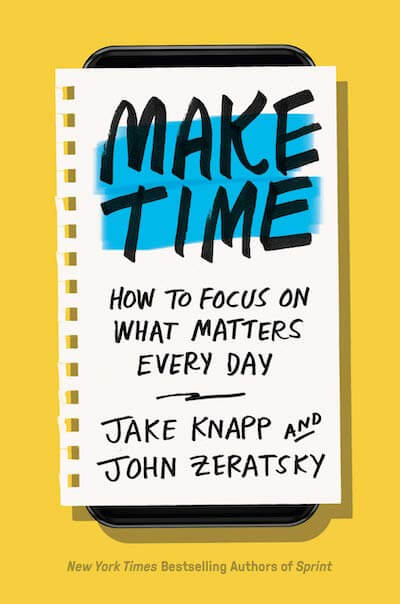
Make Time Book Summary
This Make Time Book Summary covers the key ideas, lessons, and takeaways in about 20 minutes.
Helps with these goals
Want the complete 20-minute summary?
- Full structured summary
- Video Summary
- Podcast Summary
- Audio summary
- Key takeaways
- Exercises
- Quiz
- Highlights and notes
- Ask the book with AI
What is in the Make Time book summary?
Below is a preview of Sumizeit’s expert-written summary of Make Time by Jake Knapp. The full summary covers the book’s key ideas in text, audio, and video.
Wouldn’t it be great if you had some extra time every day? You could spend an extra hour doing something productive, sleeping, or just relaxing. Unfortunately, we don’t have the ability to give you that extra hour (we would if we could!). However, creating extra time in your schedule is possible, even if it doesn’t feel that way. Let's face it: if the solution to better time management was as simple as more discipline and fewer distractions, we would all be able to do it. Luckily, with John Knapp’s Make Time, you can learn how to master your schedule and be more productive. Read on to learn his most useful tips: including how to work with your brains hardwiring to increase energy, tips for preventing caffeine slumps, and how to resist the lure of time-wasting applications like Facebook, Twitter, and more.
Ever noticed that it seems like in some applications, you can scroll infinitely and there will always be more content to distract you? These applications can take up huge amounts of time. The author calls these sorts of distractions Infinity Pools because they deliver seemingly infinite content - and consequently can waste infinite amounts of time. Research shows people will often spend 4 hours or more per day on distractions like phone applications. That’s a lot of time! Infinity Pools often combine with another problem for those wanting to make the most of their time: The Busy Bandwagon. The Busy Bandwagon is the tendency of most modern folks to keep attempting to complete tasks that are seemingly never completed. Having a to-do list is an example of this phenomenon. You’ll be chipping away at your list of tasks, and once you finally accomplish all of the ones on your list, you get another task. It's a never-ending cycle. The most aggravating part? Usually, these items aren’t anything you’d chose to do, they’re tasks you must accomplish for other people. And as you’re doing these things for others, you abandon the projects and ideas that actually mean something to you. The exhaustion and stress of the Busy Bandwagon lead you back to Infinity Pools for some relief and distraction. You might think a little self-discipline should be enough to help you get over distractions that cause you to fall into infinity pools. However...
Applications that suck you in and distract you are expertly designed to be that way. They play into how our brains have always been hardwired: what was useful to us in prehistoric times is being manipulated by these applications. Innate tendencies like our reactivity to a sudden noise, the draw of an unpredictable reward, or our desire to feel connection can be manipulated to make you obsessed with an application or game. This is why self-discipline can be so hard to muster in situations where you are faced with your favorite time-waster: your biology is being played upon. Ok, this all sounds like a total nightmare, right? If it's so deeply hardwired, how can we stop?
Want the complete 20-minute summary?
- Full structured summary
- Video Summary
- Podcast Summary
- Audio summary
- Key takeaways
- Exercises
- Quiz
- Highlights and notes
- Ask the book with AI
Who should read Make Time?
Make Time is ideal for anyone feeling overwhelmed by endless to-do lists, digital distractions, and the constant pressure to do more. Whether you're a knowledge worker drowning in notifications, an entrepreneur struggling to focus on what matters, or simply someone wanting to reclaim your time and energy, this book offers practical strategies to help you take control of your days.
Why does Make Time matter?
In an era of infinite digital content and perpetual busyness, most people waste hours daily on unconscious distractions while neglecting their meaningful goals. Make Time reveals why willpower alone fails against apps deliberately designed to hijack your attention, and provides a science-backed framework to work with your brain's hardwiring instead of against it. The stakes are high: reclaiming just one meaningful hour daily can transform your career, relationships, and sense of purpose.
What are the key themes in Make Time?
- Intentional focus over reactive productivity
- Understanding how technology exploits biological hardwiring
- Energizing your mind and body for peak performance
- Breaking free from the busy bandwagon trap
- Making conscious choices about how you spend time
- Aligning daily actions with long-term meaning
What are the key lessons from the Make Time book summary?
Infinity Pools drain more than time
Apps designed with infinite scroll exploit your natural curiosity and reward-seeking brain, causing people to lose 4+ hours daily without realizing it. Recognizing these traps is the first step to escaping them.
The busy bandwagon keeps you on someone else's priority list
Endless to-do lists create a treadmill where completing tasks only generates more tasks, usually for other people. This cycle prevents you from ever pursuing work that truly matters to you.
Self-discipline fails when biology is working against you
Digital distractions aren't a willpower problem—they're engineered to exploit prehistoric instincts like reactivity to sudden stimuli and attraction to unpredictable rewards. Understanding this removes shame and opens new solutions.
Consciousness is your antidote to unconscious consumption
Most phone-checking and app-scrolling happens automatically without real choice. By becoming conscious of these habits, you regain agency over how you spend your time.
Your daily highlight anchors everything else
Choosing one meaningful 60-90 minute highlight at the start of your day—whether important, joyful, or meaningful—gives your time direction and prevents you from defaulting to busy work.
Important, joyful, and meaningful are different types of highlights
Your daily highlight can be driven by necessity (what must get done), satisfaction (what fulfills you), or joy (what delights you). Different days may call for different types.
Focus requires removing friction from distractions
Logging out of social media, deleting apps, writing questions down instead of googling instantly, and reducing news-checking to weekly all reduce the automatic pull of distractions.
Energy is a physical, not just mental, problem
Your mind's capacity depends directly on sleep quality, exercise, nutrition, and social connection. Neglecting these makes focus impossible no matter how hard you try.
Exercise doesn't require hours to be effective
Even seven minutes of focused movement can boost energy, while 20 minutes of moderate daily exercise measurably increases intellect, health, and happiness.
Avoid the caffeine crash with strategic re-caffeination
Rather than fighting an inevitable caffeine slump, time your next caffeine dose 30 minutes before you expect to crash (typically after lunch) to maintain steady energy.
Eating well in moderation beats restrictive dieting
Focus on whole foods—plants, meats, nuts, fish—in reasonable portions rather than complex diet rules. This sustains energy better than processed foods.
Sleep schedule beats sleep catching-up
Maintaining consistent sleep times is more restorative than trying to recover from sleep debt on weekends. This stability builds the foundation for focused, energized days.
Social connection counts as a productivity tool
Spending time with people who lift your spirits isn't a distraction from productivity—it energizes you. Combining social time with healthy activities multiplies the benefit.
Reflection reveals what actually works for you
A few minutes at day's end reviewing your highlight, tactics used, and what worked transforms trial-and-error into real learning about your personal productivity patterns.
Rating your focus and energy illuminates patterns
Simple daily scores (1-10) for focus and energy levels let you identify which methods, schedules, and habits actually move your needle.
Darkening your environment supports earlier sleep
Using night mode on devices and reducing light exposure before bed helps reset your circadian rhythm, making it easier to go to bed earlier and wake refreshed.
Reclaiming one hour daily unlocks new possibilities
The framework of highlight, focus, energize, and reflect can create space for meaningful work that would otherwise never happen, potentially redirecting your entire career path.
Your highlight can span multiple days for large projects
Not every highlight fits in one day. Breaking large projects into multi-day highlights keeps you progressing toward significant work without getting lost in daily minutiae.
Combining or ranking tasks helps when you're stuck on a highlight
If choosing feels paralyzing, list your tasks, rank by importance, or simply repeat yesterday's highlight. Perfection isn't required—momentum matters most.
Want the complete 20-minute summary?
- Full structured summary
- Video Summary
- Podcast Summary
- Audio summary
- Key takeaways
- Exercises
- Quiz
- Highlights and notes
- Ask the book with AI
How can you apply ideas from Make Time?
- Start each morning by choosing your single highlight (60-90 minutes), then structure your day to protect time for it before handling anything else
- Log out of social media accounts on your devices to eliminate the friction-free temptation to scroll mindlessly
- Delete distracting apps like Facebook, Twitter, and email from your phone, checking them intentionally on desktop only at set times
- Create an evening routine with dimmed lights and night-mode devices 30-60 minutes before your target bedtime to improve sleep quality
- Do a 7-20 minute burst of exercise on busy days, or schedule weekly reflection sessions to track what focus and energy tactics work for you
- Time your afternoon caffeine intake 30 minutes before you expect your post-lunch slump to maintain steady energy throughout the day
- Replace hourly news-checking with a single weekly check-in to reclaim the mental bandwidth consumed by constant updates
What common mistakes do readers make with Make Time?
- Assuming willpower alone can overcome apps deliberately engineered to exploit your brain's hardwiring—this sets you up for shame and failure instead of systemic change
- Trying to accomplish highlights without first removing distractions, then blaming yourself for lack of focus rather than addressing the environment
- Neglecting sleep, exercise, or nutrition while trying to focus harder—your mind cannot perform well when your body is depleted
- Treating all tasks as equally important and urgent, leading you to chase the busy bandwagon rather than identifying what truly matters
Sumizeit Exercises Apply what you've learned
Turn ideas from Make Time into action with a short guided reflection: identify the biggest takeaway, connect it to your life, and commit to one step you can take in the next 24 hours.
What is the expert analysis of Make Time?
Overview
Make Time, authored by Jake Knapp, is a contemporary guide that addresses one of the most pressing challenges of modern life: managing attention and reclaiming time in an age of relentless digital distractions. Knapp, known for his influential work at Google and Google Ventures and as the creator of the Design Sprint methodology, leverages his deep experience in productivity and design thinking to offer practical strategies for focusing on what truly matters. The book stands out for its accessible, actionable advice grounded in an understanding of human psychology and behavioral design, making it significant for anyone grappling with the paradox of busyness and distraction in the digital era.
Core Thesis
Knapp’s central argument is that traditional notions of time management—centered on discipline and reducing distractions—are insufficient because they fail to account for the biological and psychological mechanisms that drive our attention. Instead, he proposes a framework of conscious living through four key steps: highlight, focus, energize, and reflect. By intentionally selecting a daily highlight, eliminating distractions, optimizing physical and mental energy, and reflecting on what works, individuals can break free from the “Infinity Pools” of endless digital content and the “Busy Bandwagon” of never-ending tasks. This approach reframes productivity as an act of deliberate choice rather than sheer willpower.
Strengths
- Integrative Approach: The book skillfully combines insights from neuroscience, behavioral psychology, and design thinking, offering a holistic method that addresses both the cognitive and physical aspects of productivity.
- Practical and Adaptable Framework: The four-step process is straightforward yet flexible, allowing readers to tailor it to their unique goals and lifestyles without requiring drastic life changes.
- Recognition of Digital Manipulation: Knapp’s concept of “Infinity Pools” aptly captures how digital platforms exploit innate human tendencies, providing a compelling explanation for why distractions are so hard to resist.
- Emphasis on Consciousness: Advocating for intentionality rather than mere discipline elevates the conversation around productivity, encouraging mindfulness and self-awareness as foundational tools.
- Author’s Credibility: Knapp’s background at Google and his success with the Design Sprint lend authority and real-world validation to his recommendations.
Critiques & Counterarguments
- Oversimplification of Complex Behaviors: While the four-step framework is elegant, it may underestimate the complexity of habits and the socio-economic factors that limit individuals’ ability to control their time and attention.
- Limited Engagement with Structural Issues: The book focuses heavily on individual agency but pays less attention to systemic factors such as workplace cultures that demand constant availability or societal pressures that fuel busyness.
- Evidence Base and Generalizability: Some recommendations, such as deleting social media apps or rigidly scheduling highlights, may not be feasible or effective for all readers, especially those in roles requiring constant connectivity or multitasking.
- Competing Research on Multitasking and Attention: Cognitive science research indicates that multitasking and frequent task switching can impair performance, but some studies also suggest that certain individuals can manage multiple streams of information effectively, challenging the universal applicability of Knapp’s focus-centric model.
- Alternative Philosophical Views on Time: Schools of thought like existentialism or certain mindfulness traditions might argue that the fixation on productivity and “making time” risks commodifying experience rather than embracing presence and acceptance of temporal flow.
Who Should Read This
Make Time is ideally suited for professionals, creatives, and knowledge workers who feel overwhelmed by digital distractions and the relentless demands of modern life. It appeals to readers seeking a pragmatic, psychologically informed approach to reclaiming control over their attention without resorting to extreme lifestyle overhauls. Additionally, individuals interested in the intersection of technology, behavior, and productivity will find Knapp’s insights particularly valuable. However, those facing structural constraints on their time or who prefer more philosophical or systemic critiques of busyness may need to supplement this book with broader perspectives.
Frequently asked questions about the Make Time book summary
What is Make Time about?
Make Time by Jake Knapp is a practical guide to reclaiming your time from digital distractions and endless to-do lists. The book reveals why willpower fails against apps designed to exploit your brain, then provides a four-step framework—highlight, focus, energize, and reflect—to help you spend your hours on what truly matters.
Who should read Make Time?
Make Time is ideal for anyone overwhelmed by notifications, endless task lists, and digital distractions. Whether you're a professional struggling to focus, an entrepreneur wanting to work on meaningful projects, or simply someone feeling like your time slips away, this book offers science-backed strategies anyone can implement.
What are the main takeaways from Make Time?
The core takeaways are: (1) digital distractions and endless to-do lists are deliberate traps, not personal failings; (2) choosing one daily highlight anchors your time around what matters; (3) focus requires removing distractions, not just trying harder; (4) energy depends on sleep, exercise, food, and connection, not willpower; and (5) daily reflection reveals what tactics work for you personally.
What are Infinity Pools and the Busy Bandwagon?
Infinity Pools are apps like social media with endless, scrollable content designed to waste unlimited time by exploiting your brain's reward-seeking nature. The Busy Bandwagon is the modern trap of endlessly completing tasks for others while abandoning meaningful work of your own—once you finish a to-do list, another magically appears.
How do I choose a daily highlight?
Your highlight should be something you can accomplish in 60-90 minutes. You can choose based on importance (What must I do?), meaning (What fulfills me?), or joy (What delights me?). If stuck, list your tasks, rank by importance, or combine multiple smaller tasks into one meaningful highlight.
Can I really improve my energy without major life changes?
Yes—even small changes compound. A 7-minute exercise burst boosts focus immediately, strategic caffeine timing prevents afternoon crashes, consistent sleep schedules work better than trying to catch up on weekends, and eating whole foods in moderation stabilizes energy throughout your day.
What practical steps should I take first?
Start by (1) choosing your daily highlight before doing anything else; (2) removing one major distraction (log out of social media or delete an app); (3) trying one energizing habit (exercise, better sleep, or timed caffeine); and (4) spending 5 minutes each evening reflecting on what worked. Small wins compound quickly.
About Sumizeit
Sumizeit is a profitable Scomy LLC company based in Miami, Florida. It has been helping readers learn from nonfiction books for 7 years with expert-written summaries in text, audio, podcast, and video.
Want the complete 20-minute summary?
- Full structured summary
- Video Summary
- Podcast Summary
- Audio summary
- Key takeaways
- Exercises
- Quiz
- Highlights and notes
- Ask the book with AI
Here's why readers love Sumizeit
Join thousands of learners getting smarter every day
"Great experience. Detailed summaries. Loved the gamification feature. Makes learning fun. Good customer service. I recommend Sumizeit to anyone. You'll learn a lot."
"I always felt busy but still wanting to keep up with the book discussion in my friend group. This was a great supplement to help me keep reading the books I find fun while keeping up with important books."
"I love this website. Instead of scrolling social media, I find myself learning a lot. I use it everyday. I recommend this app for anyone who is too busy and wants to get up to speed with their favorite books."
Make Time Book Summary PDF
Looking for a Make Time Book Summary PDF you can save and revisit offline? Our Make Time Book Summary PDF captures the book’s core ideas in a clean, printable format — the key frameworks, takeaways, and structure without the fluff. Download the Make Time Book Summary PDF when you want a reference you can annotate, share with your team, or review on the go. Get your Make Time Book Summary PDF from the download page below.
Download Make Time Book Summary PDFPeople also liked these summaries
Readers who explored Make Time often enjoyed these titles next.


Want the complete 20-minute summary?
- Full structured summary
- Video Summary
- Podcast Summary
- Audio summary
- Key takeaways
- Exercises
- Quiz
- Highlights and notes
- Ask the book with AI
Featured Book Titles
Popular Book Summaries at sumizeit, leading book summary app