


As an Amazon Associate, Sumizeit earns from qualifying purchases.
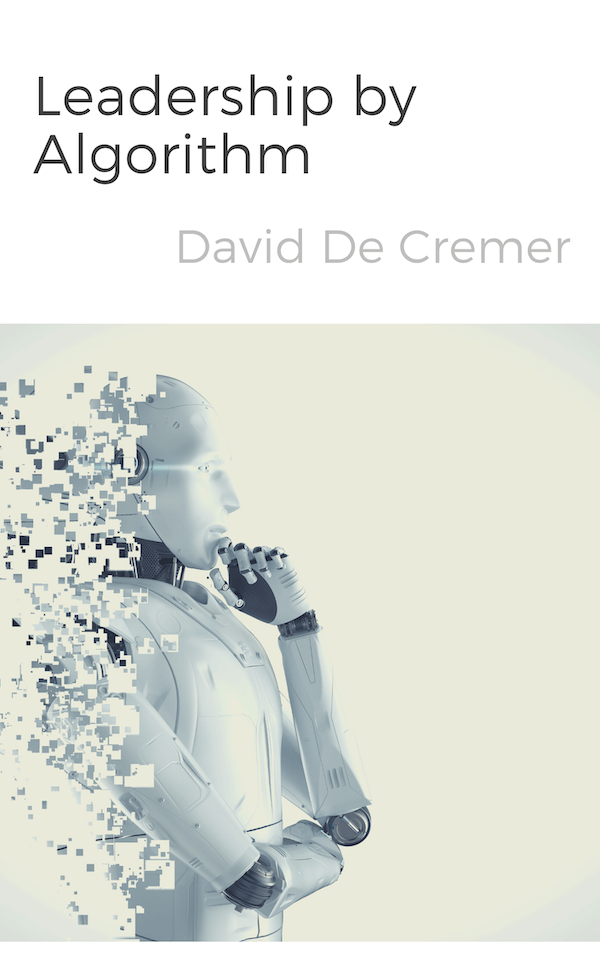
Leadership by Algorithm Book Summary
This Leadership by Algorithm Book Summary covers the key ideas, lessons, and takeaways in about 20 minutes.
Helps with these goals
Want the complete 20-minute summary?
- Full structured summary
- Video Summary
- Podcast Summary
- Audio summary
- Key takeaways
- Exercises
- Quiz
- Highlights and notes
- Ask the book with AI
What is in the Leadership by Algorithm book summary?
Below is a preview of Sumizeit’s expert-written summary of Leadership by Algorithm by David De Cremer. The full summary covers the book’s key ideas in text, audio, and video.
AI has the potential to completely revolutionize daily life, society, and business. It can analyze and process incredible amounts of data and can take over single-application, repetitive tasks, but it does not have the moral judgment or critical thinking capabilities necessary to replace true leaders. AI will likely replace certain managers, whose daily tasks can be easily automated, but they lack the insight, empathy, and perspective necessary to take over leadership positions. Only humans are capable of considering multiple different viewpoints, values, and contexts in order to make good high-level decisions. While algorithms will no doubt be a useful tool for analyzing data and improving decision making, organizations will need leaders who have advanced critical thinking, moral judgment, and high-level decision-making skills to be successful in the future.
AI Will Change The Future
Artificial Intelligence, or AI, is the future of technology. It is a technology that is so innovative, it has the power to change every aspect of daily life, society, and business. The more it advances, the faster the change will come, and it is possible that AI will take over the majority of decision-making, rendering the future unrecognizable as soon as the year 2030.
Algorithms have an advantage over humans because they are faster and have more computing power than people do. They have access to untold amounts of data and unrivaled computing power, which has enabled them to achieve great accomplishments, like beating the best human Go or chess players and even diagnosing medical conditions faster and more accurately than humans can. With its power, AI can make individuals, businesses, and economies more productive and efficient than ever before. Machine learning enables workers to offload mundane, repetitive tasks onto machines. Algorithms can make better business decisions because they can store and process more data than any individual worker or CEO can.
However, AI lacks consciousness, empathy, and feelings. Therefore, they do not have intent. They simply do what they are programmed to do. For that reason, AI is unlikely to take over the world, because AI technology will only do what humans let it do.
AI Will Replace Managers, Not Leaders
AI technology is best at accomplishing specific, repetitive, single application tasks, like playing chess or analyzing financial data. AI is even able to mimic human speech. It is able to learn from patterns and respond based on previous interactions, but it will falter if it encounters something that it has never experienced before.
AI is not able to imitate essential human qualities of leading and decision making, such as gaining trust and exercising influence over others. This is because these qualities require the demonstration of uniquely human traits, like wisdom, compassion, and fairness. Good leaders are able to demonstrate these values and therefore gain the trust and respect of other people. Many people want their leaders to have these qualities and values, which is why they do not trust AI to replace leaders and take over all societal and business decision-making.
Want the complete 20-minute summary?
- Full structured summary
- Video Summary
- Podcast Summary
- Audio summary
- Key takeaways
- Exercises
- Quiz
- Highlights and notes
- Ask the book with AI
Who should read Leadership by Algorithm?
Leadership by Algorithm is for managers, executives, and organizational leaders who want to thrive in an AI-powered workplace. Whether you're concerned about automation's impact on your role or eager to develop the human skills that will matter most in the future, this book equips you with the mindset and capabilities needed to lead effectively alongside intelligent systems.
Why does Leadership by Algorithm matter?
As artificial intelligence automates routine tasks and transforms business operations, the question isn't whether AI will change leadership—it's how leaders must evolve to remain essential. David De Cremer clarifies that while algorithms will replace many managerial positions, true leadership requires uniquely human qualities that no technology can replicate, making this book critical for anyone navigating digital disruption.
What are the key themes in Leadership by Algorithm?
- AI will automate management, not leadership
- Human decision-making requires moral judgment algorithms lack
- Critical thinking and creativity are future leadership essentials
- Empathy and emotional intelligence cannot be automated
- Organizations must balance algorithmic efficiency with human insight
- Leaders must guide teams through uncertainty and change
What are the key lessons from the Leadership by Algorithm book summary?
Algorithms Excel at Repetitive Tasks, Not Strategic Decisions
AI can process vast amounts of data and execute routine, single-application tasks with superhuman speed and accuracy, but it cannot navigate the ambiguity and complexity required for high-level organizational decisions.
Management and Leadership Are Not the Same Thing
Many management roles focused on routine decisions and administrative bureaucracy are vulnerable to automation, while true leadership—which demands wisdom, empathy, and moral judgment—remains uniquely human.
AI Lacks Consciousness and Moral Reasoning
Because algorithms lack consciousness, empathy, and intent, they cannot make ethical judgments or adjust for hidden biases, making human oversight essential for decisions with moral implications.
Leaders Must Interpret Algorithmic Insights, Not Blindly Follow Them
While AI provides powerful data analysis and pattern recognition, leaders must use critical thinking to contextualize these insights and make final decisions that account for organizational values and human factors.
Creativity and Imagination Drive Innovation
Algorithms operate within structured parameters, while human creativity thrives in ambiguity; leaders who cultivate imaginative thinking will generate breakthrough solutions that machines cannot produce.
Emotional Intelligence Builds Trust and Followership
Employees seek leaders who demonstrate empathy, authenticity, and genuine human connection—qualities that algorithms can mimic superficially but cannot truly embody or sustain.
Agility and Adaptability Are Human Strengths
Leaders must quickly pivot when circumstances change unexpectedly; while algorithms follow programmed patterns, humans can recognize entirely new situations and respond creatively.
Self-Awareness and Humility Matter More Than Ever
Leaders who understand their own biases and recognize the limits of their knowledge can collaborate effectively with both AI systems and their teams to make better decisions.
Vision and Purpose Cannot Be Delegated to Machines
Only humans can articulate a compelling organizational vision, connect it to shared values, and inspire teams to pursue long-term goals that transcend data-driven optimization.
Communication Must Remain Authentic and Human-Centered
In an age of algorithmic efficiency, leaders who communicate clearly, vulnerably, and authentically will differentiate themselves and maintain employee engagement and trust.
Bias Correction Requires Human Judgment
While algorithms can identify patterns, only humans can recognize prejudice and adjust their thinking; leaders must actively examine and counteract their own biases to make fair decisions.
Employees Want Humans Making Non-Routine Decisions
Research shows people prefer human judgment on sensitive matters like promotions and performance ratings, where context, potential, and fairness considerations matter beyond raw data.
Organizations Risk Losing Individuality Through Over-Automation
Exclusive reliance on algorithms can lead to standardization where all companies operate identically; human leadership preserves organizational character and competitive differentiation.
Leaders Must Balance AI Efficiency With Human Engagement
Effective leaders create cultures where employees understand both their roles and the roles of algorithms, ensuring technology enhances rather than diminishes human contribution and motivation.
Continuous Learning and Curiosity Are Non-Negotiable
Future leaders must remain curious and committed to lifelong learning, developing new capabilities to work alongside evolving technology while deepening their distinctly human skills.
Complex Decisions Require Weighing Multiple Perspectives
High-level decisions involve balancing stakeholder needs, organizational values, long-term goals, and employee impact—a multifaceted analysis that algorithms cannot adequately perform.
Ethical Decision-Making Is a Core Leadership Responsibility
Because algorithms cannot exercise moral judgment, leaders must serve as the ethical guardians of their organizations, ensuring decisions align with values and societal responsibilities.
AI Will Transform Roles, Not Eliminate the Need for Leaders
Rather than fearing replacement, leaders should embrace AI as a tool that handles data and routine work, freeing them to focus on the strategic, creative, and human-centered aspects of their role.
Transparency About AI's Role Builds Organizational Trust
Leaders who openly communicate how algorithms inform decisions—while maintaining human oversight and final authority—help teams trust both the technology and their leaders.
Want the complete 20-minute summary?
- Full structured summary
- Video Summary
- Podcast Summary
- Audio summary
- Key takeaways
- Exercises
- Quiz
- Highlights and notes
- Ask the book with AI
How can you apply ideas from Leadership by Algorithm?
- Audit your current management processes to identify repetitive tasks that AI can handle, freeing your time for strategic leadership
- Develop a culture where employees understand both algorithmic recommendations and the human judgment behind final decisions
- Invest in training programs that strengthen your critical thinking, creativity, and emotional intelligence—skills algorithms cannot replace
- Create decision-making frameworks that require human review and ethical judgment, especially for non-routine matters like promotions and performance evaluations
- Practice transparent communication about how AI tools inform your decisions while emphasizing the human insight and values guiding your leadership
- Build diverse teams that bring multiple perspectives to decision-making, a strength humans possess that algorithms fundamentally lack
- Establish regular learning routines to stay curious about emerging technology while deepening your understanding of your organization's purpose and values
What common mistakes do readers make with Leadership by Algorithm?
- Assuming that better data and faster algorithms automatically lead to better decisions without human interpretation and ethical oversight
- Confusing the efficiency of management tasks with the complexity of leadership, leading to misguided attempts to automate decisions requiring human judgment
- Over-relying on algorithmic recommendations without questioning potential biases embedded in their training data or design
- Neglecting to communicate clearly with employees about why final decisions may differ from algorithmic suggestions, eroding trust in both the technology and leadership
Sumizeit Exercises Apply what you've learned
Turn ideas from Leadership by Algorithm into action with a short guided reflection: identify the biggest takeaway, connect it to your life, and commit to one step you can take in the next 24 hours.
What is the expert analysis of Leadership by Algorithm?
Overview
Leadership by Algorithm is authored by David De Cremer, a distinguished professor and thought leader in the intersection of artificial intelligence and organizational leadership. De Cremer’s extensive academic and advisory background, including roles at the National University of Singapore and the University of Cambridge, lends considerable authority to his exploration of AI’s transformative impact on leadership. The book is significant for its timely interrogation of how AI technologies will reshape managerial roles and the essential human qualities that leadership demands in an increasingly automated world.
Core Thesis
De Cremer advances a nuanced argument that while AI will revolutionize business operations by automating routine managerial tasks, it cannot supplant true leadership. The central insight is that leadership hinges on uniquely human attributes—moral judgment, empathy, creativity, and critical thinking—that AI, despite its computational prowess, fundamentally lacks. The author posits that future leaders must harness AI’s analytical capabilities while cultivating skills that enable them to navigate complexity, ethical dilemmas, and human relationships in ways algorithms cannot replicate.
Strengths
- Balanced Perspective: The book avoids techno-utopianism by acknowledging AI’s strengths in data processing and efficiency while critically appraising its limitations in emotional intelligence and ethical reasoning.
- Clear Distinction Between Management and Leadership: De Cremer thoughtfully differentiates between managerial functions—often repetitive and rule-based—and leadership roles that require vision and human connection.
- Practical Framework for Future Leaders: The emphasis on new skill sets such as creativity, adaptability, and ethical judgment provides actionable guidance for leaders preparing to operate alongside AI.
- Authoritative Voice: De Cremer’s academic credentials and industry experience enrich the discourse with credibility and real-world relevance.
Critiques & Counterarguments
- Potential Oversimplification of AI’s Capabilities: The assertion that AI lacks moral judgment and creativity may underestimate emerging developments in explainable AI and generative models that increasingly mimic aspects of human reasoning and creativity, albeit imperfectly.
- Limited Engagement with Hybrid Leadership Models: The book could delve deeper into how AI-human leadership hybrids might evolve, rather than maintaining a dichotomy between AI as a tool and humans as sole ethical agents.
- Ethical and Bias Complexities Underexplored: While De Cremer notes AI’s inability to self-correct biases, the discussion could be expanded to include the ethical challenges of delegating decisions to AI systems that embed human prejudices, and how leaders might address these systemic issues.
- Competing Research on AI Decision-Making: Some research in behavioral economics and cognitive science suggests that algorithmic decision-making can reduce human biases and errors in certain contexts, challenging the blanket claim that human judgment is always superior in high-level decisions.
- Real-World Evidence of AI Leadership Support: Emerging case studies show AI augmenting leadership in complex scenarios, such as crisis management and strategic forecasting, indicating a more collaborative future rather than outright replacement or exclusion.
Who Should Read This
This book is essential reading for business leaders, managers, and organizational strategists seeking to understand the evolving landscape of leadership in an AI-augmented world. It is particularly valuable for those interested in the ethical and human-centric dimensions of technology integration. Additionally, scholars and practitioners in organizational psychology and business ethics will find De Cremer’s insights a compelling foundation for further inquiry into the interplay between artificial intelligence and human leadership.
Frequently asked questions about the Leadership by Algorithm book summary
What is Leadership by Algorithm about?
Leadership by Algorithm by David De Cremer explores how artificial intelligence will transform business and organizational management while arguing that true leadership cannot be automated. The book clarifies that while AI will replace many routine managerial roles, leaders who cultivate critical thinking, creativity, emotional intelligence, and moral judgment will remain essential to navigating uncertainty and guiding organizations toward meaningful outcomes.
Who should read Leadership by Algorithm?
This book is ideal for managers, executives, and organizational leaders who want to thrive in an AI-powered future. It's also valuable for business professionals concerned about automation's impact on their roles and anyone seeking to understand how human leadership will evolve as technology advances. Whether you're leading a team today or preparing for tomorrow's workplace, this book provides clarity on which skills will matter most.
What are the main takeaways from Leadership by Algorithm?
The core insight is that while algorithms will automate many management functions, true leadership requires uniquely human qualities—empathy, creativity, critical thinking, moral judgment, and authentic connection. Leaders of the future must use AI as a tool to analyze data and handle routine work, while reserving high-level decisions for human judgment that accounts for organizational values, ethical implications, and the multiple perspectives that algorithms cannot weigh.
Will AI replace leaders in the future?
No, according to De Cremer's analysis in Leadership by Algorithm. While algorithms will likely replace many routine management positions, AI lacks the consciousness, empathy, and moral reasoning required for authentic leadership. Humans will remain essential for making strategic decisions, building trust, fostering innovation, and guiding organizations through uncertainty and change.
What skills do future leaders need to develop?
Leadership by Algorithm emphasizes that future leaders must strengthen their critical thinking, creativity, emotional intelligence, empathy, and self-awareness. They also need curiosity, adaptability, and the ability to communicate authentically and make ethical judgments. These distinctly human capabilities will become more valuable as AI handles data analysis and routine decision-making.
How should leaders approach using AI in their organizations?
De Cremer advocates for a balanced approach in Leadership by Algorithm where leaders leverage AI to process data, automate routine tasks, and identify patterns, then use their human judgment to interpret these insights in context. This requires transparent communication with employees about AI's role, clear frameworks for when humans override algorithmic recommendations, and a culture that preserves human engagement and decision-making authority on non-routine matters.
Why does AI lack the ability to make good leadership decisions?
In Leadership by Algorithm, De Cremer explains that AI cannot make effective leadership decisions because it lacks consciousness, empathy, and moral reasoning. Algorithms are designed to process patterns within their coding and training data, but they cannot adjust for hidden biases, consider multiple values and perspectives, or exercise ethical judgment—all essential elements of sound high-level decision-making that require human awareness and intentionality.
About Sumizeit
Sumizeit is a profitable Scomy LLC company based in Miami, Florida. It has been helping readers learn from nonfiction books for 7 years with expert-written summaries in text, audio, podcast, and video.
Want the complete 20-minute summary?
- Full structured summary
- Video Summary
- Podcast Summary
- Audio summary
- Key takeaways
- Exercises
- Quiz
- Highlights and notes
- Ask the book with AI
Here's why readers love Sumizeit
Join thousands of learners getting smarter every day
"Great experience. Detailed summaries. Loved the gamification feature. Makes learning fun. Good customer service. I recommend Sumizeit to anyone. You'll learn a lot."
"I always felt busy but still wanting to keep up with the book discussion in my friend group. This was a great supplement to help me keep reading the books I find fun while keeping up with important books."
"I love this website. Instead of scrolling social media, I find myself learning a lot. I use it everyday. I recommend this app for anyone who is too busy and wants to get up to speed with their favorite books."
Leadership by Algorithm Book Summary PDF
Looking for a Leadership by Algorithm Book Summary PDF you can save and revisit offline? Our Leadership by Algorithm Book Summary PDF captures the book’s core ideas in a clean, printable format — the key frameworks, takeaways, and structure without the fluff. Download the Leadership by Algorithm Book Summary PDF when you want a reference you can annotate, share with your team, or review on the go. Get your Leadership by Algorithm Book Summary PDF from the download page below.
Download Leadership by Algorithm Book Summary PDFPeople also liked these summaries
Readers who explored Leadership by Algorithm often enjoyed these titles next.
Want the complete 20-minute summary?
- Full structured summary
- Video Summary
- Podcast Summary
- Audio summary
- Key takeaways
- Exercises
- Quiz
- Highlights and notes
- Ask the book with AI
Featured Book Titles
Popular Book Summaries at sumizeit, leading book summary app