


Prefer the print book? Buy on Amazon
As an Amazon Associate, Sumizeit earns from qualifying purchases.
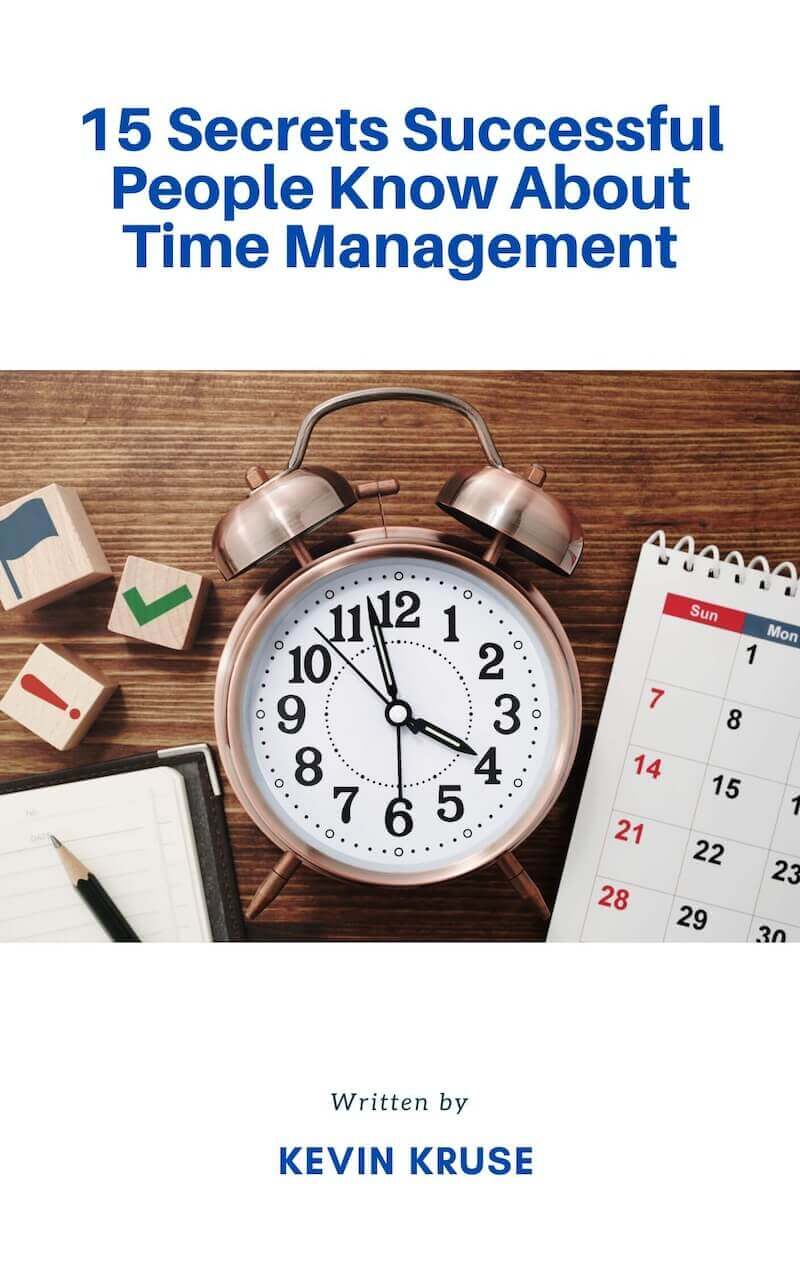
15 Secrets Successful People Know About Time Management Book Summary
This 15 Secrets Successful People Know About Time Management Book Summary covers the key ideas, lessons, and takeaways in about 20 minutes.
Short Description:
Capture time by prioritizing and minimizing distractions.
Start by ditching the to-do list and instead prioritizing what’s important. Do what you can to set yourself up for success and minimize distractions. Find ways to become more efficient. But don’t forget to take breaks for yourself.
Helps with these goals
Preview the 15 Secrets Successful People Know About Time Management book summary
Below is a preview of Sumizeit’s comprehensive human-written summary of 15 Secrets Successful People Know About Time Management by Kevin Kruse. The full summary is 15-20 minutes long and covers the book’s key ideas in text, audio, visual, and video formats. Unlock the full 20 Minute Summary
Have you ever wondered how some people seem to accomplish so much in a day while you can’t seem to find the time? In today’s society, your time is being filled up with endless tasks and interruptions. Replying to emails, responding to text messages, or constant calls on your phone. All of these things steal your time from more important tasks.
Successful people know that time management is key to getting things done. Think about it, if you lose five minutes because you’re replying to a text, you’re never getting that five minutes back. Fortunately, there are some tricks to make sure your time is not taken away and keep you on track.
Learning the habits of successful people is a great way to manage your time and will help you to improve your productivity in all parts of your life. As you will discover, none of these habits are hard to incorporate, and some are as simple as carrying a notebook with you. By learning the following 15 secrets, you will be able to find more success and more time in your day.
1. The most valuable commodity in your life is time so don’t waste it.
One of the things you have to remember is that time lost will never be regained. The best way to prevent losing time is to think of it is a commodity and break it down into measurable units. One way is to break the day down into minutes. There are a total of 1,440 minutes in each day and it is up to you how to use them.
Think of all the things you can do in a minute. You can water a plant or do some exercises. The point is, if you break down your day into minutes, you can see which tasks consume the most time and arrange your day more effectively.
2. Learning how to prioritize tasks will reduce how much time you waste.
Now that you have broken your day up into minutes, the next step is to arrange things more efficiently. A good method to use is to prioritize by importance. The Most Important Task method, known as MIT, helps you to organize your day more efficiently.
When you complete your MITs first, You feel a sense of achievement and it elevates your mood for the rest of the day. Think about it, if you leave your MITs until later in the day, they will be on your mind while you are working on other activities. This is because the MITs have the most meaningful impact on your day or your life. By completing the MITS first, you can focus your energy on other tasks without any distractions.
3. Stop making lists of things to do and start using a calendar instead.
You probably have a to-do list, everyone does. When you make a list, do you have tasks that stay on there for days or weeks at a time? The answer is probably yes.
Want the complete 20-minute summary?
- Full structured summary
- Video Summary
- Podcast Summary
- Audio summary
- Key takeaways
- Exercises
- Quiz
- Highlights and notes
- Ask the book with AI
Who should read 15 Secrets Successful People Know About Time Management?
This book is for anyone struggling to balance competing demands on their time, whether you're an entrepreneur, executive, or professional seeking greater productivity. If you feel constantly overwhelmed by interruptions, endless to-do lists, and the inability to focus on what truly matters, Kevin Kruse's practical approach will resonate with you. It's ideal for those ready to move beyond vague productivity advice and implement concrete, proven habits.
Why does 15 Secrets Successful People Know About Time Management matter?
In today's distraction-filled world, time management has become a critical skill that separates successful people from the rest. Most people waste significant hours on low-value activities like excessive email checking, unproductive meetings, and reactive task-switching. By understanding how successful people actually protect and optimize their time, you can reclaim hundreds of hours annually and achieve far more meaningful results in both your career and personal life.
What are the key themes in 15 Secrets Successful People Know About Time Management?
- Time as a finite, irreplaceable resource
- Prioritization through the MIT (Most Important Task) method
- Eliminating low-value activities and distractions
- Batch processing and thematic organization
- The power of saying no and delegation
- Recovery and rest as productivity tools
- Mindset shifts toward accepting limitations
How can you apply ideas from 15 Secrets Successful People Know About Time Management?
- Audit your email habits this week and implement the 3-2-1-Zero method to reclaim hours previously lost to inbox checking
- Replace your current to-do list with a calendar-based system and schedule each task to a specific date
- Identify your three Most Important Tasks each morning and complete them before checking email or messages
- Design themed days for your work week (e.g., deep work Mondays, admin Wednesdays) and communicate them to your team
- Create a 15-30 minute morning routine focused on exercise or wellness and protect it as non-negotiable
- Delegate three tasks from your current workload that someone else can handle, freeing you for higher-value work
- Experiment with the Pomodoro Technique for one week to understand how breaks improve your overall productivity
- Practice saying no to one request this week that doesn't align with your priorities and observe the relief it brings
What common mistakes do readers make with 15 Secrets Successful People Know About Time Management?
- Treating all tasks equally instead of distinguishing between truly important work and busywork
- Allowing email and messages to interrupt your focus throughout the day rather than batching communication
- Expecting to accomplish everything and feeling defeated when some tasks remain incomplete
- Working longer hours without adequate rest, confusing time at work with actual productive output
- Saying yes to requests that dilute focus on your core priorities and responsibilities
Sumizeit Exercises Apply what you've learned
Turn ideas from 15 Secrets Successful People Know About Time Management into action with a short guided reflection: identify the biggest takeaway, connect it to your life, and commit to one step you can take in the next 24 hours.
What is the expert analysis of 15 Secrets Successful People Know About Time Management?
Overview
15 Secrets Successful People Know About Time Management is authored by Kevin Kruse, a seasoned entrepreneur and productivity expert with a track record of founding multimillion-dollar companies and delivering keynote speeches worldwide. Kruse’s expertise is grounded not only in theory but also in practical leadership experience, making this work a notable contribution to the self-improvement and business productivity genres. The book distills time management into fifteen actionable principles, aiming to transform readers’ approach to daily tasks and overall productivity.
Core Thesis
At its core, Kruse’s book advances the argument that time is the most valuable and irretrievable commodity in life, and that mastering its management is essential for success. By adopting specific habits and strategies—ranging from prioritization techniques like the Most Important Task (MIT) method to behavioral adjustments such as limiting email checks and saying no—individuals can reclaim lost time, reduce stress, and enhance their effectiveness. The thesis emphasizes a holistic approach that balances productivity with well-being, advocating for routines that incorporate both focused work and restorative breaks.
Strengths
- Practical and Accessible Advice: The book excels in offering straightforward, easily implementable strategies that do not require radical lifestyle changes, making it accessible to a broad audience.
- Integration of Psychological Insights: Techniques to combat procrastination, such as future-oriented thinking and accountability partnerships, reflect a nuanced understanding of human behavior.
- Holistic Productivity Model: Kruse balances task management with wellness, underscoring the importance of energy restoration and morning routines, which aligns with contemporary research on sustainable productivity.
- Emphasis on Prioritization and Delegation: The focus on identifying high-impact tasks and offloading less critical ones resonates with established management theories and enhances practical utility.
- Use of Established Principles: Incorporation of concepts like the Pareto Principle and the Pomodoro Technique situates the book within a well-regarded productivity framework.
Critiques & Counterarguments
- Oversimplification of Complex Behaviors: While the book offers clear steps, some recommendations may underestimate the complexity of ingrained habits and environmental constraints that impede time management.
- Limited Empirical Evidence: The book largely relies on anecdotal and popular productivity methods without extensive citation of rigorous scientific studies, which may limit its credibility among academic audiences.
- Potential Neglect of Structural Factors: The focus on individual discipline and habits may overlook systemic issues such as workplace culture, socioeconomic factors, and digital distractions that significantly influence time management.
- Competing Research on Multitasking and Breaks: Emerging cognitive science suggests that task-switching costs may be higher than acknowledged, and that break timing and duration require personalization beyond fixed methods like Pomodoro.
- Diverse Productivity Philosophies: Alternative schools of thought, such as deep work proponents (Cal Newport) or mindfulness-based approaches, might argue for more radical restructuring of work habits rather than incremental adjustments.
Who Should Read This
This book is ideally suited for professionals, entrepreneurs, and students seeking pragmatic strategies to enhance daily productivity without overhauling their entire lifestyle. It appeals to readers who appreciate clear, actionable advice grounded in real-world experience rather than dense theory. Additionally, those new to time management concepts will find it a valuable primer, while more advanced readers may benefit from its concise reminders and motivational framing. However, individuals facing complex systemic barriers or seeking in-depth psychological analysis might need to supplement this work with more specialized literature.
Frequently asked questions about the 15 Secrets Successful People Know About Time Management book summary
What is 15 Secrets Successful People Know About Time Management about?
15 Secrets Successful People Know About Time Management by Kevin Kruse reveals 15 practical habits and strategies that high-performers use to reclaim their time and dramatically increase productivity. The book moves beyond generic advice to provide actionable methods like the MIT prioritization approach, calendar-based scheduling instead of to-do lists, email batching, delegation, and recovery techniques that collectively help readers accomplish more in less time.
Who should read 15 Secrets Successful People Know About Time Management?
This book is ideal for entrepreneurs, executives, and professionals who feel constantly overwhelmed by competing demands and endless distractions. Anyone struggling with email overload, unproductive meetings, procrastination, or the inability to focus on important work will benefit from Kruse's practical framework. It's particularly valuable for those ready to move beyond vague productivity philosophy to implement concrete, proven habits.
What are the main takeaways from 15 Secrets Successful People Know About Time Management?
The core takeaways include: treat time as your most valuable commodity measured in minutes, prioritize your Most Important Tasks and complete them first, replace to-do lists with calendar scheduling, implement email batching to prevent constant interruptions, delegate liberally, say no to misaligned requests, use the Pareto Principle to focus on high-impact work, and maintain your energy through proper rest and recovery. Together, these habits enable you to reclaim hundreds of hours annually while producing better results.
How does the MIT method work in 15 Secrets Successful People Know About Time Management?
The Most Important Task (MIT) method involves identifying three to five critical tasks each day and completing them first before any other work. By tackling your most meaningful and impactful work when your energy is highest, you create momentum, elevate your mood, and eliminate mental burden for the rest of the day. This approach ensures your best hours go toward your most valuable contributions rather than reactive busywork.
What is the 3-2-1-Zero email method from Kevin Kruse's book?
The 3-2-1-Zero method limits email to a structured approach: check your inbox only three times per day and allocate 21 minutes total to process all messages. This technique breaks the habit of constantly refreshing your inbox and eliminates the productivity drain of continuous email interruptions. By batching email handling into designated periods, you free up substantial focused time for important work.
How does Kevin Kruse recommend using the Pareto Principle for time management?
The Pareto Principle (20/80 rule) states that 20 percent of your effort produces 80 percent of your results. Kruse advises identifying which tasks fall into that high-impact 20 percent and ruthlessly prioritizing them. This allows you to focus your limited time and energy on the activities that genuinely move the needle, dramatically improving both efficiency and results.
Why does Kevin Kruse recommend calendars over to-do lists?
Calendar-based scheduling assigns specific dates and times to each task, providing structure and accountability that open-ended to-do lists lack. Tasks on traditional lists often linger indefinitely, creating anxiety and procrastination. A calendar eliminates this by forcing you to either complete tasks by their scheduled date or reschedule them, while also making space for rest and leisure activities.
What role does recovery play in 15 Secrets Successful People Know About Time Management?
Kruse emphasizes that productivity isn't about working longer hours but about maintaining high-quality focus during work time. Full sleep, breaks using the Pomodoro Technique, morning routines, and deliberate downtime recharge your energy and mental capacity. Without adequate recovery, you lose the clarity and energy needed for deep work, ultimately wasting more time despite appearing busy.
About Sumizeit
Sumizeit is a profitable Scomy LLC company based in Miami, Florida. Our founders, Clemens Raemy and Weina Scott, are successful entrepreneurs with several exits. Sumizeit is a popular book summary app / micro learning app used by busy professionals and entrepreneurs with over 2,500 non-fiction book summaries and 10,000 podcast summaries in text, audio, visual, podcast, and video format. We also have stellar retention tools to make ideas stick - such as flashcards with spaced repetition, quizzes, streaks, highlighting and notes, daily challenges, riddles, mini-courses, meditation, and more. You won't only learn the idea, but also remember it. Over 90% of our users change their habits with Sumizeit.
Upgrade Now
Here's why readers love Sumizeit
Join thousands of learners getting smarter every day
"Great experience. Detailed summaries. Loved the gamification feature. Makes learning fun. Good customer service. I recommend Sumizeit to anyone. You'll learn a lot."
"I always felt busy but still wanting to keep up with the book discussion in my friend group. This was a great supplement to help me keep reading the books I find fun while keeping up with important books."
"I love this website. Instead of scrolling social media, I find myself learning a lot. I use it everyday. I recommend this app for anyone who is too busy and wants to get up to speed with their favorite books."
15 Secrets Successful People Know About Time Management Book Summary PDF
Looking for a 15 Secrets Successful People Know About Time Management Book Summary PDF you can save and revisit offline? Our 15 Secrets Successful People Know About Time Management Book Summary PDF captures the book’s core ideas in a clean, printable format — the key frameworks, takeaways, and structure without the fluff. Download the 15 Secrets Successful People Know About Time Management Book Summary PDF when you want a reference you can annotate, share with your team, or review on the go. Get your 15 Secrets Successful People Know About Time Management Book Summary PDF from the download page below.
Download 15 Secrets Successful People Know About Time Management Book Summary PDFPeople also liked these summaries
Readers who explored 15 Secrets Successful People Know About Time Management often enjoyed these titles next.



Ready to read the whole thing?
- Full structured summary
- Video Summary
- Podcast Summary
- Audio summary
- Key takeaways
- Exercises
- Quiz
- Highlights and notes
- Ask the book with AI
Featured Book Titles
Popular Book Summaries at sumizeit, leading book summary app