


As an Amazon Associate, Sumizeit earns from qualifying purchases.
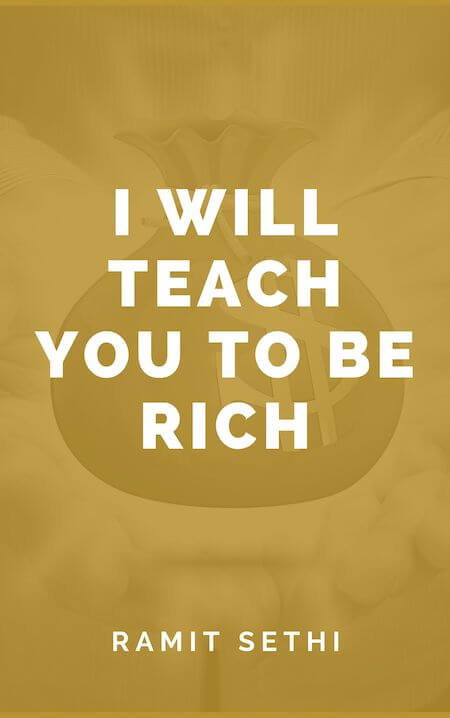
I Will Teach You To Be Rich Book Summary
This I Will Teach You To Be Rich Book Summary covers the key ideas, lessons, and takeaways in about 20 minutes.
Helps with these goals
Want the complete 20-minute summary?
- Full structured summary
- Video Summary
- Podcast Summary
- Audio summary
- Key takeaways
- Exercises
- Quiz
- Highlights and notes
- Ask the book with AI
What is in the I Will Teach You To Be Rich book summary?
Below is a preview of Sumizeit’s expert-written summary of I Will Teach You To Be Rich by Ramit Sethi. The full summary covers the book’s key ideas in text, audio, and video.
In this manual of advice, Ramit Sethi explains that good financial health is easier than we think. Money management skills like budgeting and investing seem complicated and difficult, scaring people away from learning them. Sethi shows that these skills are actually extremely straightforward, and can be set-up in a matter of six weeks and then maintained in our sleep for years on end. In arranging a few foolproof lifestyle changes and habits, Sethi argues that any financial dream is achievable, whether that be freedom to retire early, more money to travel, or a cushioned bank account.
The first step to financial health is taking responsibility for yourself
When you look at your bank account, which may not be as large as you’d like, and your debt, your first reaction may be to blame others in frustration. Maybe you believe your school should have taught you how to do your taxes correctly or how to budget, or you blame your parents for not helping you understand how to save. You may feel frustrated by the investing market for seeming difficult to understand and therefore feeling inaccessible, or disillusioned by the financial recession which lost people their money and left many unemployed.
Although this reaction is normal, it will not help you get back on your feet. In fact, many of these difficulties are already addressed. For example, most schools teach financial literacy courses but these courses are poorly attended. There are also plenty of tools for understanding different money management skills online which may not have been explored. Drops in the market are normal, and irrelevant in the longterm.
Sethi writes that admitting to our neglect to learn about this part of our lives is crucial to moving forward. By admitting that we haven’t done enough to prepare ourselves, we can transcend the frustration of blame and make peace with reality. Then, we can take a deep breath and take control of our financial future. According to Sethi, every single person is capable of solving their money problems.
The sooner a person does this, the better, says Sethi, who points out that the young are unfortunately the least likely to invest. The younger a person starts making a simple plan for themselves, the more opportunities they will have to grow their wealth and feel more relaxed in the future. That being said, it is never too late to start, even for those close to retirement age, and starting earlier is better than continuing to wait.
Being wealthy doesn’t necessarily mean having millions in the bank
When Sethi claims that his book will make you rich, he does not necessarily mean he will increase your net worth to an arbitrary number. Instead, he explains that wealth can mean different things to different people. For example, wealth could mean being able to work for pleasure rather than working to pay the bills. It can mean buying a house in a remote place where relaxing is easy.
Want the complete 20-minute summary?
- Full structured summary
- Video Summary
- Podcast Summary
- Audio summary
- Key takeaways
- Exercises
- Quiz
- Highlights and notes
- Ask the book with AI
Who should read I Will Teach You To Be Rich?
I Will Teach You To Be Rich is for anyone who feels intimidated by personal finance and wants to build lasting wealth without complexity. Whether you're a young professional just starting out, someone overwhelmed by financial jargon, or someone who wants to retire earlier, this book demystifies money management and shows that financial success is more achievable than you think.
Why does I Will Teach You To Be Rich matter?
Financial literacy is rarely taught well, leaving most people uncertain about how to manage money effectively. Ramit Sethi's approach proves that wealth-building doesn't require a finance degree or constant market monitoring—just smart habits set up once and automated for years. In an era of economic uncertainty and rising costs, understanding how to optimize your accounts, build credit, and invest passively is essential for long-term security.
What are the key themes in I Will Teach You To Be Rich?
- Automation removes willpower and makes financial success effortless
- Personal responsibility is the foundation of financial change
- Wealth means different things to different people—define yours
- Small, consistent steps beat dramatic overhauls
- Conscious spending allows guilt-free enjoyment of money
- Long-term investing through index funds beats active stock picking
What are the key lessons from the I Will Teach You To Be Rich book summary?
Stop blaming external factors and take control
Financial frustration often leads to blame—toward schools, parents, markets, or recessions. Real progress begins when you accept responsibility and move forward despite past neglect.
Define wealth on your own terms
Wealth isn't about hitting an arbitrary net worth number. It's personal—whether that means early retirement, travel freedom, or helping family. Clarify what rich means to you before building a plan.
Credit cards are tools, not traps
A strong credit score saves hundreds of thousands on mortgages and loans through lower interest rates. Build credit early by using cards responsibly and automating full monthly payments.
Strategic account selection saves more than you realize
Not all banks are equal. Online banks often offer 6-10x higher interest rates with no fees compared to traditional banks, and these differences compound significantly over time.
Starting to invest early, even with $50, creates exponential growth
Time is your greatest investment asset. The earlier you begin, the more compound interest works in your favor, regardless of how small your initial contribution is.
401(k) matching is literally free money you should claim
Over half of employees with access to 401(k)s don't participate, missing employer matching that is essentially free wealth. This is the easiest wealth-building opportunity most people have.
A Roth IRA and 401(k) together provide tax-efficient diversification
Having both accounts lets you diversify growth paths. Roth IRAs are taxed upfront so withdrawals are tax-free, the opposite of 401(k)s, providing flexibility in retirement.
Conscious spending starts with identifying what matters most
Rather than restricting all spending equally, identify what brings genuine value to your life and cut ruthlessly from everything else. This makes budgeting intuitive, not punitive.
Automation transforms spending from willpower to habit
Set up automatic transfers on paycheck arrival—paying bills first, then funding investments, then savings, then guilt-free spending. Once established, you save and invest in your sleep.
The 60/10/10/20 rule provides a simple spending framework
Allocate roughly 60% to fixed costs, 10% to investments, 10% to savings, and 20% to guilt-free spending. These percentages can adjust based on personal goals.
Index funds beat managed mutual funds through simplicity and low fees
Computer-run index funds track markets at minimal cost and outperform expensive, actively-managed mutual funds over time. Experts can't predict markets anyway, so keep it simple.
Lifecycle funds automatically adjust risk as you age
Target retirement funds (like Vanguard Target Retirement) shift automatically from stocks to bonds as you approach retirement, eliminating the need to rebalance manually.
Ignore short-term market noise and expert predictions
Financial media creates urgency and confusion by constantly changing recommendations. Studies show even experts can't predict short-term market movements, so tune out the chatter.
Progress beats perfection in building financial habits
Start with whatever amount feels manageable—even $50 to retirement—and increase gradually as you adjust. Slow, consistent steps build lasting habits better than drastic changes.
Forgive yourself for past financial mistakes and focus forward
Dwelling on past errors derails progress. Acknowledge them, adjust course, and move slowly toward your goals. The best time to start is today, not when conditions are perfect.
Keep a cushion in checking to avoid costly overdraft fees
Even with automation, maintain $100-$1,000 in your checking account to prevent overdraft fees that undo your savings progress.
Multiple savings accounts help track goals visually
Opening separate savings accounts for different goals—travel, down payment, emergency fund—makes progress visible and reduces the temptation to dip into dedicated funds.
Young investors have the biggest advantage but it's never too late
Youth provides decades for compound growth, yet many young people delay investing. However, even those close to retirement can benefit by starting immediately rather than waiting.
Request credit limit increases over time to build credit strength
Periodically asking your card issuer to raise your limit—and keeping balances low—signals creditworthiness and strengthens your credit score without added cost.
Beating inflation requires interest rates above 1% in savings accounts
Since inflation erodes savings value, place money in accounts earning above inflation rates (typically 1%). Online banks offering 4-6% actually help your money grow in real terms.
Want the complete 20-minute summary?
- Full structured summary
- Video Summary
- Podcast Summary
- Audio summary
- Key takeaways
- Exercises
- Quiz
- Highlights and notes
- Ask the book with AI
How can you apply ideas from I Will Teach You To Be Rich?
- Set up automatic monthly payments to pay your credit card balance in full and build a strong credit score effortlessly
- Switch to a high-yield online savings account and reinvest the interest difference into investments
- Schedule automated transfers on payday: first to bills, then to 401(k) and Roth IRA, then to savings, then unlock remaining funds for spending
- Open a 401(k) if your employer matches contributions, immediately claiming free employer money
- Select a target-date index fund matching your retirement year and set it to auto-invest monthly
- Use the envelope method with debit cards by loading different amounts to separate cards for different spending categories
- Call your bank and request fee waivers by threatening to switch competitors, or simply move to a no-fee online bank
What common mistakes do readers make with I Will Teach You To Be Rich?
- Waiting for the 'perfect time' or ideal financial situation to start investing, losing years of compound growth
- Neglecting employer 401(k) matching because investing seems complicated, effectively rejecting free money
- Keeping all accounts at a traditional brick-and-mortar bank while missing 6-10x higher interest rates available online
- Attempting drastic spending cuts all at once, leading to burnout and abandonment of the financial plan
- Treating credit cards as free money rather than automatic payments, accumulating debt at punishing interest rates
Sumizeit Exercises Apply what you've learned
Turn ideas from I Will Teach You To Be Rich into action with a short guided reflection: identify the biggest takeaway, connect it to your life, and commit to one step you can take in the next 24 hours.
What is the expert analysis of I Will Teach You To Be Rich?
Overview
I Will Teach You To Be Rich is a personal finance guide authored by Ramit Sethi, a Stanford-educated entrepreneur and financial advisor known for his pragmatic, no-nonsense approach to money management. The book distinguishes itself in the crowded self-improvement and finance genre by demystifying complex financial concepts and presenting them as accessible, actionable steps. Sethi’s background as an online educator and entrepreneur lends credibility and a contemporary relevance to his advice, tailored primarily toward young adults and those new to financial planning.
Core Thesis
Sethi’s central argument is that achieving financial health and wealth is not about austerity or extreme sacrifice but about creating automated systems and smart habits that require minimal ongoing effort. He posits that by taking full responsibility for one’s finances, setting clear personal goals for what “rich” means, and employing straightforward strategies—such as optimizing bank accounts, building credit, conscious spending, and disciplined investing—anyone can build lasting wealth. The emphasis is on starting early, automating financial flows, and focusing on long-term growth through low-cost index funds rather than chasing market trends or complex investment vehicles.
Strengths
- Practical and Actionable Advice: Sethi excels at translating abstract financial principles into concrete steps, such as automating bill payments and investments, which readers can implement immediately.
- Psychological Insight: The book acknowledges common emotional barriers—blame, procrastination, intimidation—and offers a mindset shift toward personal accountability and patience, which is crucial for sustained financial behavior change.
- Holistic View of Wealth: By encouraging readers to define what “rich” means personally, Sethi moves beyond the narrow metric of net worth to incorporate quality of life and individual values.
- Emphasis on Automation: The strategy of “setting it and forgetting it” reduces decision fatigue and leverages behavioral economics to help readers stay on track without constant vigilance.
- Accessible to Beginners: The book avoids jargon and complexity, making investing, credit management, and budgeting approachable for novices.
Critiques & Counterarguments
- Oversimplification of Financial Complexity: While accessibility is a strength, the book occasionally glosses over the nuances of investing, credit risks, and market volatility, potentially underpreparing readers for real-world complexities.
- Limited Scope on Socioeconomic Barriers: Sethi’s thesis assumes a baseline level of financial stability and access to credit, which may not apply to marginalized populations facing systemic economic obstacles.
- Potential Underestimation of Behavioral Challenges: Automation is powerful, but the book may underestimate how deeply ingrained spending habits and psychological biases can derail even automated systems without ongoing self-awareness and discipline.
- Critique of Mutual Funds: Sethi’s blanket dismissal of mutual funds overlooks the fact that many actively managed funds outperform index funds in certain market conditions, and some investors prefer the potential upside despite fees.
- Alternative Financial Philosophies: Schools of thought such as FIRE (Financial Independence, Retire Early) or minimalist frugality emphasize more aggressive saving and lifestyle downsizing, contrasting with Sethi’s more balanced “conscious spending” approach. Some critics argue that without stricter discipline, wealth accumulation may be slower.
Who Should Read This
This book is ideal for young professionals, recent graduates, and anyone feeling overwhelmed by personal finance who seeks a clear, manageable roadmap to financial security. It particularly benefits readers who appreciate a psychologically informed, habit-based approach rather than technical investment manuals or austerity-focused guides. Those who want to take control of their money without becoming financial experts will find Sethi’s blend of practical advice and motivational insight compelling. However, readers facing complex financial situations or seeking advanced investment strategies may need to complement this book with more specialized resources.
Frequently asked questions about the I Will Teach You To Be Rich book summary
What is I Will Teach You To Be Rich about?
I Will Teach You To Be Rich by Ramit Sethi is a practical guide proving that financial success doesn't require a finance degree or constant effort. The book shows how to automate your money, optimize your accounts, build credit strategically, and invest passively through simple, one-time setups that work for decades. Sethi argues that anyone can achieve their version of wealth—whether early retirement, travel freedom, or financial security—by following straightforward habits.
Who should read I Will Teach You To Be Rich?
Anyone intimidated by personal finance, unsure where to start, or frustrated by financial complexity should read this book. It's especially valuable for young professionals, recent graduates, people avoiding investment due to confusion, and anyone who wants to automate their finances and stop worrying about money. The book also works for those closer to retirement who feel they've started too late—Sethi emphasizes it's never too late to begin.
What are the main takeaways from I Will Teach You To Be Rich?
The core takeaways are: take personal responsibility for your finances, define what wealth means to you personally, build credit strategically through automated card payments, choose high-interest online banks over traditional banks, start investing immediately through employer 401(k)s and Roth IRAs, and automate all spending transfers on payday so you invest and save without willpower. Sethi emphasizes that index funds beat active investing, small consistent progress beats perfection, and automation makes financial success effortless long-term.
How does automating finances actually work?
Automation works by setting up transfers on payday that direct money automatically to bills, investments, savings, and spending accounts in sequence. For example, rent and utilities transfer on day one, then 401(k) and Roth IRA contributions on day two, savings on day five, with remaining funds available guilt-free. Once set up once, this system runs indefinitely without requiring willpower or monthly decisions, effectively making you save and invest in your sleep.
Why should I invest in index funds instead of picking individual stocks?
Index funds are passively managed by computers, have minimal fees, and automatically track market performance. Research shows that even professional managers can't consistently beat markets over time, making complex stock picking unnecessary. Target-date index funds automatically shift from stocks to bonds as you age, eliminating the need to rebalance manually. This simplicity combined with low costs makes index funds the better choice for most long-term investors.
What's the difference between a 401(k) and a Roth IRA?
A 401(k) is employer-sponsored and allows your contributions to reduce your current taxable income, but withdrawals in retirement are taxed. A Roth IRA is individually opened and funded with after-tax money, but withdrawals are tax-free in retirement. Ideally, use both for tax diversification—contributions are tax-deductible for 401(k)s while Roth IRAs provide tax-free growth, giving flexibility in retirement planning.
How much should I be saving and investing each month?
Sethi recommends allocating roughly 60% of income to fixed costs (rent, bills), 10% to investments, 10% to savings, and 20% to guilt-free spending. However, these percentages are flexible based on personal goals. The key principle is starting with whatever feels manageable—even $50 monthly—and increasing gradually. Progress matters more than perfection, so beginning today with a small amount beats waiting for ideal conditions.
About Sumizeit
Sumizeit is a profitable Scomy LLC company based in Miami, Florida. It has been helping readers learn from nonfiction books for 7 years with expert-written summaries in text, audio, podcast, and video.
Want the complete 20-minute summary?
- Full structured summary
- Video Summary
- Podcast Summary
- Audio summary
- Key takeaways
- Exercises
- Quiz
- Highlights and notes
- Ask the book with AI
Here's why readers love Sumizeit
Join thousands of learners getting smarter every day
"Great experience. Detailed summaries. Loved the gamification feature. Makes learning fun. Good customer service. I recommend Sumizeit to anyone. You'll learn a lot."
"I always felt busy but still wanting to keep up with the book discussion in my friend group. This was a great supplement to help me keep reading the books I find fun while keeping up with important books."
"I love this website. Instead of scrolling social media, I find myself learning a lot. I use it everyday. I recommend this app for anyone who is too busy and wants to get up to speed with their favorite books."
I Will Teach You To Be Rich Book Summary PDF
Looking for a I Will Teach You To Be Rich Book Summary PDF you can save and revisit offline? Our I Will Teach You To Be Rich Book Summary PDF captures the book’s core ideas in a clean, printable format — the key frameworks, takeaways, and structure without the fluff. Download the I Will Teach You To Be Rich Book Summary PDF when you want a reference you can annotate, share with your team, or review on the go. Get your I Will Teach You To Be Rich Book Summary PDF from the download page below.
Download I Will Teach You To Be Rich Book Summary PDFPeople also liked these summaries
Readers who explored I Will Teach You To Be Rich often enjoyed these titles next.


Want the complete 20-minute summary?
- Full structured summary
- Video Summary
- Podcast Summary
- Audio summary
- Key takeaways
- Exercises
- Quiz
- Highlights and notes
- Ask the book with AI
Featured Book Titles
Popular Book Summaries at sumizeit, leading book summary app