


Prefer the print book? Buy on Amazon
As an Amazon Associate, Sumizeit earns from qualifying purchases.
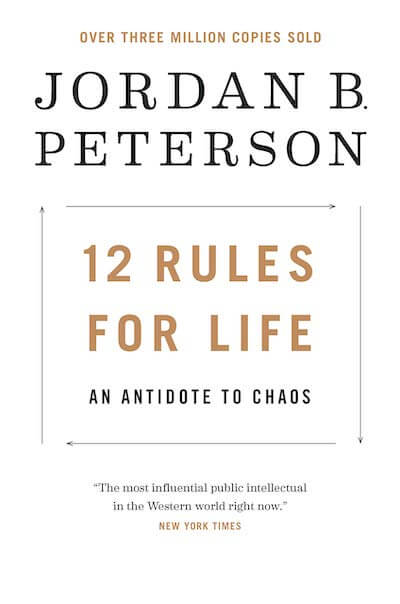
12 Rules For Life Book Summary
This 12 Rules For Life Book Summary covers the key ideas, lessons, and takeaways in about 20 minutes.
Short Description:
12 Rules for Life teaches responsibility and truth as paths to meaning.
The book’s message is timeless: life is hard, but you are strong enough to bear it. When you accept responsibility, speak truth, and act with courage, you transform suffering into purpose. Meaning is not something you find by chance—it is something you build, moment by moment, through the choices you make.
Helps with these goals
Want a Free Weekly Read?
Get a free summary every week straight to your mailbox.
Preview the 12 Rules For Life book summary
Below is a preview of Sumizeit’s comprehensive human-written summary of 12 Rules For Life by Jordan Peterson. The full summary is 15-20 minutes long and covers the book’s key ideas in text, audio, visual, and video formats. Unlock the full 20 Minute Summary
In 12 Rules for Life: An Antidote to Chaos, Jordan B. Peterson explores the philosophical, psychological, and moral foundations of a meaningful life. Drawing from his experience as a clinical psychologist, biblical stories, evolutionary biology, and myths from across cultures, Peterson argues that every human being must learn to balance order and chaos—the two fundamental domains of existence.
Order represents tradition, security, and predictability—the structure that gives stability to our lives. Chaos, on the other hand, symbolizes uncertainty, change, and potential. Too much order leads to stagnation and tyranny, while too much chaos results in anxiety and despair. The challenge of life, Peterson writes, is to walk the fine line between the two.
For centuries, religion offered moral guidance that provided meaning within this balance. But in the modern, secular age, many people have lost their moral compass, replacing belief with nihilism, ideology, or resentment. Peterson proposes that meaning—not happiness—is the highest aim of human existence. By voluntarily taking responsibility for oneself and others, an individual transforms chaos into order, suffering into growth, and existence into something worthwhile.
Rule 1: Stand Tall and Face Life’s Challenges
Peterson begins with an unexpected example from nature: lobsters. Lobsters have nervous systems that regulate social hierarchies using serotonin—the same chemical that influences human mood and confidence. When lobsters win fights, their serotonin levels rise, and they stand tall; when they lose, they slouch. This biological mechanism mirrors human social behavior. People who hold themselves upright and act confidently are more likely to command respect and succeed in life.
Standing up straight is not merely about posture—it’s a metaphor for courage and responsibility. To stand tall is to confront the chaos of life voluntarily, to accept suffering as an inescapable truth, and to act with dignity despite it. Peterson shares examples from his clinical practice, where depressed clients began transforming their lives simply by improving their posture, hygiene, and body language. Their outward confidence reinforced internal strength.
This act of “standing tall” is a small but profound first victory in the battle against despair. It sends a message to your mind: I am capable of facing life, and I deserve to exist proudly in this world.
Rule 2: Treat Yourself Like Someone You Are Responsible for Helping
Many people show more compassion toward others than toward themselves. A person might care for their dog’s health meticulously yet neglect their own medications or mental wellbeing. Peterson argues that this self-neglect arises from guilt and self-loathing—an unconscious belief that one is unworthy of care.
He urges readers to view themselves as caretakers of a valuable being entrusted to them by existence itself. To live responsibly means to maintain one’s body, mind, and soul with the same diligence one would show to a loved one. For example, if your friend were struggling, you wouldn’t tell them they’re worthless—you’d encourage them to keep going. Yet many people talk to themselves in cruel, dismissive ways they would never use toward another.
Caring for yourself is…
Want the complete 20-minute summary?
- Full structured summary
- Video Summary
- Podcast Summary
- Audio summary
- Infographic
- Key takeaways
- Exercises
- Quiz
- Highlights and notes
- Ask the book with AI
Who should read 12 Rules For Life?
12 Rules for Life is for anyone struggling with purpose, direction, or meaning in the modern world. Whether you're facing personal challenges, feeling lost in a chaotic society, or simply seeking a framework for living more intentionally, this book offers practical wisdom drawn from psychology, philosophy, and timeless human traditions. It speaks especially to those who suspect that happiness alone is not enough—that what we truly need is meaning.
Why does 12 Rules For Life matter?
In an age of declining religious frameworks and rising nihilism, Jordan Peterson's 12 Rules for Life provides a secular yet deeply moral guide for navigating existence. The book addresses the real crisis many face: loss of direction and purpose in a world that no longer offers clear values or meaning. By reconnecting readers to ancient wisdom, psychological insight, and the power of personal responsibility, Peterson offers an antidote to despair that is both philosophically grounded and practically applicable to everyday life.
What are the key themes in 12 Rules For Life?
- The balance between order and chaos as fundamental to human flourishing
- Meaning through responsibility rather than the pursuit of happiness
- Personal integrity as the foundation for critiquing society
- The power of voluntary suffering and growth
- Discipline and sacrifice as paths to a meaningful life
- The moral obligation to care for yourself and those around you
How can you apply ideas from 12 Rules For Life?
- Improve your posture and body language as a first step toward building confidence and tackling life challenges more effectively
- Establish a personal self-care routine (sleep, nutrition, exercise) as a moral obligation to yourself, not a luxury
- Audit your relationships and distance yourself from people who drag you down or discourage your growth
- Track small personal improvements daily rather than comparing yourself to others on social media or in your workplace
- Set clear, fair boundaries with children and enforce consistent consequences to teach responsibility and self-control
- Identify one area of your life that is disorganized or dishonest and commit to putting it in order before criticizing external systems
- Practice precise speech by replacing vague complaints with specific, actionable statements in conversations and self-reflection
- Create space for small joys in your daily routine—moments of beauty, gratitude, or play that remind you life is worth living
What common mistakes do readers make with 12 Rules For Life?
- Assuming happiness is the goal rather than recognizing that meaning—which often involves sacrifice—is what truly sustains a life
- Trying to help or rescue people who refuse to take responsibility for themselves, which drains you without improving their situation
- Believing that your personal circumstances don't matter and that you can critique the world while your own life is chaotic or dishonest
- Comparing your progress to others' highlight reels instead of measuring improvement against your own past self
- Avoiding necessary discipline with children out of guilt or fear of rejection, which fails to prepare them for the real world
Sumizeit Exercises Apply what you've learned
Turn ideas from 12 Rules For Life into action with a short guided reflection: identify the biggest takeaway, connect it to your life, and commit to one step you can take in the next 24 hours.
What is the expert analysis of 12 Rules For Life?
Overview
12 Rules for Life: An Antidote to Chaos is a seminal work by Jordan B. Peterson, a Canadian clinical psychologist and public intellectual renowned for his interdisciplinary approach that synthesizes psychology, mythology, philosophy, and evolutionary biology. Published in 2018, the book has achieved global prominence by addressing the perennial human quest for meaning amid the complexities of modern life. Peterson’s unique blending of scientific research, biblical narratives, and cultural myths offers readers a framework to navigate the tension between order and chaos—a duality he posits as fundamental to existence.
Core Thesis
At its core, Peterson argues that the highest aim of human life is not happiness but meaning, which emerges through the voluntary acceptance of responsibility. He conceptualizes existence as a dynamic balance between order (stability, tradition, predictability) and chaos (uncertainty, change, potential). Excessive order leads to rigidity and tyranny, while excessive chaos breeds anxiety and despair. The individual’s task is to courageously confront suffering and chaos, transforming them into growth and purpose by adhering to disciplined, truthful, and morally grounded principles. Through twelve practical “rules,” Peterson offers a roadmap for cultivating integrity, resilience, and personal transformation.
Strengths
- Interdisciplinary Synthesis: Peterson’s integration of clinical psychology, evolutionary biology, and mythological symbolism provides a rich, multi-layered understanding of human behavior and motivation.
- Practical Wisdom: The twelve rules distill complex philosophical ideas into actionable guidance, making abstract concepts accessible and applicable to everyday life.
- Emphasis on Responsibility: By prioritizing meaning over fleeting happiness, Peterson challenges contemporary cultural narratives centered on entitlement and victimhood, encouraging proactive engagement with life’s challenges.
- Use of Narrative and Metaphor: Drawing on stories from religious texts and personal clinical anecdotes, Peterson humanizes psychological insights, fostering emotional resonance and deeper reflection.
- Balanced View of Order and Chaos: The dialectical framing offers a nuanced perspective on the human condition, avoiding simplistic dichotomies and acknowledging the necessity of both stability and change.
Critiques & Counterarguments
- Empirical Ambiguity: While Peterson’s clinical anecdotes and evolutionary analogies are compelling, some critics argue that his evidentiary base is anecdotal or selectively interpreted, lacking rigorous empirical validation across diverse populations.
- Oversimplification of Complex Social Issues: The framing of personal responsibility as a panacea can understate systemic factors such as socioeconomic inequality, cultural oppression, or mental health disparities that complicate individual agency.
- Conservative Moral Framework: Peterson’s reliance on traditional values and biblical morality may alienate readers from pluralistic or secular backgrounds, and some view his prescriptions as culturally prescriptive rather than universally applicable.
- Opposing Psychological Paradigms: Schools of thought emphasizing social constructivism or critical theory might contest Peterson’s emphasis on inherent hierarchies and biological determinism, advocating instead for transformative social change over individual adaptation.
- Real-World Evidence on Risk and Safety: Peterson’s valorization of risk-taking, especially in childhood, is challenged by developmental psychology research emphasizing the importance of safe environments for healthy cognitive and emotional growth.
Who Should Read This
12 Rules for Life is ideally suited for readers seeking a profound yet pragmatic exploration of how to live meaningfully in an era marked by cultural fragmentation and existential uncertainty. It appeals to individuals interested in psychology, philosophy, and self-improvement who appreciate a synthesis of science and tradition. Those grappling with questions of personal responsibility, moral clarity, and resilience will find Peterson’s work both challenging and inspiring. However, readers open to critical engagement with its assumptions—especially regarding social structures and cultural norms—will derive the greatest intellectual benefit.
Frequently asked questions about the 12 Rules For Life book summary
What is 12 Rules For Life about?
12 Rules for Life by Jordan Peterson is a philosophical and practical guide to living a meaningful existence in the modern world. The book argues that meaning—not happiness—is the highest human aim, and that this meaning is built through accepting responsibility, speaking truth, and voluntarily confronting suffering. Peterson draws on psychology, mythology, biology, and spiritual wisdom to present twelve rules that challenge readers to live with integrity, discipline, and courage.
Who should read 12 Rules For Life?
This book is for anyone seeking purpose and direction in their life, especially those who feel lost, directionless, or exhausted by modern culture's focus on happiness alone. It appeals to people struggling with depression, seeking personal growth, wanting to understand how to raise resilient children, or looking for a moral framework in a secular age. Peterson's insights resonate with readers of all ages who suspect that meaning, not comfort, is what they truly need.
What are the main takeaways from 12 Rules For Life?
The main takeaways are that meaning arises from accepting responsibility rather than seeking pleasure, that personal integrity must come before external criticism, and that suffering is inevitable but can be transformed through discipline and courage. Peterson teaches that small actions—standing tall, speaking truth, listening carefully, caring for yourself—compound into a meaningful life. Above all, the book emphasizes that you are strong enough to bear life's hardships and that confronting them with honesty and responsibility transforms pain into purpose.
How can 12 Rules For Life help with depression and anxiety?
Peterson addresses depression and anxiety by shifting focus from feeling better to living meaningfully. The book suggests that depression often stems from avoiding responsibility and telling yourself lies. By taking concrete steps—improving posture and hygiene, setting boundaries, pursuing meaningful work, and speaking truth—readers can rebuild agency and purpose. Peterson's clinical examples show how clients transformed their mental health not through positive thinking alone, but through accepting difficulty and taking responsible action.
What does Peterson mean by balancing order and chaos?
Order represents tradition, structure, predictability, and security—the frameworks that stabilize life. Chaos symbolizes uncertainty, change, and potential. Peterson argues that both are necessary: too much order leads to tyranny and stagnation, while too much chaos causes despair and anxiety. The art of living is walking the line between them, using discipline to create structure while remaining open to growth and change.
Is 12 Rules For Life religious or secular?
While Peterson draws heavily from biblical stories, mythology, and religious tradition, 12 Rules for Life is not explicitly religious—it's philosophical and psychological. Peterson argues that religion historically provided meaning and moral guidance that modern secular society has lost. His book attempts to recover those insights through reason, science, and storytelling, offering a moral framework that can work for both religious and secular readers.
How does 12 Rules For Life address modern social issues?
Rather than offering political commentary, Peterson addresses modern issues by emphasizing personal responsibility and integrity. He argues that before critiquing governments or institutions, individuals must put their own lives in order and live honestly. This approach suggests that large-scale social problems stem partly from individuals avoiding responsibility, and that genuine change begins with personal moral courage and truthfulness.
About Sumizeit
Sumizeit is a profitable Scomy LLC company based in Miami, Florida. Our founders, Clemens Raemy and Weina Scott, are successful entrepreneurs with several exits. Sumizeit is a popular book summary app / micro learning app used by busy professionals and entrepreneurs with over 2,500 non-fiction book summaries and 10,000 podcast summaries in text, audio, visual, podcast, and video format. We also have stellar retention tools to make ideas stick - such as flashcards with spaced repetition, quizzes, streaks, highlighting and notes, daily challenges, riddles, mini-courses, meditation, and more. You won't only learn the idea, but also remember it. Over 90% of our users change their habits with Sumizeit.
Upgrade Now
Here's why readers love Sumizeit
Join thousands of learners getting smarter every day
"Great experience. Detailed summaries. Loved the gamification feature. Makes learning fun. Good customer service. I recommend Sumizeit to anyone. You'll learn a lot."
"I always felt busy but still wanting to keep up with the book discussion in my friend group. This was a great supplement to help me keep reading the books I find fun while keeping up with important books."
"I love this website. Instead of scrolling social media, I find myself learning a lot. I use it everyday. I recommend this app for anyone who is too busy and wants to get up to speed with their favorite books."
12 Rules For Life Book Summary PDF
Looking for a 12 Rules For Life Book Summary PDF you can save and revisit offline? Our 12 Rules For Life Book Summary PDF captures the book’s core ideas in a clean, printable format — the key frameworks, takeaways, and structure without the fluff. Download the 12 Rules For Life Book Summary PDF when you want a reference you can annotate, share with your team, or review on the go. Get your 12 Rules For Life Book Summary PDF from the download page below.
Download 12 Rules For Life Book Summary PDFPeople also liked these summaries
Readers who explored 12 Rules For Life often enjoyed these titles next.




Ready to read the whole thing?
- Full structured summary
- Video Summary
- Podcast Summary
- Audio summary
- Infographic
- Key takeaways
- Exercises
- Quiz
- Highlights and notes
- Ask the book with AI
Featured Book Titles
Popular Book Summaries at sumizeit, leading book summary app