


As an Amazon Associate, Sumizeit earns from qualifying purchases.
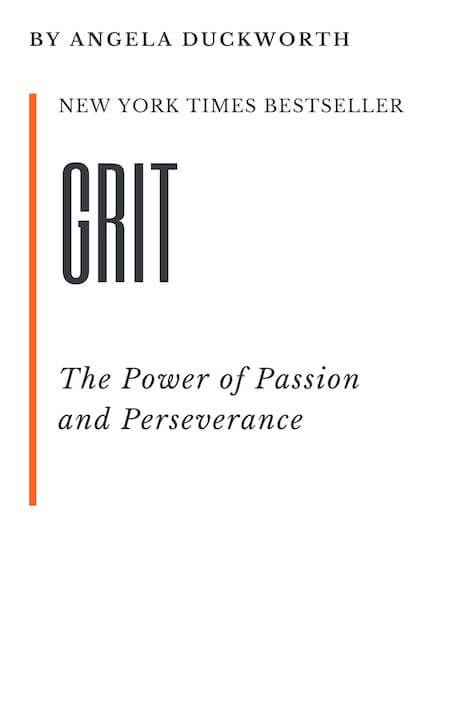
Grit Book Summary
This Grit Book Summary covers the key ideas, lessons, and takeaways in about 20 minutes.
Helps with these goals
Want the complete 20-minute summary?
- Full structured summary
- Video Summary
- Podcast Summary
- Audio summary
- Infographic
- Key takeaways
- Exercises
- Quiz
- Highlights and notes
- Ask the book with AI
What is in the Grit book summary?
Below is a preview of Sumizeit’s expert-written summary of Grit by Angela Duckworth. The full summary covers the book’s key ideas in text, audio, and video.
What’s the secret to getting to the top?
Is it talent?
Or, is it really just about believing in yourself?
In her book, “Grit”, Angela Duckworth shares her secrets to success. Duckworth puts emphasis on determination and perseverance when it comes to reaching your goal.
She tells why people often believe they are not good enough to reach their dreams and how this hinders their work efforts.
“I have a feeling tomorrow will be better is different from I resolve to make tomorrow better.”- Angela Duckwork
After reading these helpful tips from author, Angela Duckworth, you will understand why hard work is really the only thing you should be focused on when it comes to making your dreams come true.
The Talent Bias
We have all heard the saying to keep on trying even when the going gets tough. But, the truth is, as humans, we have this thing called the talent bias. We believe that the people with the most talent will naturally make their way to the top without any hard work or effort. But, that couldn’t be farther from the truth. Even talented people need to work hard!
In business, employers would rather hire a person with a strong work-ethic than one who is just naturally good at what they do. When the people who enjoy hard work are encountered with a new obstacle they will work to overcome it. People with natural talent, however, might be baffled and overwhelmed, which could affect the way they problem-solve.
Still, unfortunately in the job world, people are often hit with the talent-bias. Someone who is a natural people-person may seem more valuable than someone who has learned to network along the way in their career.
Effort is More Valuable Than Talent
Effort leads to skills, which then leads to results. When you put the effort into something such as a political campaign, you begin to learn things along the way, and when you learn new skills, you can utilize them and see results.
“As much as talent counts, effort counts twice.”- Angela Duckworth
If you want a formula to refer to, Talent x Effort = Skill.
Then, to expand on that formula more, Skill x Effort = Achievement.
This formula can be used when practicing anything. For example, if you are a musician and you dream of attending Julliard, you must put in the effort in order to get to that achievement. Not only do you have to practice, but you must go through the effort of applying and auditioning for a spot in the program.
Stick to Low-Level Goals
In order to keep doing what you love, creating low-level goals will help you to maintain balance and keep you motivated. Think of low-level daily goals as a path you are paving to your success.
Starting with goals that are too high, such as the end goal of being an Olympian or a famous author will only encourage you to overlook the little things that must be done along…
Want the complete 20-minute summary?
- Full structured summary
- Video Summary
- Podcast Summary
- Audio summary
- Infographic
- Key takeaways
- Exercises
- Quiz
- Highlights and notes
- Ask the book with AI
Who should read Grit?
Grit is for anyone who feels stuck, underestimated, or discouraged by their natural abilities. Whether you're a student, professional, athlete, or parent seeking to unlock your potential, this book speaks to those who believe that persistence and dedication matter more than innate talent.
Why does Grit matter?
In a world that obsesses over talent and natural ability, Angela Duckworth's Grit challenges this myth with research-backed insights showing that sustained effort is the true driver of achievement. As workplace engagement and motivation crisis rates climb, understanding how to build genuine resilience and purpose has never been more relevant.
What are the key themes in Grit?
- Effort and deliberate practice triumph over innate talent
- Purpose and passion fuel long-term persistence
- Small, consistent goals create pathways to big achievements
- Growth mindset and resilience are learned, not inherited
- Feedback and intelligent practice matter more than hours logged
- Finding meaning in work transforms motivation
- Perseverance requires both ambition and realistic self-assessment
What are the key lessons from the Grit book summary?
Talent is overrated; effort counts twice
Natural ability is just the starting point. The real differentiator in success is the sustained effort you invest, which directly translates into skill development and achievement.
Use the effort equation to understand achievement
Talent multiplied by effort equals skill; skill multiplied by effort equals achievement. This framework shows that effort is the common denominator in every step toward mastery.
Low-level daily goals pave the path to big dreams
Breaking massive ambitions into manageable daily targets keeps you grounded and motivated while preventing the overwhelm that stops most people from starting.
Passion alone isn't enough; you must build it
Finding work you love requires active exploration and intentional effort—it's not something that strikes like lightning. Commitment to a field often deepens passion over time.
Smart practice beats endless grinding
Deliberate, focused practice with specific goals and feedback loops accelerates progress far more than simply logging hours on autopilot.
Purpose multiplies motivation exponentially
When you connect your work to how it helps others and understand its larger meaning, motivation becomes intrinsic rather than dependent on external rewards.
Grit is a learnable skill, not a fixed trait
Resilience, determination, and work ethic are developed through experience and habit, not inherited traits—this means anyone can cultivate them.
Feedback is a tool for course correction
Actively seeking and acting on feedback prevents you from repeating mistakes and ensures your effort is directed toward continuous improvement rather than reinforcing bad habits.
Realistic self-assessment prevents wasted effort
Understanding your actual strengths and limitations helps you pursue callings aligned with genuine capabilities, not fantasy versions of yourself.
Employers value work ethic over raw talent
In real-world settings, people who embrace challenges and push through obstacles outperform naturally gifted individuals who collapse when faced with difficulty.
Peak performance requires ditching autopilot mode
Continuous growth demands conscious attention and intentional adjustment—repeating the same routines indefinitely plateaus progress.
Consistency in your chosen field compounds over time
Sticking with one pursuit long-term allows you to accumulate skills, relationships, and wisdom that create exponential returns far beyond initial years.
Parental and teacher messaging shapes grit development
How adults reward effort versus talent has profound lifelong effects on children's willingness to embrace challenges and persist through difficulty.
Motivation is built through action, not waiting for inspiration
Rather than waiting to feel motivated, actively searching for ways to improve your situation and connect with purpose creates the motivation you need.
Alignment between values and work is non-negotiable
Choosing work that matches your personality type and values—such as collaborative versus independent roles—is essential for sustainable motivation and performance.
The gap between good intentions and real commitment is action
Saying you will try is fundamentally different from resolving to actually make tomorrow better—commitment requires concrete daily choices.
Want the complete 20-minute summary?
- Full structured summary
- Video Summary
- Podcast Summary
- Audio summary
- Infographic
- Key takeaways
- Exercises
- Quiz
- Highlights and notes
- Ask the book with AI
How can you apply ideas from Grit?
- Set incremental daily goals that directly support your long-term vision, then track progress consistently
- Identify one area where you can practice deliberately with specific feedback mechanisms—whether from a mentor, coach, or measurable metrics
- Map how your current or desired work connects to helping others, then consciously reflect on that purpose weekly
- Create a feedback loop by asking for input regularly and adjusting your approach based on what you learn rather than repeating the same methods
- Audit your current role or career path: does it match your personality and values? If not, create a side-project timeline to explore your true calling
- Practice staying engaged during difficult moments by reminding yourself of the skill-building opportunity, not just the discomfort
- As a parent or leader, deliberately praise effort and persistence in others rather than natural ability or intelligence
What common mistakes do readers make with Grit?
- Assuming you lack talent and giving up prematurely, when in fact most people underestimate the power of sustained practice
- Setting only massive end goals without breaking them into daily or weekly micro-goals, which makes progress invisible
- Practicing passively without feedback or intentional challenge, logging hours that produce minimal skill gains
- Abandoning pursuits too quickly because initial passion hasn't materialized, rather than building passion through commitment and mastery
Sumizeit Exercises Apply what you've learned
Turn ideas from Grit into action with a short guided reflection: identify the biggest takeaway, connect it to your life, and commit to one step you can take in the next 24 hours.
What is the expert analysis of Grit?
Overview
Grit is a seminal work by psychologist Angela Duckworth that has significantly influenced contemporary discourse on success, motivation, and achievement. Duckworth, a professor and researcher with a background in psychology, challenges conventional wisdom that innate talent is the primary driver of success. Instead, she posits that sustained passion and perseverance—what she terms “grit”—are the true determinants of high achievement. The book synthesizes empirical research with compelling anecdotes, making it a pivotal read for those interested in psychology, education, business, and self-improvement.
Core Thesis
The central argument of Grit is that effort and persistence outweigh raw talent in predicting success. Duckworth introduces a formula where talent multiplied by effort yields skill, and skill multiplied by further effort leads to achievement. She contends that grit—a combination of sustained passion and perseverance—is a learnable trait that can be cultivated through deliberate practice, goal-setting, and finding meaningful purpose. This thesis reframes success as a function of resilience and sustained hard work rather than innate ability alone.
Strengths
- Empirical Foundation: Duckworth’s arguments are grounded in rigorous psychological research, including longitudinal studies and validated measures of grit, lending credibility and scientific weight to her claims.
- Accessible and Practical: The book translates complex psychological concepts into actionable advice, such as setting low-level goals and practicing deliberately, making it highly applicable for readers across domains.
- Counteracting Talent Bias: By challenging the pervasive cultural myth that talent is destiny, Duckworth empowers individuals and educators to value effort and growth mindset, which has important implications for education and workforce development.
- Holistic View on Motivation: The emphasis on loving what you do and finding purpose adds psychological depth, recognizing that grit is not mere stubbornness but sustained engagement driven by intrinsic motivation.
Critiques & Counterarguments
- Oversimplification of Success Factors: While grit is undeniably important, Duckworth’s framework may understate the roles of systemic factors such as socioeconomic status, opportunity structures, and access to resources that profoundly influence achievement.
- Measurement Limitations: The construct of grit, though operationalized through self-report scales, has faced criticism for overlapping substantially with conscientiousness, raising questions about its distinctiveness and predictive power beyond established personality traits.
- Potential for Overemphasis on Perseverance: Critics argue that valorizing grit risks encouraging unhealthy persistence in unproductive or harmful endeavors, neglecting the wisdom of strategic quitting or pivoting.
- Competing Research: Alternative models of success emphasize factors such as emotional intelligence, creativity, and social capital, which grit alone may not capture. For example, Carol Dweck’s growth mindset theory complements but also nuances Duckworth’s thesis by focusing on beliefs about learning rather than effort alone.
- Contextual Variability: Real-world evidence suggests that the efficacy of grit can vary widely depending on context, such as cultural norms around work ethic or organizational environments that either support or stifle perseverance.
Who Should Read This
Grit is essential reading for educators, psychologists, business leaders, and anyone invested in personal development or talent cultivation. It offers valuable insights for parents and teachers seeking to foster resilience in children, as well as professionals aiming to understand the psychological underpinnings of sustained achievement. Moreover, individuals struggling with motivation or facing long-term goals will find practical strategies and inspiration. However, readers should approach the book as one piece of a broader conversation about success, complementing it with perspectives on systemic influences and diverse pathways to achievement.
Frequently asked questions about the Grit book summary
What is Grit about?
Grit by Angela Duckworth challenges the myth that talent alone determines success. The book argues that sustained effort, deliberate practice, passion, and perseverance—qualities collectively called grit—are far more predictive of achievement than natural ability. Through research and real-world examples, Duckworth shows how anyone can develop grit and use it to reach their highest potential.
Who should read Grit?
Grit is ideal for students, professionals, athletes, entrepreneurs, and parents who want to understand what truly drives success. It's especially valuable for anyone who feels limited by perceived lack of talent, struggles with motivation, or seeks to build lasting resilience and achievement in any field.
What are the main takeaways from Grit?
The core insights include: effort counts twice as much as talent, passion is built through commitment not discovered instantly, small daily goals pave the path to big dreams, deliberate practice with feedback beats endless grinding, and grit itself is a learnable skill anyone can develop. Additionally, finding purpose in your work and connecting it to helping others dramatically multiplies motivation and persistence.
Does talent matter at all?
Yes, talent provides a starting point, but it is far less important than effort in determining long-term success. The book presents the equation Talent × Effort = Skill, then Skill × Effort = Achievement, showing that effort appears in both steps and is therefore the true driver of results.
How do you develop grit if you don't have it naturally?
Grit is a learned trait, not an innate quality. You develop it by setting incremental goals, practicing deliberately with feedback, finding purpose in your work, and committing long-term to your chosen field. Role models, mentors, and consistent daily habits all accelerate grit development.
Can you change careers or interests while building grit?
Yes, but the key is conscious exploration rather than random jumping. Duckworth emphasizes finding your true calling through active interest, then committing long-term to develop depth. You can pursue side projects to explore callings while maintaining current commitments.
How does purpose relate to grit?
Purpose is the fuel that sustains grit over the long term. When you understand how your work helps others and connect it to a larger meaning, intrinsic motivation takes over and persisting through difficulty becomes far easier than chasing external rewards.
About Sumizeit
Sumizeit is a profitable Scomy LLC company based in Miami, Florida. It has been helping readers learn from nonfiction books for 7 years with expert-written summaries in text, audio, podcast, and video.
Want the complete 20-minute summary?
- Full structured summary
- Video Summary
- Podcast Summary
- Audio summary
- Infographic
- Key takeaways
- Exercises
- Quiz
- Highlights and notes
- Ask the book with AI
Here's why readers love Sumizeit
Join thousands of learners getting smarter every day
"Great experience. Detailed summaries. Loved the gamification feature. Makes learning fun. Good customer service. I recommend Sumizeit to anyone. You'll learn a lot."
"I always felt busy but still wanting to keep up with the book discussion in my friend group. This was a great supplement to help me keep reading the books I find fun while keeping up with important books."
"I love this website. Instead of scrolling social media, I find myself learning a lot. I use it everyday. I recommend this app for anyone who is too busy and wants to get up to speed with their favorite books."
Grit Book Summary PDF
Looking for a Grit Book Summary PDF you can save and revisit offline? Our Grit Book Summary PDF captures the book’s core ideas in a clean, printable format — the key frameworks, takeaways, and structure without the fluff. Download the Grit Book Summary PDF when you want a reference you can annotate, share with your team, or review on the go. Get your Grit Book Summary PDF from the download page below.
Download Grit Book Summary PDFPeople also liked these summaries
Readers who explored Grit often enjoyed these titles next.



Want the complete 20-minute summary?
- Full structured summary
- Video Summary
- Podcast Summary
- Audio summary
- Infographic
- Key takeaways
- Exercises
- Quiz
- Highlights and notes
- Ask the book with AI
Featured Book Titles
Popular Book Summaries at sumizeit, leading book summary app