


As an Amazon Associate, Sumizeit earns from qualifying purchases.
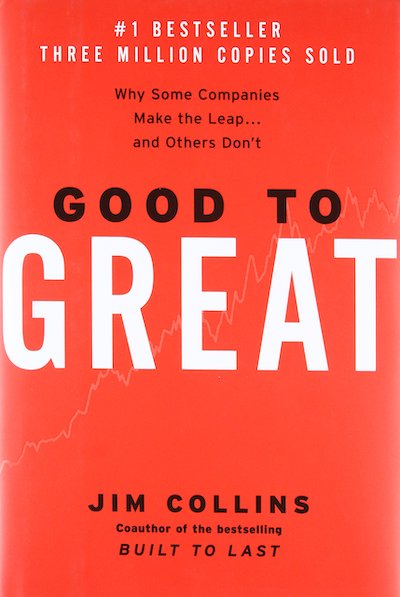
Good to Great Book Summary
This Good to Great Book Summary covers the key ideas, lessons, and takeaways in about 20 minutes.
The journey from good to great is not about dramatic change but about steady, thoughtful growth. Technology, innovation, and creativity are important—but they only matter when anchored to a clear vision and consistent discipline. Greatness, Collins reminds us, is not something you stumble upon. It is a deliberate choice, practiced every day.
Helps with these goals
Want the complete 20-minute summary?
- Full structured summary
- Video Summary
- Podcast Summary
- Audio summary
- Key takeaways
- Exercises
- Quiz
- Highlights and notes
- Ask the book with AI
What is in the Good to Great book summary?
Below is a preview of Sumizeit’s expert-written summary of Good to Great by Jim Collins. The full summary covers the book’s key ideas in text, audio, and video.
Overview
Why do some companies soar to greatness while others remain stuck in mediocrity? In Good to Great, Jim Collins investigates this question through one of the most rigorous research studies ever conducted in business. Over five years, Collins and his team examined 1,400 U.S. companies, identifying just 11 that transformed from average performers to long-term market leaders—and sustained that success for at least fifteen years.
The study revealed that greatness is not about luck or one-time innovation; it’s about consistent discipline, strong leadership, and unwavering focus. Great companies move forward gradually, not through sudden revolutions, but through small, steady actions that build unstoppable momentum.
The Quiet Strength of Level 5 Leaders
At the core of every great company is a special kind of leader—what Collins calls a Level 5 leader. These individuals are humble, reserved, and modest, yet they possess an extraordinary resolve to achieve lasting success for their organizations. Their ambition is not for personal fame but for the company’s enduring prosperity.
One powerful example is Darwin Smith, the unassuming CEO of Kimberly-Clark. In the 1970s, he made the bold move to sell the company’s paper mills and focus entirely on consumer brands like Kleenex and Huggies. Many thought he was crazy, but his quiet confidence and clear vision transformed Kimberly-Clark into an industry leader that outperformed even Procter & Gamble.
Similarly, Colman Mockler of Gillette led the company through repeated takeover attempts. Instead of cashing out, he reinvested heavily in research and development, producing cutting-edge razors that kept Gillette at the top of the market for decades.
These leaders share a paradoxical blend of humility and determination. They take the blame when things go wrong, credit others when things go right, and never allow ego to interfere with the company’s mission. Their leadership is quiet, persistent, and transformational.
Building a Great Team Before Building a Strategy
Collins found that great companies start not with a vision or strategy, but with the right people. Before deciding where to go, they make sure the right people are on board—and the wrong people are not. Once the right team is in place, direction becomes clear and adaptable.
Wells Fargo exemplified this during the deregulation of the banking industry. Instead of chasing growth through risky acquisitions, the company focused on recruiting disciplined, capable individuals who could navigate uncertainty. When the industry shifted, Wells Fargo thrived while competitors like Bank of America stumbled.
The key insight is simple: the right people don’t need micromanagement or excessive motivation. They are self-driven, committed to the mission, and capable of steering the company through change. Strategy evolves, but great people are the foundation that keeps a company resilient.
Facing Harsh Truths Without Losing Hope
A defining trait of good-to-great companies is their ability to face uncomfortable facts while maintaining faith in their ultimate success.
Want the complete 20-minute summary?
- Full structured summary
- Video Summary
- Podcast Summary
- Audio summary
- Key takeaways
- Exercises
- Quiz
- Highlights and notes
- Ask the book with AI
Who should read Good to Great?
Good to Great is essential reading for business leaders, entrepreneurs, and managers who want to understand what separates thriving companies from mediocre ones. Whether you're running a startup, managing a department, or studying organizational behavior, this book provides a research-backed framework for achieving sustainable success. It's also valuable for anyone interested in leadership philosophy and how to build cultures that last.
Why does Good to Great matter?
In a world obsessed with disruption and quick wins, Good to Great by Jim Collins cuts through the noise by revealing what actually creates enduring excellence. Based on a rigorous five-year study of 1,400 companies, the book challenges conventional wisdom about success and shows that greatness comes from discipline, the right people, and clear purpose—not luck or charisma. These principles remain profoundly relevant today as organizations navigate uncertainty and compete in crowded markets.
What are the key themes in Good to Great?
- Leadership rooted in humility and resolve rather than ego
- Getting the right people on the bus before deciding direction
- Confronting brutal truths while maintaining unwavering faith
- Simplifying focus through a single, clear strategic concept
- Building momentum through consistent, incremental progress
- Using technology to amplify strength, not mask weakness
- Creating discipline and freedom in organizational culture
- Preserving core values while adapting to change
What are the key lessons from the Good to Great book summary?
Level 5 Leadership Combines Humility with Iron Resolve
The most transformational leaders are quiet, modest, and focused on the company's success rather than personal glory. They take blame when things go wrong and credit others when things go right, yet they possess unshakeable determination to build something great.
Get the Right People on the Bus First, Strategy Second
Before deciding where to go, great companies ensure they have exceptional people in place. Once the right team is assembled, direction becomes clear and the organization can adapt as circumstances change.
The Stockdale Paradox: Face Harsh Truths Without Losing Hope
Great companies confront uncomfortable realities about their weaknesses, market threats, and failures while maintaining absolute faith in their ultimate success. This balance between brutal realism and optimism enables resilience and adaptability.
The Hedgehog Concept Simplifies Complex Strategy
Sustainable success comes from focusing on what you can be best at in the world, what drives economic profit, and what you're deeply passionate about. This intersection of three insights provides crystal-clear direction.
Discipline Creates Freedom, Not Constraint
Organizations that combine disciplined people, disciplined thought, and disciplined action can move fast and empower employees without chaos. The right culture lets self-driven people thrive without micromanagement.
Technology Amplifies Momentum Rather Than Creating It
Technology alone doesn't make companies great; it only magnifies existing strengths or weaknesses. Great companies adopt technology strategically to enhance their core mission, not to chase fads or patch problems.
The Flywheel Effect Builds Lasting Momentum
Transformation happens through persistent, incremental progress—like pushing a giant flywheel that gradually spins faster until it gains unstoppable momentum. One disciplined decision compounds with another over years.
Avoid the Doom Loop of Quick Fixes and Erratic Direction
Companies that abandon disciplined progress for short-term gains and constant leadership changes spiral into decline. Consistency and patience in execution build greatness; chasing instant results ensures failure.
Build a Culture Where Truth Surfaces Freely
Leaders must create environments where people can openly share bad news, debate assumptions, and analyze failures without fear. This transparency prevents denial and allows organizations to respond quickly to reality.
The Right People Don't Need Excessive Motivation
Exceptional employees are self-driven and committed to the mission. Rather than motivating them, leaders should focus on removing obstacles and aligning incentives with company values.
Greatness Requires Choosing Focus Over Diversification
Companies that try to be everything to everyone lose their competitive edge. Staying tightly focused on core competencies and eliminating distractions is far more effective than sprawling diversification.
Enduring Greatness Preserves Core Values While Adapting Practices
The best companies remain true to their fundamental purpose and identity while continuously evolving their strategies and operations. This balance between consistency and adaptability creates lasting competitive advantage.
Place the Right People in the Right Seats on the Bus
Beyond hiring good people, great organizations invest in understanding each person's strengths and placing them in roles where they can excel. Misalignment between person and position undermines even the best teams.
Excellence Requires Confronting What You're Not Best At
Part of discovering your Hedgehog Concept is honestly evaluating areas where you cannot achieve world-class status. Recognizing these limitations allows you to stop wasting resources on mediocre pursuits.
Continuous Improvement Compounds Over Years
Great companies don't rely on one major innovation or breakthrough; they accumulate advantages through constant, deliberate improvement across all operations. These small gains compound into dramatic long-term success.
Leadership Transitions Matter Less Than Cultural Foundation
Great companies don't depend on charismatic founders or heroic CEOs to survive. When culture and values are deeply embedded, the organization endures and thrives through multiple generations of leadership.
Incentives Must Align with Long-Term Mission, Not Short-Term Metrics
Compensation structures that reward short-term performance at the expense of long-term strategy undermine greatness. Great companies tie rewards to progress toward their fundamental mission.
Know Your Economic Engine—What Actually Makes Money
Understanding the single metric that drives profitability—whether it's profit per customer, per transaction, or per employee—clarifies decision-making and prevents wasteful spending on non-essential areas.
Create Accountability Without Creating Blame Culture
Discipline requires clear expectations and consequences, but great leaders separate accountability for results from blame for mistakes. This distinction allows people to take risks and learn without fear.
Want the complete 20-minute summary?
- Full structured summary
- Video Summary
- Podcast Summary
- Audio summary
- Key takeaways
- Exercises
- Quiz
- Highlights and notes
- Ask the book with AI
How can you apply ideas from Good to Great?
- Assess your leadership team: Do you have Level 5 leaders who put the organization's mission above their ego? If not, begin recruiting for this type of character.
- Conduct a hiring audit: Identify whether your organization has the right people in the right roles. Create a plan to move the wrong people off the bus and recruit exceptional talent.
- Define your Hedgehog Concept: Bring your leadership team together to answer three questions—what can you be best at, what drives economic profit, and what are you passionate about? Use this clarity to guide strategy.
- Establish a truth-telling culture: Create forums where difficult realities can be discussed openly. Implement processes that force confrontation with data rather than allowing wishful thinking.
- Audit your technology investments: Review recent tech spending. Are you adopting technology that amplifies your core strengths, or are you chasing trends? Reallocate resources accordingly.
- Map your flywheel: Identify the key activities that reinforce each other in your business. Optimize these activities and communicate the reinforcing cycle to your team to build momentum.
- Review your culture and incentive structures: Ensure that rewards, promotions, and recognition reinforce long-term mission rather than short-term wins. Adjust compensation if misaligned.
What common mistakes do readers make with Good to Great?
- Waiting for the perfect strategy before assembling the right team—greatness requires great people first, then strategy will emerge.
- Adopting new technologies or trends without evaluating whether they fit your core mission or competitive advantage.
- Allowing fear of difficult truths to drive denial; companies that avoid honest assessment of problems cannot adapt or improve.
- Spreading focus across too many initiatives and markets instead of simplifying around a single, clear Hedgehog Concept.
- Confusing discipline with micromanagement; great organizations attract self-driven people who need autonomy, not control.
- Expecting overnight transformation instead of building momentum through persistent, incremental progress over years.
Sumizeit Exercises Apply what you've learned
Turn ideas from Good to Great into action with a short guided reflection: identify the biggest takeaway, connect it to your life, and commit to one step you can take in the next 24 hours.
What is the expert analysis of Good to Great?
Overview
Good to Great by Jim Collins stands as a seminal work in the canon of business literature, distinguished by its empirical rigor and enduring insights into corporate transformation. Collins, a scholar and consultant with a strong academic and professional pedigree, undertook a five-year research project analyzing 1,400 U.S. companies to isolate the factors that enable a select few to transition from mediocrity to sustained market leadership. The book’s significance lies in its methodical approach to dissecting what differentiates “good” companies from truly “great” ones, offering a framework that has influenced executives, entrepreneurs, and organizational theorists alike.
Core Thesis
The central argument of Good to Great is that greatness in business is not the product of luck, charismatic leadership, or sudden innovation, but rather the outcome of disciplined people, disciplined thought, and disciplined action. Collins introduces several key concepts—such as Level 5 Leadership, the Hedgehog Concept, and the Flywheel effect—to illustrate how companies achieve and sustain greatness through humility, focused strategy, and incremental momentum. The thesis emphasizes that enduring success is a deliberate, cumulative process grounded in confronting reality honestly while maintaining unwavering faith in long-term goals.
Strengths
- Empirical Foundation: The book’s strength lies in its rigorous research methodology, analyzing a vast data set over an extended period to identify patterns of success.
- Conceptual Clarity: Collins distills complex organizational dynamics into accessible, memorable frameworks such as Level 5 Leadership and the Hedgehog Concept, facilitating practical application.
- Balanced Leadership Model: The portrayal of Level 5 leaders as humble yet resolute challenges traditional notions of charismatic leadership, offering a nuanced understanding of effective leadership.
- Focus on Culture and Discipline: The emphasis on disciplined culture and incremental progress provides a counterpoint to faddish management trends and quick-fix solutions.
- Use of Case Studies: Real-world examples like Kimberly-Clark, Walgreens, and Nucor Steel ground the theory in tangible business outcomes, enhancing credibility.
Critiques & Counterarguments
- Survivorship Bias: The selection of companies that succeeded over a specific timeframe risks ignoring firms that followed similar practices but failed, potentially overstating causal relationships.
- Oversimplification of Complex Dynamics: The neat frameworks may underrepresent the multifaceted and often chaotic nature of business environments, where external factors and chance play significant roles.
- Dated Examples: Many case studies reflect corporate realities of the late 20th century; the rapid evolution of technology and globalization since then may limit direct applicability.
- Competing Research: Studies in behavioral economics and organizational psychology suggest that leadership effectiveness and company performance are influenced by a broader array of factors, including emotional intelligence and adaptive capacity, which receive less emphasis in Collins’s model.
- Real-World Contradictions: Some companies highlighted as “great” have later faced significant decline or controversy, raising questions about the durability of the principles when applied in isolation or without adaptation.
Who Should Read This
Good to Great is essential reading for business leaders, executives, and managers seeking a disciplined, research-backed approach to organizational excellence. It also benefits scholars and students of business strategy and leadership who desire a foundational understanding of what drives sustained corporate success. Moreover, entrepreneurs and consultants will find its frameworks valuable for guiding strategic decisions and cultivating resilient company cultures. However, readers should approach the book with a critical mindset, integrating its insights with contemporary developments and diverse perspectives in management thought.
Frequently asked questions about the Good to Great book summary
What is Good to Great about?
Good to Great by Jim Collins is a research-based exploration of what separates exceptional companies from mediocre ones. Through a rigorous five-year study of 1,400 companies, Collins identifies 11 that transformed from average performers into market leaders and sustained that success for at least 15 years. The book reveals that greatness comes from disciplined leadership, the right people, clear strategic focus, and consistent incremental progress—not luck, innovation, or charisma.
Who should read Good to Great?
Good to Great is essential for business leaders, executives, entrepreneurs, and managers seeking to build or improve organizations. It's also valuable for anyone studying leadership, organizational behavior, or business strategy. Whether you're running a startup, managing a department in a large corporation, or advising organizations, this book provides actionable frameworks grounded in rigorous research.
What are the main takeaways from Good to Great?
The main takeaways include: Level 5 leaders combine humility with iron resolve; assemble the right people before deciding strategy; confront harsh truths while maintaining faith; focus on your Hedgehog Concept (what you can be best at, what drives profit, and what you're passionate about); use discipline to create freedom; treat technology as an amplifier of existing strength; and build momentum through persistent, incremental progress rather than dramatic transformation.
What is the Stockdale Paradox and why does it matter?
The Stockdale Paradox, named after Vietnam POW Admiral James Stockdale, describes the balance between brutal realism and unbreakable optimism. In business, it means acknowledging difficult truths about weaknesses, threats, and failures while maintaining absolute confidence in long-term success. This mindset allows great companies to adapt and respond quickly to reality rather than denying problems or losing hope.
What is the Hedgehog Concept and how do I apply it?
The Hedgehog Concept is the intersection of three critical insights: what you can be best at in the world, what drives your economic profit, and what you're deeply passionate about. To apply it, gather your leadership team and honestly answer all three questions. The overlap reveals your strategic focus and allows you to eliminate distracting initiatives, simplify decision-making, and concentrate resources on your true competitive advantage.
What does Good to Great say about technology and innovation?
Collins found that technology doesn't make companies great by itself—it only amplifies existing momentum. Great companies adopt technology strategically to enhance their core strengths and mission, while companies that chase every new trend without understanding its relevance lose direction. Technology is a tool to accelerate greatness, not a substitute for disciplined leadership and clear purpose.
How does the flywheel concept explain business momentum?
The flywheel metaphor describes how great companies build unstoppable momentum through persistent, incremental progress. Like a giant wheel that requires enormous effort to start turning, each disciplined decision and improvement builds on the previous one. Over time, the wheel spins faster and faster until momentum becomes almost effortless. This steady approach beats dramatic change and creates lasting competitive advantage.
About Sumizeit
Sumizeit is a profitable Scomy LLC company based in Miami, Florida. It has been helping readers learn from nonfiction books for 7 years with expert-written summaries in text, audio, podcast, and video.
Want the complete 20-minute summary?
- Full structured summary
- Video Summary
- Podcast Summary
- Audio summary
- Key takeaways
- Exercises
- Quiz
- Highlights and notes
- Ask the book with AI
Here's why readers love Sumizeit
Join thousands of learners getting smarter every day
"Great experience. Detailed summaries. Loved the gamification feature. Makes learning fun. Good customer service. I recommend Sumizeit to anyone. You'll learn a lot."
"I always felt busy but still wanting to keep up with the book discussion in my friend group. This was a great supplement to help me keep reading the books I find fun while keeping up with important books."
"I love this website. Instead of scrolling social media, I find myself learning a lot. I use it everyday. I recommend this app for anyone who is too busy and wants to get up to speed with their favorite books."
Good to Great Book Summary PDF
Looking for a Good to Great Book Summary PDF you can save and revisit offline? Our Good to Great Book Summary PDF captures the book’s core ideas in a clean, printable format — the key frameworks, takeaways, and structure without the fluff. Download the Good to Great Book Summary PDF when you want a reference you can annotate, share with your team, or review on the go. Get your Good to Great Book Summary PDF from the download page below.
Download Good to Great Book Summary PDFPeople also liked these summaries
Readers who explored Good to Great often enjoyed these titles next.



Want the complete 20-minute summary?
- Full structured summary
- Video Summary
- Podcast Summary
- Audio summary
- Key takeaways
- Exercises
- Quiz
- Highlights and notes
- Ask the book with AI
Featured Book Titles
Popular Book Summaries at sumizeit, leading book summary app