


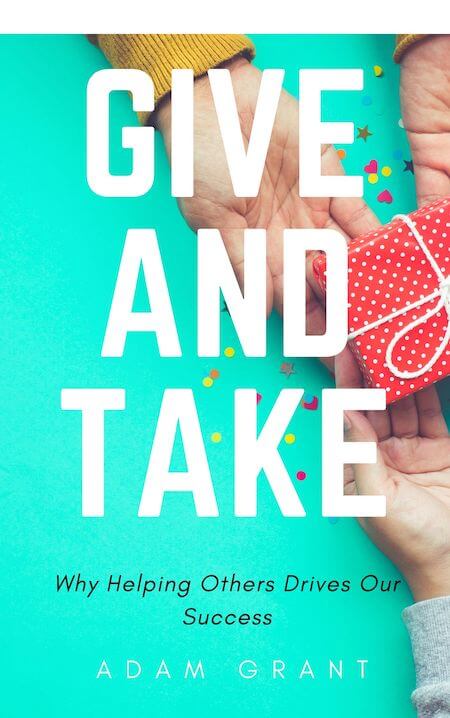
Give and Take Book Summary
This Give and Take Book Summary covers the key ideas, lessons, and takeaways in about 20 minutes.
Helps with these goals
Want the complete 20-minute summary?
- Full structured summary
- Video Summary
- Podcast Summary
- Audio summary
- Key takeaways
- Exercises
- Quiz
- Highlights and notes
- Ask the book with AI
What is in the Give and Take book summary?
Below is a preview of Sumizeit’s expert-written summary of Give and Take by Adam Grant. The full summary covers the book’s key ideas in text, audio, and video.
In Give and Take: Why Helping Others Drives Our Success, Adam Grant invites readers to explore what it really means to give and take. While traditional teaching tells us we must take what it is we need, Grant uncovers the many reasons why it is actually the givers who win in the end.
And oftentimes, the givers carry others with them on the road to success.
Givers and Takers
Givers--they give far more than they get
Takers--they take far more than they give
To takers, the world is a battleground. Life is an unforgiving game and you need to take as much as you can. You only help others if the benefit is far greater than the cost. For example, Michael Jordan’s personal philosophy is “To be successful, you have to be selfish.” He is known for speaking out against increasing team revenue shares when he was a team owner, the converse of his opinion as a player.
To givers, on the other hand, helping others is a reward in and of itself. For example, George Meyer, writer for The Simpsons, encouraged other writers to use his ideas for the show. As a result, he is only credited with writing 12 episodes when he actually penned more than 300. For George Meyer, helping his colleagues was more important than receiving recognition.
The Importance of the Social Circle
When we need to ask for a favor, we are most likely to turn to our closest friends and family members first. The alternative feels awkward: we wonder what right we have to ask for something from an individual we have not been in contact with recently.
However, research shows that most givers are actually not phased by not knowing a recipient of their generosity very well--or by not having been in communication with them lately.
Quite the contrary.
For instance, let’s look at Adam Rifkin, cofounder of the company 106 Miles. Twice each month, Rifkin holds events where entrepreneurs come together as a group and he then provides feedback on their ideas, assists them in getting jobs, and helps connect them to his extensive network.
While it is likely that Adam Rifkin started holding these gatherings based on a sense of altruism, the successful entrepreneur has benefitted from his own generosity as well.
He was able to use the ‘social capital’ he received from his networking events to ask for a favor of his own. When starting a company called Excite, he received advice from Graham Spencer--a person he had not seen in five years. Even so, Spencer remembered Rifkin for his assistance from years ago and was compelled to help him out with this new endeavor.
Givers commonly believe that pool knowledge benefits everyone.
Excessive Taking
For those who take and take, a price is often paid in the form of a damaged reputation and lost respect. This is referred to as a taker tax.
Want the complete 20-minute summary?
- Full structured summary
- Video Summary
- Podcast Summary
- Audio summary
- Key takeaways
- Exercises
- Quiz
- Highlights and notes
- Ask the book with AI
Who should read Give and Take?
Give and Take is ideal for professionals, entrepreneurs, and anyone seeking to understand how generosity and reciprocity drive success. Whether you're climbing the corporate ladder, building a business, or managing relationships at work, this book reveals why the most successful people often prioritize helping others. Leaders and managers will find particular value in learning how to foster a culture of giving within their organizations.
Why does Give and Take matter?
In a competitive world where many believe success requires ruthlessness and self-interest, Adam Grant's research challenges this assumption with evidence that givers ultimately outperform takers. Understanding the dynamics of giving and taking is essential for anyone wanting to build lasting influence, trust, and professional networks. The book provides practical insights for navigating workplace dynamics and decision-making in an era where reputation and social capital matter more than ever.
What are the key themes in Give and Take?
- The paradox that generosity leads to greater long-term success than self-interest
- How reputation and social capital accumulate through consistent giving
- The hidden costs of excessive taking and its impact on professional relationships
- The power of expanding your network and helping diverse connections
- How group dynamics and social proof influence our willingness to give
- The effectiveness of relationship-focused communication over self-promotion
- Authenticity versus adaptation in professional contexts
What are the key lessons from the Give and Take book summary?
Givers Build Stronger Networks Over Time
By consistently helping others without immediate expectation of return, givers develop extensive networks that provide unexpected opportunities when needed. These social capital investments compound over years, creating advantages that takers never access.
Takers Face the Taker Tax
Excessive taking damages reputation through word-of-mouth and eventually isolates high-takers professionally. Organizations and networks naturally distance themselves from chronic takers, limiting their opportunities and influence.
Success is Not Zero-Sum
Givers succeed not by hoarding opportunities but by lifting others, creating an expanding circle of reciprocal support. This collaborative approach generates more total success for everyone involved than competitive taking.
Proximity and Familiarity Are Overrated in Helping
Effective givers help strangers and distant contacts as readily as close friends, understanding that generosity builds bridges regardless of prior relationship history. These loose ties often provide the most valuable unexpected opportunities.
Group Identity Motivates Generosity
When people recognize shared identity or values with others, they become significantly more willing to help. Highlighting common ground increases cooperation and support across professional and social contexts.
Powerless Communication Builds Trust
Asking questions and seeking advice (powerless communication) creates stronger relationships than assertive self-promotion. This approach makes others feel valued and more inclined to reciprocate with support.
Visibility of Your Giving Matters
When others see you giving generously, they're motivated to reciprocate through social proof and group influence. However, the giving itself should remain authentic, not performative.
Givers Can Adapt Without Becoming Takers
Successful givers learn to calibrate their generosity based on workplace culture and context, maintaining their core philosophy while fitting organizational norms. This flexibility prevents burnout while preserving their giving identity.
Information Sharing Accelerates Collective Success
Givers who share knowledge, data, and insights create organizational advantages that benefit everyone, including themselves through recognition and advancement. Hoarding information may provide short-term advantage but limits overall impact.
Help Others Achieve Their Goals as a Strategy
By actively assisting others in reaching their objectives, givers build reciprocal relationships where others naturally support their future endeavors. This creates a virtuous cycle of mutual advancement.
Reciprocity Works Across Time and Distance
People remember help received years or decades earlier and will reciprocate even after long periods of no contact. Generosity investments never truly expire.
Takers Often Self-Identify Through Different Logic
What takers see as necessary self-preservation, others see as excessive self-interest. Takers rationalize their behavior through different values, making them resistant to changing their approach without external consequences.
Professional Advancement Rewards Generous Contribution
Organizations promote and reward those who elevate collective performance through sharing and collaboration. Visible contribution to others' success becomes a credential for leadership positions.
Network Diversity Increases Opportunity Flow
Givers build relationships across different industries, roles, and backgrounds, creating multiple pathways for unexpected opportunities and valuable connections. Homogeneous networks limit access to novel information and possibilities.
Active Listening is a Form of Giving
Genuine interest in understanding others' perspectives, challenges, and needs demonstrates respect and builds trust. This intangible form of generosity often matters more than material help.
The Cost of Appearing Self-Interested
Even high-performers who prioritize self-interest damage their reputation through visible self-promotion and reluctance to help. The perception of selfishness creates barriers that talent alone cannot overcome.
Groupthink Can Normalize Giving or Taking
Organizational and cultural norms significantly influence whether people naturally gravitate toward giving or taking behaviors. Intentionally creating a giving culture shifts group dynamics toward mutual support.
Mentorship as a Mutual Benefit Strategy
Givers who invest in mentoring others gain loyal advocates and collaborators while creating meaningful impact. Mentees remember and support those who invested in their growth.
Strategic Generosity Requires Boundaries
Sustainable givers learn to help strategically rather than indiscriminately, ensuring their generosity supports their own ability to continue giving. Understanding when to say no preserves long-term impact.
Success Definitions Differ Between Givers and Takers
Givers measure success partly through others' advancement and collective achievement, while takers measure it through personal accumulation. These different definitions lead to fundamentally different career trajectories.
Want the complete 20-minute summary?
- Full structured summary
- Video Summary
- Podcast Summary
- Audio summary
- Key takeaways
- Exercises
- Quiz
- Highlights and notes
- Ask the book with AI
How can you apply ideas from Give and Take?
- Host regular networking events or coffee meetings to build social capital across your professional network, following Adam Grant's model of systematic relationship-building.
- Share your expertise, data, and insights openly within your organization to establish yourself as a valuable collaborator and increase your advancement opportunities.
- Practice asking for advice and input from colleagues and clients rather than leading with your own needs, building trust through powerless communication.
- Deliberately help at least one person per week with their goals, projects, or challenges, documenting how these connections later provide unexpected support.
- Create systems to track your generosity over time and measure the return in terms of referrals, opportunities, and network growth.
- When asking for help, remind others of ways you've previously supported them or acknowledged shared identity to increase likelihood of reciprocation.
- Mentor younger professionals or colleagues, investing time in their development as a long-term relationship and reputation strategy.
What common mistakes do readers make with Give and Take?
- Assuming that being a giver means saying yes to every request, leading to burnout and reduced effectiveness—givers need boundaries to sustain their impact.
- Expecting immediate returns on generous actions; the most valuable reciprocation often comes months or years later from unexpected sources.
- Giving only to people you know well or expect reciprocation from, missing opportunities to build ties with distant contacts who may become your most valuable connections.
- Hiding your generosity entirely out of humility, missing the group influence effect where visible giving motivates others and establishes your reputation as a connector.
Sumizeit Exercises Apply what you've learned
Turn ideas from Give and Take into action with a short guided reflection: identify the biggest takeaway, connect it to your life, and commit to one step you can take in the next 24 hours.
What is the expert analysis of Give and Take?
Overview
Give and Take: Why Helping Others Drives Our Success is a seminal work by Adam Grant, a distinguished organizational psychologist and professor at the Wharton School. Grant’s expertise in psychology and organizational behavior lends considerable weight to his exploration of how interpersonal dynamics shape success in professional and personal realms. The book challenges conventional wisdom that success is primarily driven by self-interest, instead positing that generosity and collaboration often yield superior outcomes. Grant’s standing as a young tenured professor and his broad engagement with both academic research and practical examples make this book a significant contribution to contemporary discussions on leadership, motivation, and social capital.
Core Thesis
Grant’s central argument is that individuals can be categorized as givers, takers, or matchers, with givers—those who contribute more to others than they receive—ultimately achieving the highest levels of success. Contrary to the prevailing notion that self-serving behavior is necessary to get ahead, Grant contends that generosity, when practiced strategically, not only fosters personal achievement but also elevates entire networks. The book emphasizes the long-term benefits of giving, highlighting how social capital, trust, and reciprocity create sustainable success. Importantly, Grant nuances this thesis by acknowledging the potential pitfalls of giving excessively without boundaries, advocating for a balanced, thoughtful approach.
Strengths
- Empirical grounding: Grant integrates a wide array of psychological studies, field research, and real-world case studies, lending robustness and credibility to his claims.
- Compelling storytelling: The use of vivid examples—from Michael Jordan to Abraham Lincoln and contemporary entrepreneurs—renders abstract concepts tangible and relatable.
- Practical applicability: The book offers actionable insights for readers across professions, encouraging reflection on one’s interpersonal style and its impact on career trajectory.
- Nuanced categorization: By distinguishing givers, takers, and matchers, Grant avoids simplistic binaries and acknowledges complexity in human behavior.
- Focus on social capital: The emphasis on networks and reciprocity highlights the interconnectedness of success, moving beyond individualistic paradigms.
Critiques & Counterarguments
- Overgeneralization of categories: While the giver-taker framework is illuminating, human behavior often defies such neat classification. Individuals may shift roles contextually, and the binary may obscure these fluid dynamics.
- Potential for exploitation: The book underplays scenarios where givers are systematically exploited in toxic organizational cultures, raising questions about the limits of generosity as a strategy.
- Selective evidence: Some case studies, such as the examples of historical figures or successful entrepreneurs, may suffer from survivorship bias, neglecting those who gave generously but did not succeed.
- Contrasting research: Alternative psychological theories emphasize competitive instincts and self-interest as evolutionary drivers of success, suggesting that giving is not universally advantageous.
- Contextual variability: Cultural and industry-specific factors influence the efficacy of giving; what works in collaborative knowledge economies may falter in highly competitive or zero-sum environments.
Who Should Read This
Give and Take is ideal for professionals, leaders, and scholars interested in the psychology of success and organizational dynamics. It appeals to readers seeking to understand how interpersonal strategies influence career advancement and workplace culture. Those engaged in leadership development, human resources, entrepreneurship, and social psychology will find the insights particularly valuable. Additionally, individuals aspiring to cultivate more meaningful and productive relationships in both personal and professional contexts will benefit from Grant’s nuanced exploration of generosity as a pathway to success.
Frequently asked questions about the Give and Take book summary
What is Give and Take about?
Give and Take by Adam Grant explores how generosity and reciprocity fundamentally shape professional success. The book argues that givers—people who contribute more than they take—ultimately outperform takers in long-term achievement while building stronger networks and organizations. Grant presents research and real-world examples showing why helping others often leads to greater personal success than pursuing self-interest alone.
Who should read Give and Take?
Give and Take is essential for professionals, entrepreneurs, managers, and leaders seeking to understand how generosity drives success. Anyone struggling with work relationships, trying to build influence, or wondering whether competitive self-interest is necessary for advancement will find practical insights. The book appeals to those interested in organizational culture, networking strategy, and the psychology of professional relationships.
What are the main takeaways from Give and Take?
The core takeaways are that consistent giving builds social capital and professional networks more effectively than self-focused taking, that excessive taking damages reputation through the 'taker tax,' and that successful givers strategically help others while maintaining healthy boundaries. Adam Grant also emphasizes that relationship-focused communication outperforms self-promotion, group dynamics influence generosity, and the most successful people lift others as they advance.
Can someone be both a giver and a taker?
According to Give and Take, people tend to operate as primarily either givers or takers rather than a consistent blend of both. However, successful givers do adapt their approach based on context—they may calibrate their generosity to fit workplace culture without abandoning their core philosophy. The key is maintaining a generous mindset while developing strategic boundaries.
What is the taker tax explained in Give and Take?
The taker tax refers to the negative reputation consequences and lost opportunities that chronic takers experience. As people take without giving, word-of-mouth damage their reputation and others become reluctant to help or work with them. Grant illustrates this through examples like Frank Lloyd Wright, whose exploitative treatment of apprentices caused clients to hire his workers directly instead, ultimately undermining his business.
How does networking differently for givers versus takers in Give and Take?
Givers build networks by consistently helping across a wide range of contacts, including distant connections and strangers, creating extensive social capital that provides unexpected opportunities. Takers focus on high-value contacts and help only when the benefit exceeds the cost. Grant shows that givers' expansive networks ultimately create more opportunities and advantages than takers' more transactional approach.
What is powerless communication in Give and Take?
Powerless communication, as described in Give and Take, involves asking questions and seeking advice from others rather than assertively promoting your own perspective. Despite seeming less direct, this approach builds trust and relationships more effectively. Grant demonstrates through examples that asking 'What would you do in my situation?' creates stronger buy-in and support than presenting demands or self-focused arguments.
About Sumizeit
Sumizeit is a profitable Scomy LLC company based in Miami, Florida. It has been helping readers learn from nonfiction books for 7 years with expert-written summaries in text, audio, podcast, and video.
Want the complete 20-minute summary?
- Full structured summary
- Video Summary
- Podcast Summary
- Audio summary
- Key takeaways
- Exercises
- Quiz
- Highlights and notes
- Ask the book with AI
Here's why readers love Sumizeit
Join thousands of learners getting smarter every day
"Great experience. Detailed summaries. Loved the gamification feature. Makes learning fun. Good customer service. I recommend Sumizeit to anyone. You'll learn a lot."
"I always felt busy but still wanting to keep up with the book discussion in my friend group. This was a great supplement to help me keep reading the books I find fun while keeping up with important books."
"I love this website. Instead of scrolling social media, I find myself learning a lot. I use it everyday. I recommend this app for anyone who is too busy and wants to get up to speed with their favorite books."
Give and Take Book Summary PDF
Looking for a Give and Take Book Summary PDF you can save and revisit offline? Our Give and Take Book Summary PDF captures the book’s core ideas in a clean, printable format — the key frameworks, takeaways, and structure without the fluff. Download the Give and Take Book Summary PDF when you want a reference you can annotate, share with your team, or review on the go. Get your Give and Take Book Summary PDF from the download page below.
Download Give and Take Book Summary PDFPeople also liked these summaries
Readers who explored Give and Take often enjoyed these titles next.



Want the complete 20-minute summary?
- Full structured summary
- Video Summary
- Podcast Summary
- Audio summary
- Key takeaways
- Exercises
- Quiz
- Highlights and notes
- Ask the book with AI
Featured Book Titles
Popular Book Summaries at sumizeit, leading book summary app
