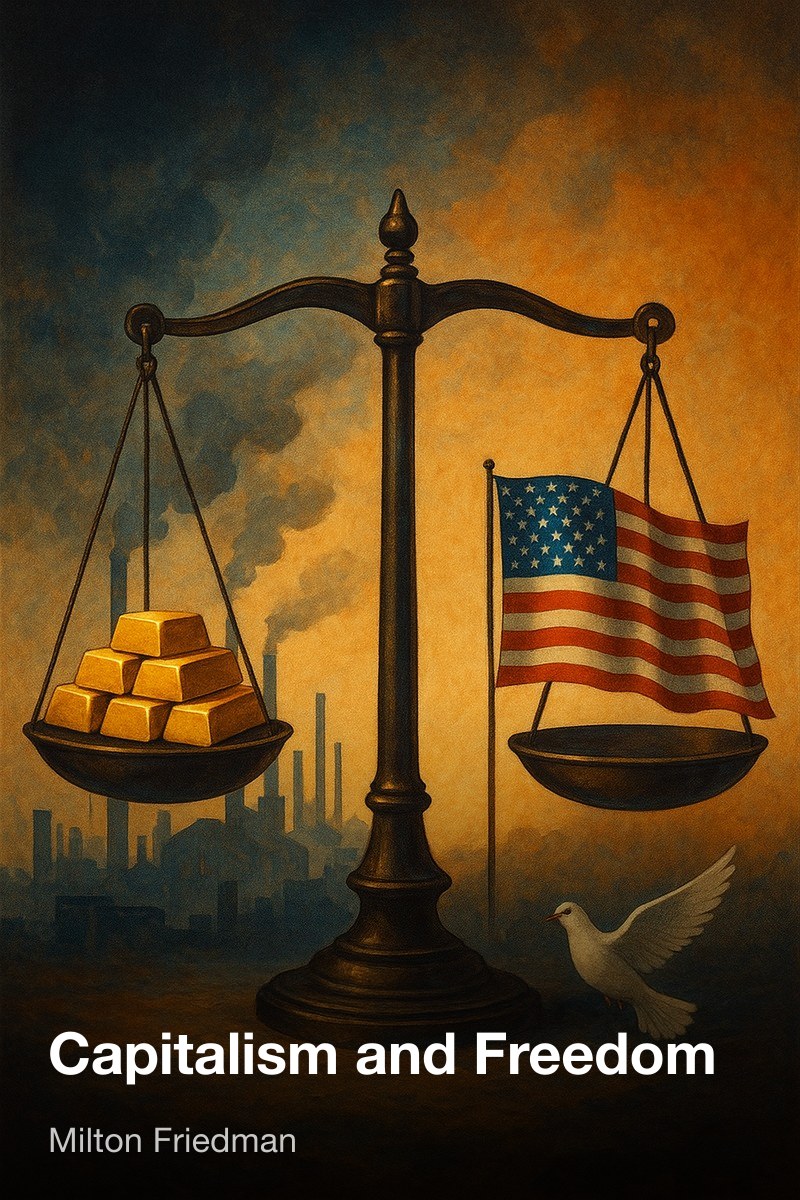
Milton Friedman taught economics at the University of Chicago for more than three decades and became the most recognizable voice of what's often called the Chicago School, an approach to economics built around free markets and skepticism of government intervention. He won the Nobel Memorial Prize in Economic Sciences in 1976 for his work on consumption analysis, monetary history, and the difficulty of stabilizing an economy through policy. Beyond Capitalism and Freedom, he's known for Free to Choose, the 1980 book and television series he made with his wife and frequent collaborator, Rose Friedman, which carried many of these same ideas to a much wider audience. Friedman advised multiple U.S. presidents and foreign governments, and his views on floating exchange rates, an all volunteer military, and monetary policy went on to shape real policy decisions long after this book was first published. He died in 2006, but few economists have had as much influence on how governments actually run their economies.
.jpg?width=400)